

Jo Piazza is a bestselling author, podcast creator and award-winning journalist. Jo is the national and international bestselling author of The Sicilian Inheritance, We Are Not Like Them, You Were Always Mine, Charlotte Walsh Likes to Win, The Knockoff, How to Be Married, and her latest release, The Parisian Heist. Her work has been published in ten languages in twelve countries and four of her books have been optioned for film and television. Jo’s podcasts have garnered more than twenty-five million downloads and regularly top podcast charts. An editor, columnist and travel writer, her work has also appeared in the Wall Street Journal, The New York Times, New York Magazine, Marie Claire, Glamour and many other publications. She lives in Philly with her husband, Nick Aster and three feral children.
I hadn’t tackled a dual-timeline novel until I started writing The Sicilian Inheritance a little over six years ago. As a reader, I adore dual timelines. When they’re done well, they can feel like the author just pulled off a magic trick by delivering the pleasure of two stories unfolding at once, and then at some point everything clicks into place and you realize the stories have been in conversation with one another all along.
But there are also plenty of dual-timeline novels that don’t work and that’s something I was really afraid of as a writer..
Usually it isn’t because one timeline is stronger than the other. It’s because the stories don’t actually belong together. They feel like an estranged married couple who sleep in separate bedrooms. Maybe they once had a passionate and meaningful connection. Maybe they even share some DNA. But they haven’t talked in six months and haven’t had sex in even longer.
That was the thing I wanted to avoid in both The Sicilian Inheritance and now The Parisian Heist.
I didn’t want two separate stories awkwardly sharing a cover. I wanted each timeline to make the other one better. I wanted them to miss the timeline they’d just left behind while also being excited to return to the one they were entering. Most importantly, I wanted the book to feel as though one story couldn’t be told without the other.
While I was writing The Sicilian Inheritance, I tried what felt like a thousand different approaches before I landed on a process that works for me. It’s something readers ask about constantly at book clubs and author events.
How do you construct a dual timeline that invests readers in both stories? How do you keep all the reveals, clues, mysteries, and emotional beats aligned? How do you make two stories feel like one?
The answer is that I don’t really solve those problems while I’m drafting.
Part of that is because I’m a pantser, not a plotter. I don’t outline my novels. My first draft is usually the outline where I figure out what the book is actually about.
So I write all the way through the entire book, moving from one timeline to the other and back again. I just fly by the seat of my pants and pray and snack and go, go, go. I don’t let myself get hung up on structural details. I just write.
Then, once I reach the end, I take the entire thing apart, separate the timelines and read each one completely on its own. To me, they need to be able to stand alone as individual novels. I want each of the chapters to leave me wanting more and I want enough information revealed that you aren’t confused or second guessing.
One timeline might have excellent momentum but thin character development. Another might have a beautiful emotional arc but not enough plot.
So I revise each story separately until I feel like it could stand on its own. If this timeline had to live alone on a bookstore shelf, would anybody want to read it? Could it survive without its companion story?
Only once I can answer yes do I put the timelines back together.
Then I read the novel straight through.
And that’s when I discover a completely different set of problems.
Character arcs aren’t lining up, a reveal has been drafted too early, a clue is too obvious, I’m desperate to leave one of the characters behind. Sometimes I kill entire chapters and others I split one into two and move it around.
What I’m looking for at this stage is whether the timelines enhance one another.
They never do at first and so I some more exact surgery.
After that, I read the manuscript out loud to myself. This can take weeks.
I’m listening for pacing and voice. Each timeline should feel distinct. Readers should have a sense of that timeline’s place and perspective without looking to see whose point of view they are reading from.
In The Parisian Heist, for example, we’re operating in two very different worlds.
One timeline takes place in 1996, which I continue to refer to as the modern-day timeline despite being reminded almost daily that 1996 was nearly thirty years ago. Apparently the nineties are now historical fiction.
That timeline follows an all-women art heist in Paris. One of the reasons I wanted to set it in the nineties is that mysteries are more interesting to me before smartphones, Google, and the ability to answer every question in three seconds. If my characters want information, they have to go looking for it. They have to spend time in libraries and archives and smoky Parisian bars. They will miss calls and messages on answering machines will be erased. I also loved the idea of them moving through the Paris art world of the nineties and potentially running into Liam Gallagher at three in the morning.
The second timeline takes place more than a century earlier and follows Jo van Gogh, Vincent van Gogh’s sister-in-law. After Vincent’s death, Jo inherited hundreds of his paintings, many of which were essentially worthless at the time. She then spent the rest of her life convincing the world that Vincent van Gogh mattered.
She organized exhibitions, cultivated critics, helped to publish his letters and carefully shaped the narrative around his work and his life.Vincent van Gogh became one of the most famous artists in history because Jo dedicated herself to making that happen.
The more I researched her, the more convinced I became that she was one of history’s great marketing geniuses. She understood audience building, reputation management, storytelling, and influence long before any of those terms existed. I sometimes joke that she was one of the world’s first influencers.
On the surface, these stories couldn’t be more different. One is a feminist art heist. The other is the story of a widow determined to preserve an artist’s legacy.
And yet I promise, they are deeply connected. The goal is making readers feel as though they were always one story.
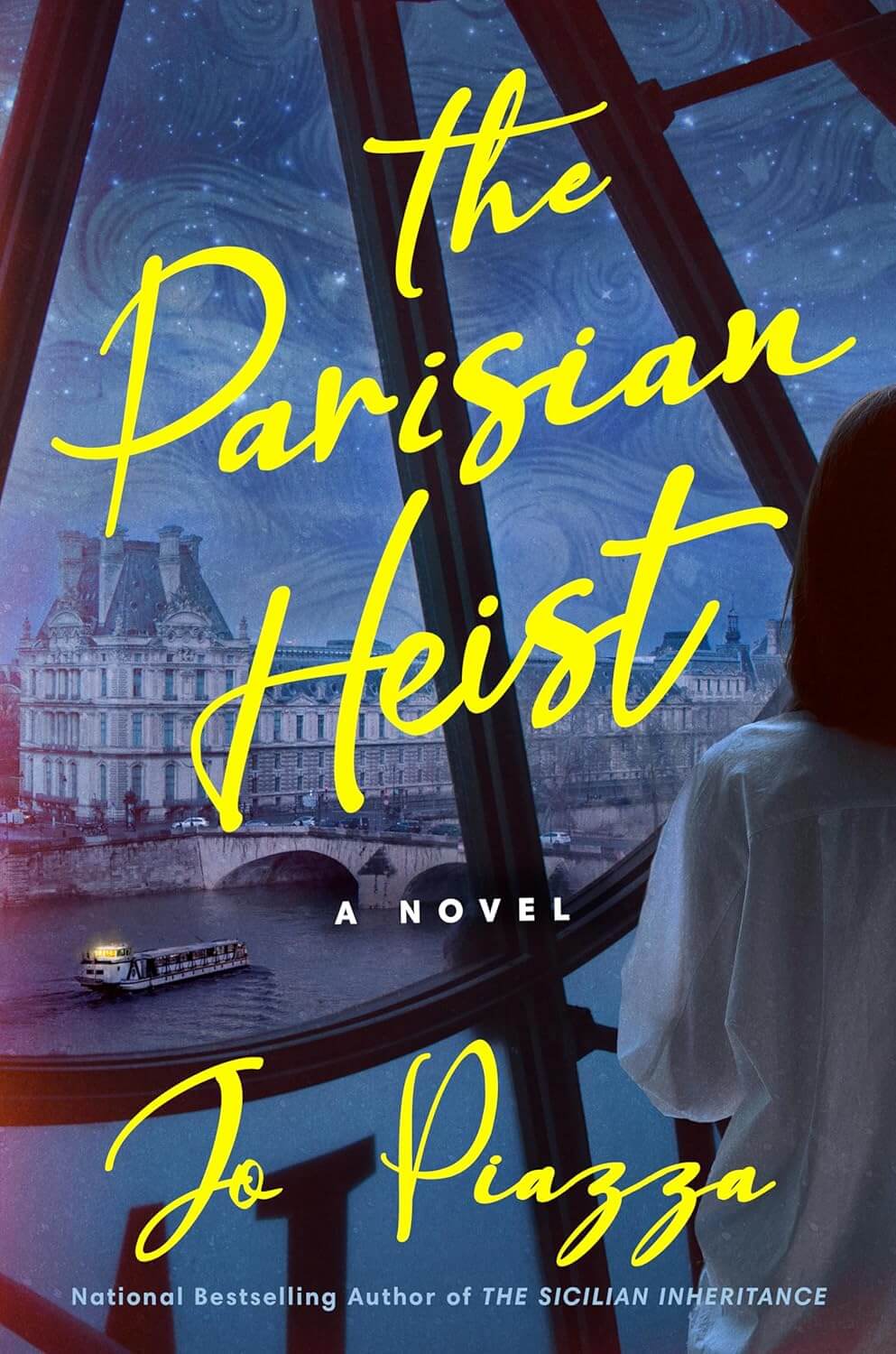 The Parisian Heist by Jo Piazza
Emma, a former struggling artist, has taken a job cleaning for Paris’s wealthy. It’s through this that she meets Stella Swanson, the widow of a notorious art dealer. The Swansons deal with buyers that will pay fortunes for masterpieces. Struck by their wealth and by an attractive grandson, Emma joins the family empire doing work that crosses the lines of legality. In a parallel story in the late 1800s, widowed Jo van Gogh has inherited hundreds of paintings from her dead brother-in-law, Vincent. Jo becomes devoted to creating a legacy for Vincent and to create a future for her young son. Both women must learn who they can trust and how far is too far to succeed.
Buy the book now: Bookshop.org | Amazon










Leave A Comment