

Eliza Knight is an award-winning, USA Today and international bestselling author of dozens of novels. Her latest novel is Lost in the Summer of ‘69. A lifelong history obsessive, Eliza’s love affair with the past began as a young girl when she traipsed the halls of Versailles. She is the creator of the popular historical blog, History Undressed, and host on the History, Books and Wine podcast. Her books have been translated into multiple languages, and most recently, her co-authored title A Day of Fire has been optioned for television. Knight holds an MFA in creative writing from Drexel University and is a creative writing instructor. She lives in the sunshine state with her husband, three daughters, a dog, a crab and a turtle.
A flat character can make or break a story. The issue usually isn’t weak plotting, missing conflict, or even a thin backstory. If you’ve fully developed your character, and they are still missing the mark, a lot of times what is happening is a lack of agency. Your protagonist is reacting to the story instead of driving it.
Events happen around them while other characters make the decisions that actually propel the story forward. The plot carries your protagonist from one scene to the next, and instead of making an active decision, they mostly react to whatever happens.
Readers can feel that passivity after a while, even if they can’t quite explain what’s missing. A protagonist should feel like they have at least one hand on the wheel, even if they’re driving the story straight toward disaster. In Lost in the Summer of ’69, Nora’s agency comes through the gradual choices she makes about the kind of future she wants for herself. She begins the novel following expectations placed on her, but as the summer progresses, her decisions increasingly reflect her own desires rather than the life others imagined for her.
You don’t want your reader to struggle to connect with characters who simply exist inside the story while secondary characters make the important decisions. A protagonist can have wit, trauma, charm, or even an interesting backstory and still feel strangely flat if they aren’t involved in influencing the narrative. Agency grows out of a want for something. What does the character want badly enough to risk disappointment, conflict, or change? When you’ve nailed that deep desire, your story gains energy because your main character begins making choices that complicate their life and the lives of those around them.
Don’t confuse agency with constant action. A character dominating every scene or making explosive decisions to feel compelling, doesn’t always go hand in hand with agency. Those choices need to be natural to the character. What does the character want badly enough to risk discomfort, heartbreak, embarrassment, or change? Your story will gain momentum when your protagonist makes choices in pursuit of that desire and then deals with the fallout afterward. Even hesitation can reveal agency if the hesitation itself is a decision.
And remember, a reserved or vulnerable protagonist can still change what happens next, too. Meanwhile, a charismatic or daring character can still feel passive if they only respond to events. What readers crave is to witness character decisions—wise or reckless—determining the heart of the story. Eleanor, one of the women in Lost in the Summer of ’69, demonstrates this kind of vulnerable agency. She isn’t charging into battle scenes or delivering dramatic speeches. Her agency comes from choosing reinvention late in life and allowing herself to want more after years of restraint.
Characters who don’t want anything strongly enough often end up feeling passive, almost like they’re meandering through the plot waiting for the story to happen to them. The most interesting characters usually want two conflicting things at once, or they want something that scares them almost as much as it excites them. Leanne’s emotional arc in Lost in the Summer of ’69 is driven
less by external action and more by longing. She fears becoming invisible in her own life as her daughter prepares to leave home. That fear shapes her choices throughout the novel, even in scenes where very little outwardly happens.
So, what are some ways you can have your character show agency? If somebody lies, avoids a conversation, betrays a friend, takes a risk, or says the thing they’ve been terrified to admit, the story should feel different afterward. Relationships strain. Trust cracks. Tension builds. Even relief can create new problems. Readers keep turning pages because they’re waiting for the domino effect of a character’s choices. Without that wave, scenes can start feeling emotionally weightless, as though nothing really matters because nothing meaningfully has been altered.
A rule of thumb to keep in mind is that every scene should contain some sort of agency, no matter how small. A character walks into a scene wanting something—to impress someone, hide fear, keep control of a conversation, protect a relationship, uncover a secret, avoid humiliation. Then life pushes back. Another character interrupts the plan. Emotions get in the way. Social pressure creeps in. Maybe the character freezes. Maybe they lash out. Maybe they say the exact wrong thing. That tension between desire and resistance is where scenes start feeling alive. By the end of the scene, the story has altered course in some way. The character made a choice, avoided one, or created a new problem entirely, which kept the story moving. Not endless action, but characters affecting the direction of the narrative through their decisions.
But what about your plot outline? I am guilty of flattening agency in pursuit of protecting my carefully constructed plot. We’ve all done it. You need a character to end up in a certain place along their arc, so suddenly they’re making decisions that feel convenient for the plot instead of true to who they are. Characters over-explain themselves. Conflict appears out of nowhere. Coincidences pile up. Readers may not consciously identify the problem, but they can feel when a character is being nudged around by the author instead of acting genuinely. Allow your characters to make more complicated decisions, even if it wrecks the neat version of the outline you originally planned. You might just be surprised at how much fun you’ll have with that!
While I was writing Lost in the Summer of ‘69, I realized I was trying too hard to move the characters neatly from one concert stop to the next on their summer road trip. The story started feeling forced instead of organic. Once I loosened my grip a little and let the characters make decisions based on emotion instead of outline convenience, the book opened up. They took a few surprising detours—emotionally and literally—and those choices changed the trajectory of their lives in ways I didn’t originally plan. Now, the story has true energy. Characters wanting things, making choices, and complicating everything along the way.
Agency transforms characters from passive figures into people who come alive on the page. And it doesn’t mean they need to constantly be arguing, making dramatic speeches, or blowing up their lives every seven paragraphs. Some of the strongest agency comes from longing. Having a goal, making choices because of it, and then dealing with the fallout after. That thread should run through your entire story. Scene by scene, decision by decision. Readers connect to characters who leave fingerprints on the narrative, who shape what happens because of their desires, fears, flaws, and sometimes terrible judgment. That’s usually when stories start feeling immersive in a way readers can’t fully explain, because the characters feel like they’re living the story instead of simply drifting through it, and the reader is right there along for the ride.
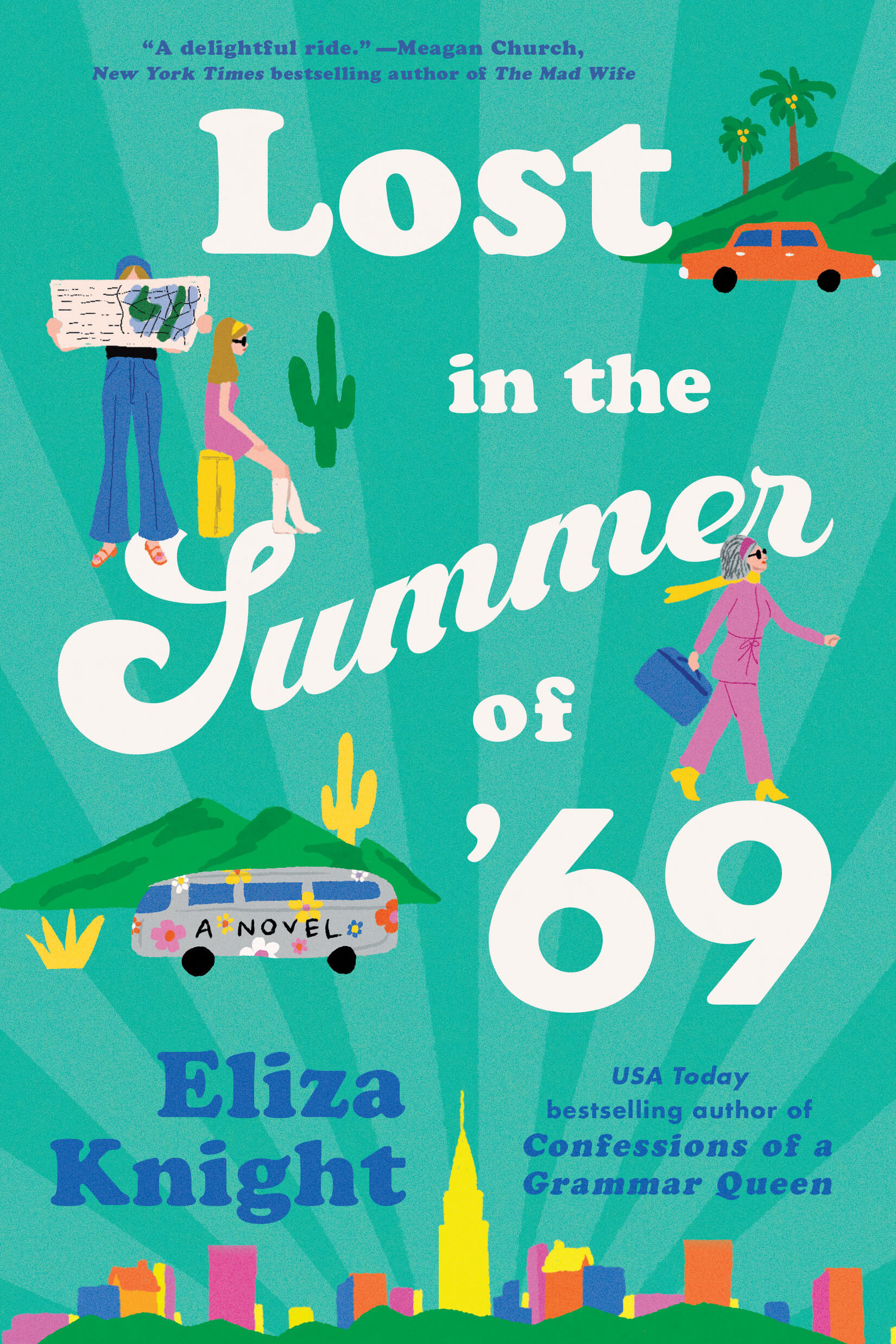 Lost in the Summer of ’69 by Eliza Knight
In the summer of 1969, aging musician Eleanor Bell secretly sets off on a cross-country journey to reconnect with the music she loves before memory loss takes it away. Her daughter Leanne and granddaughter Nora follow her trail across America, chasing radio broadcasts and festival appearances in a heartfelt road trip that explores family, forgiveness, and embracing life’s final encore.
Buy the book now: Bookshop.org | Amazon











Leave A Comment