

I spent nearly a decade in the querying trenches. Three months as an agented author. And one month on submission.
Ask me anything about landing a literary agent, and I can give you an extensively researched answer alongside anecdotal evidence from my vast failings and pinch-me successes.
The revision process with my agent, to me, was innate because I’d spent a large part of that decade in the querying trenches revising, and revising, and revising shelved manuscripts.
But submission? I didn’t know a thing.
My understanding was based on what I’d heard, and what I’d heard was either that it’s horrendous—the most anxiety you will ever feel—or that it’s a dream come true. The former being hums of the literary community as a whole, the latter from the lucky few with a breakout debut. There didn’t seem to be any in-between, or at least not that I found.
For this month’s From The Trenches piece, I was lucky enough to interview seven brilliant authors about their submission experience to help paint a broader picture for authors about to embark on their own journey towards traditional publication. I have also interwoven my own experience going on submission and selling my debut novel to a Big Five publisher.
Because each of these authors provided such a wealth of insights into the process, I’ve broken this piece into two parts. In this article, we’ll dive into what the specifics of being on submission look like—from preparing to go out to publishers to the financial aspect of a book deal to what’s “standard” for timing to the legal side of things. Think of this as your practical guide to submission.
In part two, we’ll dive into the emotional side of things because the submission scaries get their name for very good reason.
The Revision Process Before Submission:
I have always been of the opinion that I’d rather take my time writing the best version of the story possible than rush to publication. So, I signed with my literary agent because of the edits she wanted to do before submission. However, we also didn’t want to take too long on revisions because of all the hype the Tell Me Lies television adaptation was getting. We wanted to hit that polishing sweet spot while also being timely about our approach. All in, my edits took about two and a half months and I sincerely believe the outcome was stronger because we waited.
Several others felt the same. Laura Vogt worked with her literary agent for over a year, over many rounds, before she headed out on submission.
“The edits [my agent] suggested dramatically sharpened and strengthened my debut,” she said. “It wouldn’t be the same book without her.”
However, that’s not the case for everyone.
Kate Emilie went on submission one week after signing with her literary agent. She’d gotten so much attention following a fourteen-agent-auction situation, editors were quick to reach out to her agent directly, letting her know they’d like to be submitted to when ready.
Kristina Kamen “was one of those aspiring authors who was told, ‘Your manuscript must read like a published book before you query,’ more times than [she] could count. Because of that, [she] had done extensive editorial work on it before [her] agent ever read it, so when she did, she thought it was extremely polished.”
They hardly did any edits before they went out on submission, and they received editor interest just one day after going out on submission.
When it comes to revisions before submission, two things seem to be true. The first: agents know the market. They know when to take their time going out on submission—when revisions will make the work in question stronger—versus when it’s more important to strike while the iron is hot. It’s their job to know what editors are looking for, and to assess which edits are must-have and which can wait until there’s an editor steering the vision.
The second is a gut thing. I knew my book could be stronger, and I didn’t want to rush this dream of mine that had already been ten years in the making. A few months of in-depth edits seemed worthwhile to me. There is no reason to rush a book deal.
The Timing of Submission:
Authors saw timelines as quick as overnight, three weeks, three months, to as long as eight months. Hailey Alcaraz’s debut novel sold in about three to five months, which gave her unrealistic expectations because of how quick that is in publishing time. Mallory Arnold initially said her submission process took six months, then she dove into her email to discover that it was about a month. “Goes to show how long it feels to wait for that answer.”
The one common thread amongst all author interviews was that agents, it seemed, were spot on when it came to their submission to acceptance timeline predictions.
When I went out on submission, my agent told me I’d have a book deal by the time I had my baby. I was eight months pregnant, and that’s precisely what happened.
Kristina Kamen’s expectation was to have interest in three days. Instead, she received her first offer overnight.
Agents, in my experience, don’t promise anything unless they can deliver. And if they are over-promising, that’s a red-flag in my book. Writers trying to break into traditional publishing are already oversaturated with rejection. As Dana Swift said:
“The general populace doesn’t understand the years of rejection and dedication it really takes to get there. You have to really want this and put in the work and even then sometimes luck isn’t on your side.”
Your agent, if they’re a good one, should know how to manage your expectations. And they won’t gamble on hope.
The Financial Aspect of Submission:
While my agent committed to a timeline of which I’d receive my offer, she would not commit to a number for me to expect except to say that offers tended to range broadly. And after seeing the offers I received, I see why.
Financial transparency has drastically increased over the years, with authors revealing their incomes on Reddit, Substack and social media so greener authors know what they’re getting into. However, even a deep knowledge of the way things are broken out still doesn’t prepare you for the financial considerations of landing a book deal.
“The financial aspect is the hardest to wrap your head around,” Hailey Alcaraz said. “The reality of what the money looks like is less glamorous than what a lot of people think it is.”
Dana Swift described the nuance behind receiving a larger deal after a smaller one.
“For my first book, I would’ve liked more of an advance. Not just to be more financially stable during that time in my life, but because it also meant less support from the publisher. My second deal was much larger in comparison, though now I’m scared of never earning out.”
Nic DiDomizio agreed with this sentiment.
“Most books don’t sell enough to justify a huge advance, and the author often pays the price.”
If they don’t earn out their advance for their first book, then it becomes much harder to sell their second book for a comparable advance.
“I really think I’ve been able to continue getting published and building my career, book by book, because all of my books have earned out. Even if they were small deals.”
Laura Vogt is proof of this. She received a low advance, but she earned out in the first month after debut, plus an additional 35%. Her second month, royalties were 65% of the original advance. She’s only a few months out, so she doesn’t know how sales will sustain, but thus far, the trend has continued.
“All that to say,” she said, “a lower advance isn’t disappointing.”
Not every financial decision on submission is about how much you’re offered—sometimes it’s about whether to take the offer at all. Kate Emilie turned down a pre-empt, betting that holding out for auction would pay off further down the line. And it did. When I asked if it made her nervous to turn down a guaranteed offer, she said:
“Of course I wondered if it was a mistake, if I’d turned down the best offer I was going to get, but I trusted my agent. She’s done these submissions and negotiations enough times to know how to read the situation and advise a client.”
There are pros and cons to every deal size, and the advance amount by no means determines the success of your career. No matter what, selling a book is a huge achievement, given the odds.
A refresher on what you’re up against: the rule of thumb is that less than 3% of writers ever actually finish a book. One out of every thousand querying writers ever lands a literary agent. And while there’s no agreed-upon statistic for how rare it is to land a book deal, Jericho Writers estimates that a top agent at a top agency will sell approximately two out of every three manuscripts they put out on submission.
A note: these numbers come from different sources and don’t perfectly stack, but the scale tells its own story. If you’ve landed a book deal, you are rare. By my rough estimate, you’re one in 50,000.
Endlessly grateful to each of the authors who agreed to be interviewed for this piece. In alphabetical order, I’m honored to introduce:
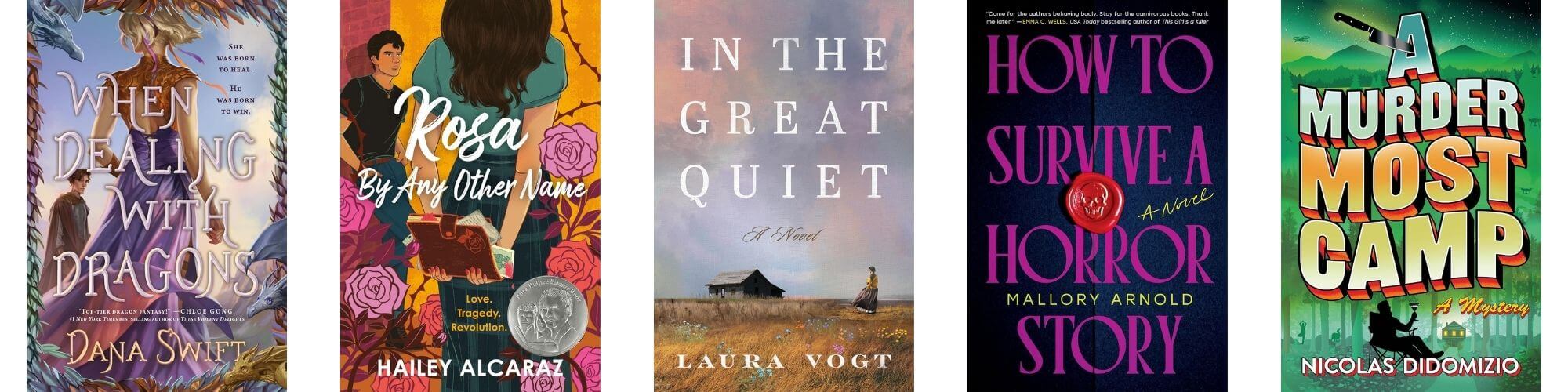
- Dana Swift, who has been crafting fantasy worlds in her head since she was eleven years old and she hasn’t stopped since. Her latest world, When Dealing With Dragons, was deemed “remarkably unique” by the one and only Chloe Gong.
- Hailey Alcaraz who, alongside her characters, is changing the world one multicultural coming-of-age story at a time. Her sophomore novel, Rosa By Any Other Name, just won the Pura Belpré honor.
- Kate Emilie whose forthcoming debut Seven Dishes To Fall In Love was called “a standout YA novel at Frankfurt Book Fair” by The Bookseller.
- Kristina Kamen, author of My Husband’s Family, whose forthcoming from William Morrow in 2027 sold in a major deal following a competitive multi-publisher auction.
- Historian, storyteller and poet Laura Vogt whose debut In The Great Quiet was selected as a March Editor’s Pick for Amazon First Reads.
- Mallory Arnold, author of How To Survive A Horror Story and the upcoming Cross My Heart I Hope You Die (a twisty, campy delight of a novel—it’s no wonder she’s been able to establish herself as a thriller author to know with three books already sold).
- USA Today Bestseller Nic DiDomizio, our resident submission expert whose debut was deemed “unforgettable” by Mr. James Patterson himself. You may have heard from The New York Times that his “voicey, lively writing shines” in his latest release A Murder Most Camp and to that I say, it sure does.




Leave A Comment