

Stacey Gordon grew up in the Appalachian foothills of southern Ohio and began her career as a trade journalist covering the cultured pearl and jewelry industries, visiting farms across Asia and companies around the world. For the past twenty-five years she’s worked in marketing and user experience design for the Silicon Valley tech industry. This is her debut novel. She lives with her family in Alameda, California.
As a reader and viewer, I’m drawn time and again to stories set in small towns. Give me a close-knit community, the colorful and quirky dynamics of the townspeople, the charm and homeyness of a miniature downtown with two traffic lights. Small towns and their tropes are favorite settings, whether they’re the backdrop for second-chance romances or the close quarters where dangerous secrets lurk.
While I might gobble up fantasies about fictional towns like Stars Hollow, Dream Harbor, or Cabot Cove, I also know small-town tropes are often exaggerated, unrealistic, and overused to the point of tiresome.
See, I’m also the product of a small town. I grew up in a rural area of southern Ohio, in a town big enough that not everyone knew everyone, but small enough that we probably knew at least one of their family members.
If I were the protagonist of a romance, I’d be the “gal who got away” to pursue an ambitious career in the big city, until one day I burn out, return to my hometown to heal, and meet the love of my life. But this is real life. I built my life on the West Coast and stayed here, a little nostalgic for the place I grew up but never drawn back to it.
Building a fictional small town with more nuance
When I set out to write the small-town setting for my debut novel, The Pearl Farmers, I wanted to paint the fictional town of Ferry’s Landing, Tennessee—hometown of the book’s three sisters and home of the family’s pearl farm—with more complexity.
I wanted to portray it as a place that’s fallen on hard times but still reflects the values and character of the classic middle-American burg. Everyone connected to Ferry’s Landing has a different opinion about the town’s best future, but they all agree they want to preserve what’s inherently good about the place.
My goal was to avoid the clichés that so often show up when a small town plays a major role. Here are a few common depictions of small-town life I steered away from.
A quiet, stress-free place to heal
The protagonist needs a retreat—from grief, big-city burnout, or a scandal—and the small town provides respite. In books like Virgin River by Robyn Carr or All Rhodes Lead Here by Mariana Zapata, the little town and its laid-back lifestyle are exactly the foil the main character needs to lick their wounds and discover who they are. Bonus round: they fall in love.
I wanted to show a more nuanced relationship with small-town life through Penn, my novel’s youngest sister. She does return to Ferry’s Landing when she hits a wall, but her return is complicated. She resents the town where she grew up. She remembers how her mother was treated like an outcast, how she herself was ostracized for being smart and different, and how her family’s heavy expectations weighed on her.
Ferry’s Landing shaped Penn, but it has never felt like home. Small-town life isn’t for everyone, and while Penn finds healing with her family, she ultimately leaves for someplace that’s a better fit.
The charming, prosperous downtown
Small-town fiction almost always conjures the movie-set enchantment of a bustling town center. Blocks lined with coffee shops, bakeries, bookstores, and antique shops, a picturesque green with a white gazebo, and townspeople strolling past make up the fantasy of Main Street USA. Towns like the one in Emily Henry’s Book Lovers or Laurie Gilmore’s The Pumpkin Spice Café are textbook examples.
In reality, many small towns have fallen on hard times. A typical American downtown may be dotted with vacant storefronts, and the businesses that survive tend to be more utilitarian than atmospheric—more payday lenders and smoke shops than boutiques and adorable cafés. Meanwhile, chain stores and fast-food restaurants have become locals’ destinations of choice.
And while there’s plenty of fiction about downtrodden towns too, the reality is usually a mix—part optimistic charm, part economic hardship. One of the backstories woven into The Pearl Farmers reflects the trend toward revitalization efforts for downtowns. Main character Anna, the only sister still living in Ferry’s Landing, shops at Walmart and regularly picks up fast-food burgers and Piggly Wiggly fried chicken for her family. But she also aligns herself with a civic effort to “bring back” the town.
The push and pull over how to do that in a way that’s good for everyone, including the small-business owners still persevering downtown, becomes a central theme of the book.
The benevolently meddlesome gossips
Every fictional small town seems to have well-intentioned gossips who meddle. Think of bed-and-breakfast owner Mabel in Sarah Adams’s When in Rome series or village gossip Gabri Dubeau in Louise Penny’s Three Pines mysteries.
Gossip is rampant in small towns, but the nosy matchmaker pulling strings behind the scenes is mostly fantasy. Real small-town gossip turns vicious fast, mutating like a game of Telephone.
Gossip plays a big role in The Pearl Farmers, but I wanted to portray it realistically: how fast rumors spread about relationships or situations that are actually innocent, and how much damage they can do. A new job is jeopardized by rumors of an illicit workplace affair. Jealous, unfounded whispers about characters’ mental health, relationships, and histories whip around town as soon as someone steps into it.
Strong community and connections
A quirky hamlet with a cast of eccentric, lovable characters often sets the stage for small-town stories, contrasting the townspeople’s loyalty to one another with cold, hard urban life. From Gilmore Girls to Schitt’s Creek to every cozy romance and mystery on the shelf, stories about kooky, close-knit communities provide idyllic backdrops for protagonists seeking safety, comfort, and acceptance.
There’s something nice about a place where everyone knows each other, locals meet at the same watering hole every night, and neighbors look out for each other. Strong community really is one of the gifts of a less populated life.
But there’s a flip side, and I wanted my novel to show it. In small towns, people know everyone’s history, and they don’t forget it. They remember what someone did thirty years ago, where their parents used to live, who they dated in high school. Two of my main characters left Ferry’s Landing for college and successful careers, but when they return, they’re still saddled with old reputations, family histories, and misconceptions.
Going home on my own terms
I didn’t write Ferry’s Landing to knock small towns—instead, I tried to reflect a more nuanced place because it felt more interesting than the picture-perfect postcard. I wanted to portray a town that, for some people, is flawed but worth loving and fighting for, while for others, will never represent a place they feel at home.
I’ve always been grateful for my small-town upbringing, and I am who I am because of where I came from—but I also recognize the mixed blessings of small-town life. I wanted to bring this complex reality together for my main characters too.
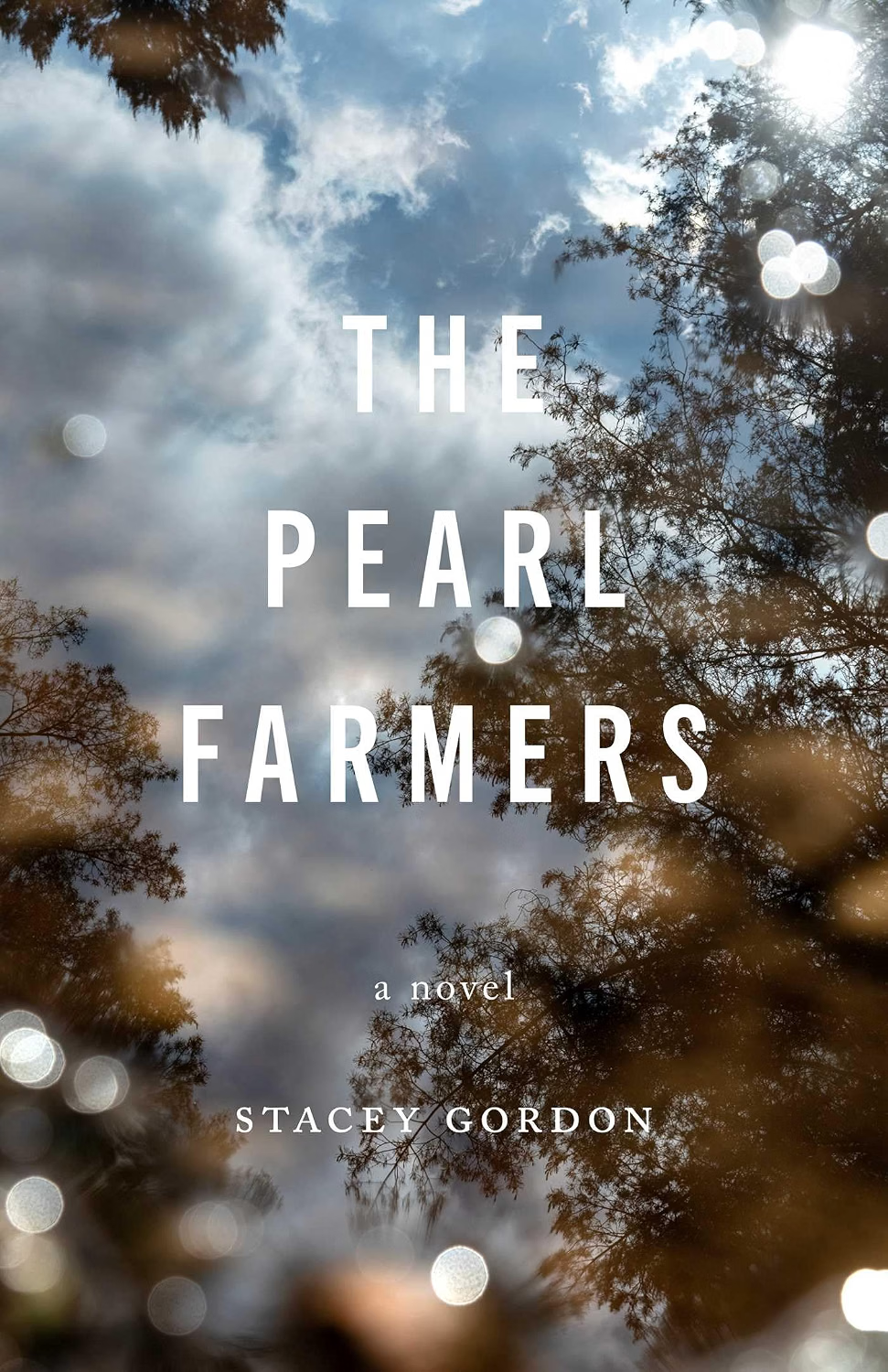
The Pearl Farmers by Stacey Gordon
Three estranged sisters reunite when their family’s once-famous freshwater pearl farm in rural Tennessee faces collapse. As they confront old betrayals, buried secrets, and complicated family dynamics, they must decide whether to preserve their family’s legacy or break free from the past.
Buy the book now: Bookshop.org | Amazon













Leave A Comment