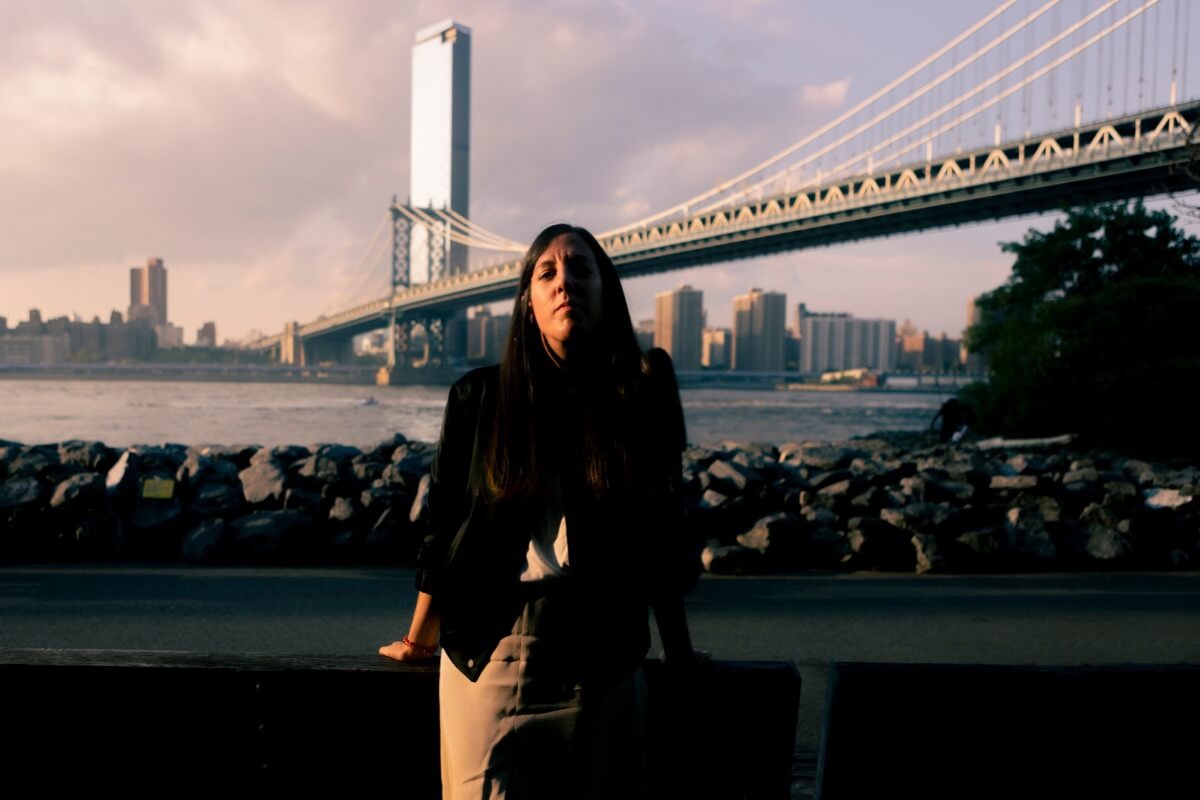
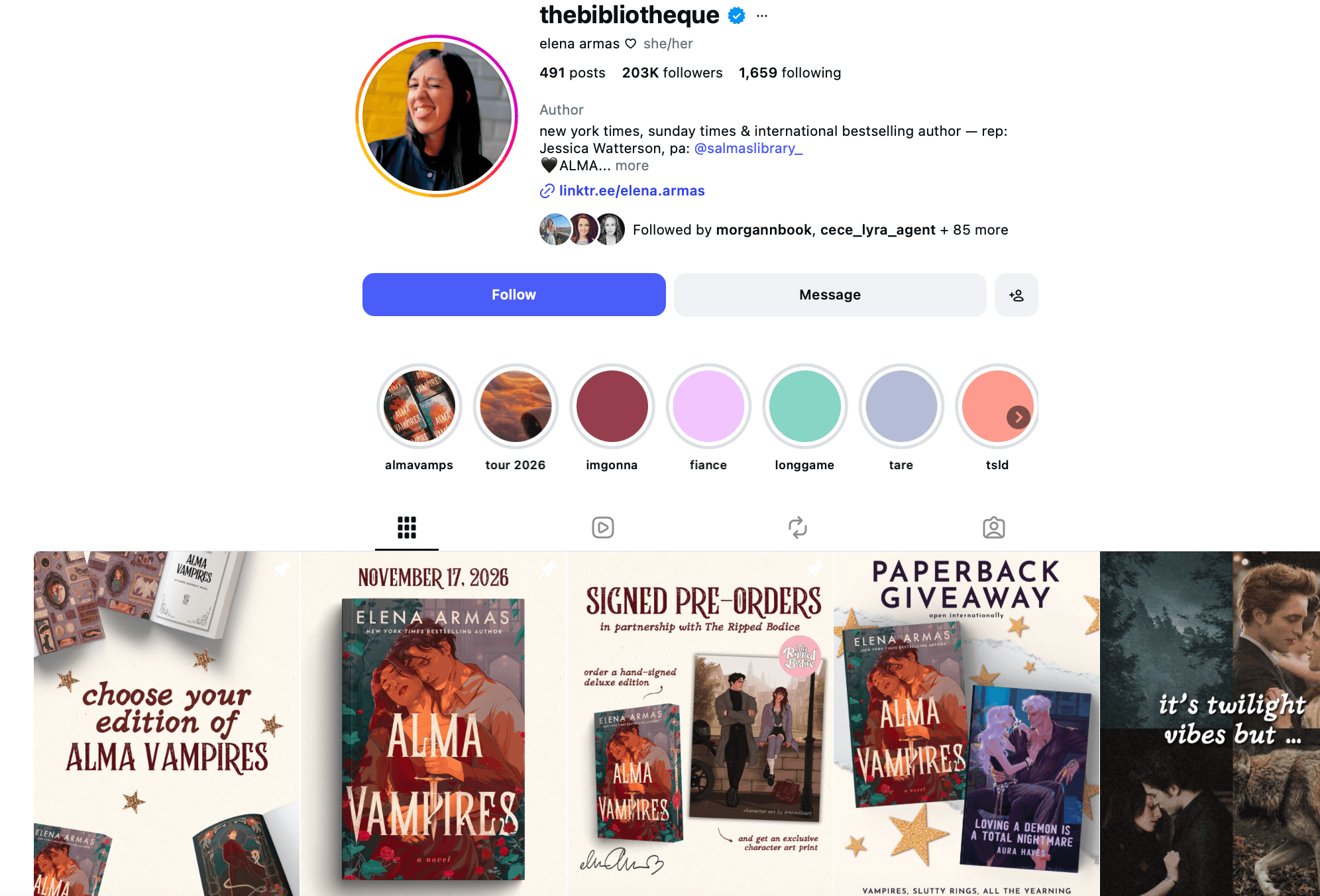
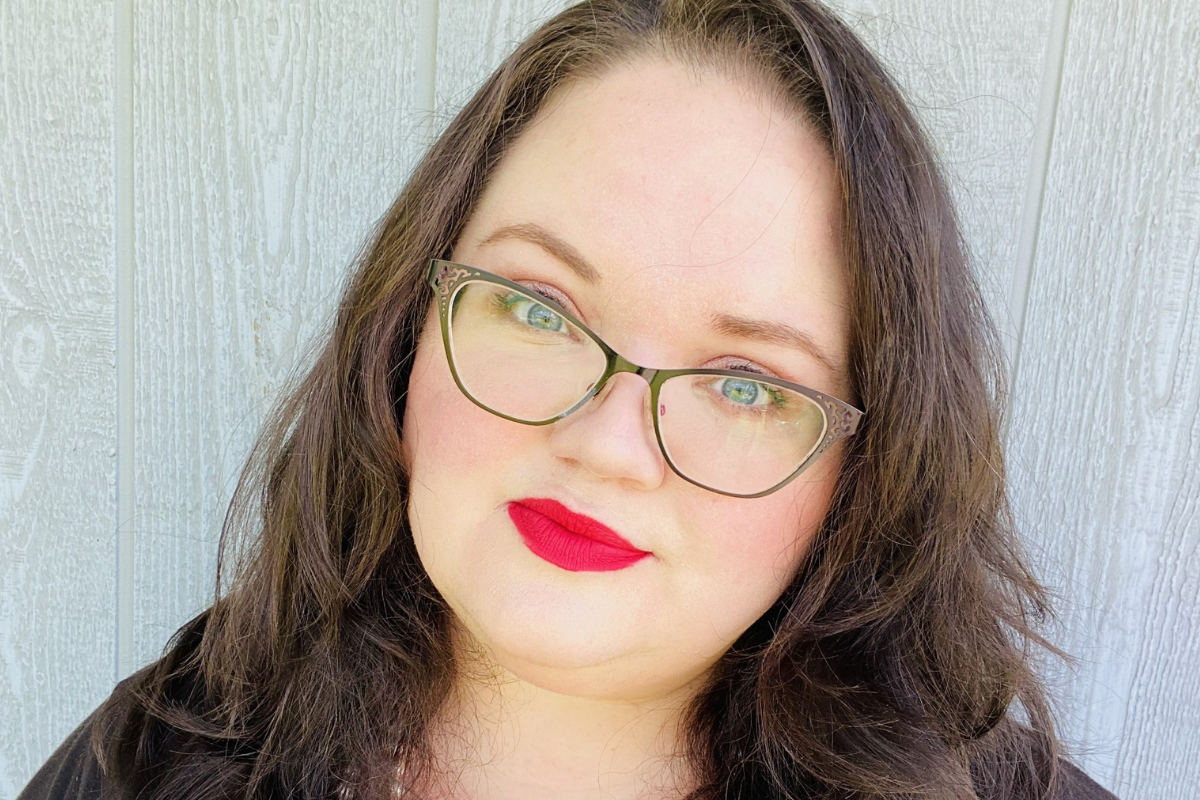
Elena Armas is the New York Times bestselling author of The Spanish Love Deception. A chemical engineer turned author, she first entered the book world by pouring her love of reading into her Instagram account, @thebibliotheque. Her self-published book was an enormous success and her platform has only continued to grow. So with her new release, Alma Vampires, we sat down to talk with Elena about her shift into paranormal romance, the Instagram account that started it all, and her overall take on platform-building and publishing.
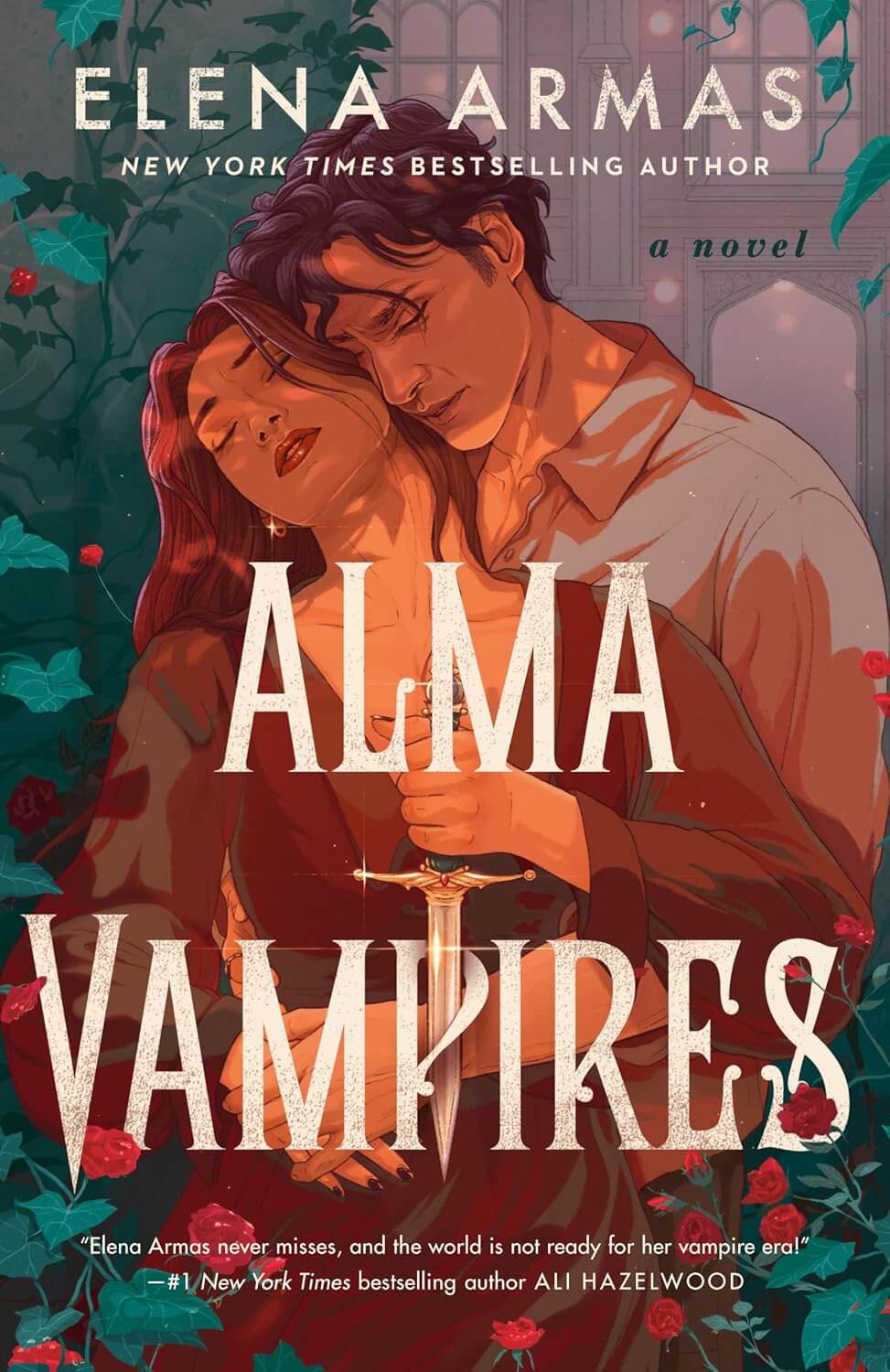
Tell us about Alma Vampires. After the huge success of your contemporary romances, what made you choose a supernatural love story?
This is the genre that made me an avid reader. As a teen, I would always gravitate towards fantasy and paranormal young adult stories. Like any millennial, I was raised on vampire gospels like Twilight, The Vampire Diaries or Vampire Academy. And now that I’m an adult, not only am I’m proud to say that I never outgrew my love for the genre, but I’ve also been craving that high-stakes feeling those books would evoke. I might have started out my writing career in contemporary romance, but a part of me has always known that eventually I’d venture into paranormal stories. It was a matter of working out the courage, and in a way, it couldn’t have come at a better time. Publishing a book like Alma Vampires is a deeply personal and creative milestone for me.
Buy the book now: Bookshop.org | Amazon
What about this sub genre shift challenged and/or inspired your writing process?
As much as I’ve spent countless hours in this genre as a reader, putting on my writing shoes to tackle the project was as intimidating as it was exciting. I was very lucky to have a clear idea of what I wanted to do with the story and characters, but there were still roadblocks I would encounter along the way. When working on my contemporaries, I would leave a fair chunk of the story open and dissect or navigate it on the page. I’m not saying it was the most productive, as you have to turn back and forth more times than you’d probably like, but I always found there was magic in letting the characters walk you through their own journeys. Now, when actual magic is part of the equation … that room for surprise becomes a bit of an issue. There are rules that must be established and respected, and the high-stakes element becomes more prominent. I found myself plotting in depth this book, which was something new for me. But even that way, I’m happy to report that I still found creative freedom in the process. I could still build an entirely new world with an emotionally rich story without being constrained by the reality shackles. Playing with the limits of possessiveness or obsessive love was so much fun when fate is not just an imaginary hand, but a real force that feels like a character.
Your degree is in chemical engineering. For anyone who set career goals in one direction, but has a deep desire to write, what would you say to them?
I would tell them to never give up on that desire or dream to write. Feed it in any way you can without placing too much pressure on yourself. Making choices and sacrificing something you love for something you believe it’s more practical is a decision I understand well. But it doesn’t mean the end of anything. My passion for literature was always ever present in my life while I studied and then worked full-time as an engineer. My free time would be spent reading, and when that wasn’t enough, I made the jump to blogging about the books I read. Taking the leap to write happened naturally and almost by accident when Covid hit and I found myself with extra time in my hands. I’m not saying that’s the way to go, you can also chase a dream and be determined about it. But writing under no pressure helped me understand better who I was as a writer back then. My debut was the book I desired to write. When I sat down on my laptop, it was just me, the story and the characters in the room. And perhaps, if I’d known everything that would follow, I would have second guessed every decision I was making. Even publishing.
You’ve been running a very successful bookish platform since before you were published. How do you feel this connection to the online book community helped you as an author (before sales were even a factor)?
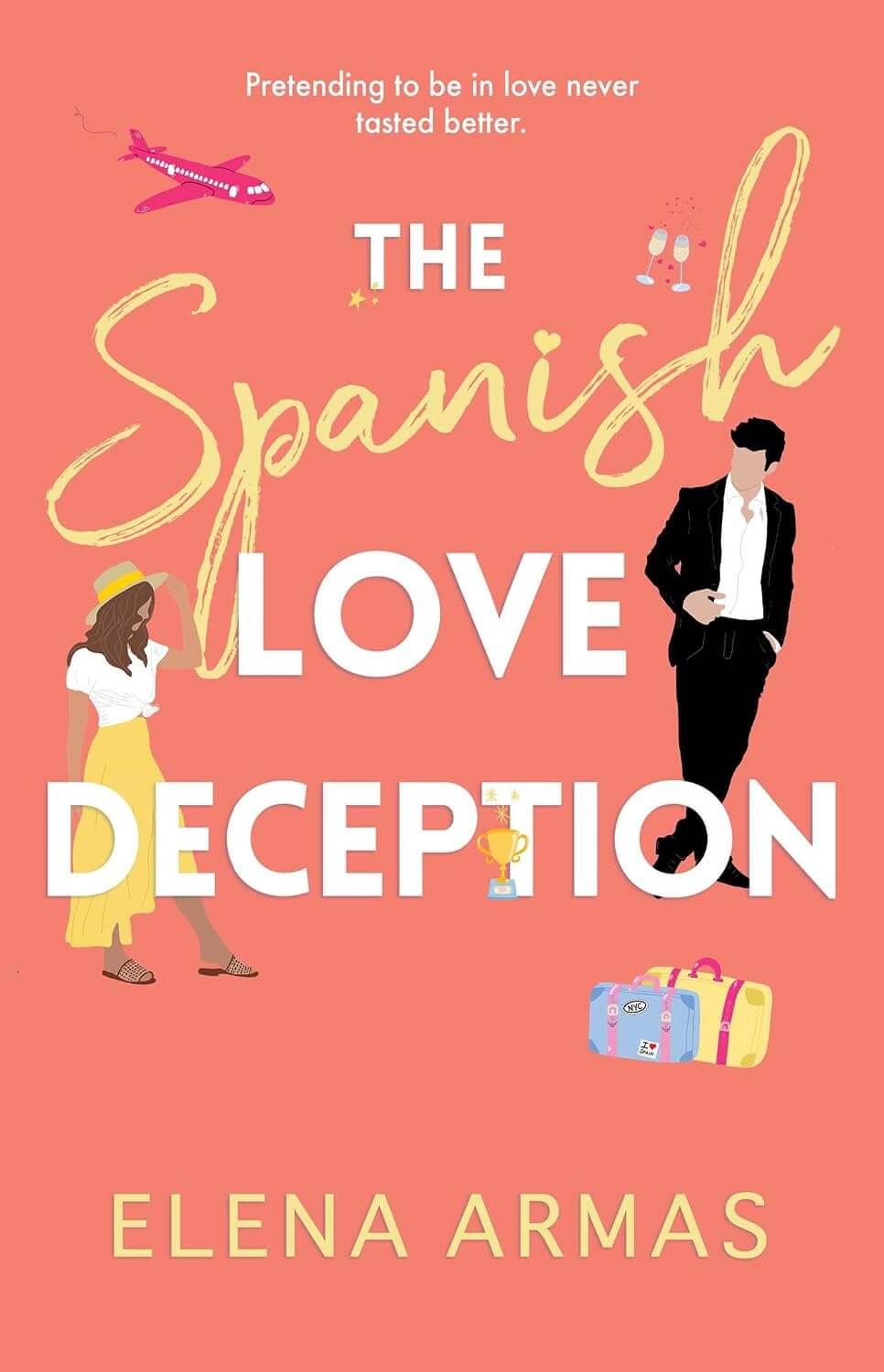
It goes against what I just preached in my previous response, but it helped me get the pulse on my audience. I wouldn’t suggest write books to follow trends, but listening to what the book community is loving at the moment can broaden your interests. I’ve discovered countless authors who became instant favorites through social media. Not just back then, but now that I’m a writer. When I decided to self-publish The Spanish Love Deception, I knew what I wanted to do with the cover because I had a very good idea of what trends I liked or disliked. Same with marketing, after having seen first hand as an influencer what publishing houses or indie authors were doing, it was easier to create a plan to promote my own book. Having a small community of readers who I could send the book to for review made all the difference in the world. It doesn’t guarantee a level of success or virality, as that’s unpredictable, but I’ll always be grateful to those who supported me when I was doing something so intimidating.
Did you feel like there was a transition from being a reader to an author with your social audience, or did one flow into the next easily?
One flowed into the next quite organically. My first readers were those who were already following me and were excited about my writing. The big shift came after my debut went viral and my career underwent a big 180. I still talk about the books I love and I love to engage with my readers, but the stakes are different when you’re an author with a platform.
“Platform” is always such a big debate in publishing. When to build one, what content to share, how to translate follows into engaged readers, etc. In your opinion, what does it take to build a thriving platform?
I don’t think there’s a universally right answer to that question. Just like anything in life, not everything works for everybody, which is why I get so frustrated with how the industry works nowadays. We are all pressured into existing within social media, but no one has the rules for it. I’m someone who’s regarded as an author who knows what they’re doing on socials, but the truth is that I feel lost more days than not. Things have changed very drastically since my days on bookstagram, but at the heart of it, I try to keep the focus on the same pillar: the community. My platform is a community of readers who I love to interact with, so whenever I post about the books I now write, I do with that in mind.
If you were to give one piece of advice to an author wanting to engage more on social media, what would it be?
Be yourself. Talk about those things you love and never think you’re burdening your audience. Any reader that follows you, wants to be there.
You have multiple social media accounts that are highly engaged with, but do you have a favorite as an author? One you feel like has the most engaged readers?
I adore Tessa Bailey’s books, but I think her TikTok is pure magic. She pokes fun at the same clichés she writes so masterfully, and doesn’t shy away from posting sketch-like content. I think she’s brilliant.
What content do you feel works best for you as an author?
Whatever content I have more fun creating it’s what usually ends up working best. It doesn’t mean that every post gets the engagement I wish or expect (so much flops nowadays), but at the end of the day, there’s a person on the other side of the screen. They’re probably going to enjoy consuming the things you enjoy creating. Which, not so ironically, will also apply to writing.
What is something that makes you really optimistic about the future of reading/publishing?
How our community continues to make waves as it grows in size. There’s still a long way to go in terms of breaking taboos about the romance genre, or books written by women for women, but to see more and more readers stake their claim on the genre so proudly makes me incredibly hopeful.
What is something you’re hoping we leave behind in the bookish world?
The need to justify what we read and why. I’d love to leave behind the idea of some books being more intellectual or worthwhile than others. There’s no space for guilt in the pleasure of reading.
What are you working on next?
Book two in the Icarus University series. And if you’ve read Alma Vampires, then you know exactly why 🙂

Leave A Comment