

About Carla Vass: She began her career at Goldman Sachs, then helped build early teams at Uber and Waymo, and later founded her own venture-backed startup. When her company ultimately shut down, Carla found herself reflecting on over a decade spent inside elite, high-pressure environments—and questioning the culture of power, loyalty, and silence she had long taken for granted. Her debut novel, The Rally (coming in September from Union Square/Hachette) blends sharp social observation with romance and high-stakes drama. Chris Bohjalian says, “The Rally is proof positive that The White Lotus hasn’t a monopoly on glam travel and bad behavior. It’s the sort of scrumptious novel you’ll devour.”
At a recent lunch with a group of women, we were asked to share what we were working on. Which, in practice, meant explaining who we were. Or had been.
One had a successful tech exit and was now pivoting to a new industry, one of those swings that announce you’ve decided to play at a different scale. Another had helped grow a large, publicly traded financial firm. The woman to my immediate right was building something more idiosyncratic: a creative agency in a niche most people had never considered. Yet another carved out a space in a male-dominated industry and had recently been featured on the front page of a glossy magazine. Another headed a division of a major media company.
When it was my turn, I admitted, a little sheepishly, that I was, um, a fledgling writer, and described the entry point of my debut novel: a female company founder walks into a boardroom and learns she’s being forced out of the company she built.
The woman to my left stiffened
Sorry, she said. It’s just — I took on new investors for my company last year. They promised me so much. And then, almost immediately, I was told I was no longer needed.
She sounded shell-shocked as she spoke.
Slowly, the rest of the table chimed in. One had been made redundant. Another had been brought aboard a sinking ship and dismissed when she couldn’t perform the miracle she’d been hired for. The stories kept coming until it was clear I’d stumbled onto something less like a coincidence and more like a condition.
I felt a flicker of discomfort. The rest of my novel takes place during a glamorous classic-car rally through Europe — champagne, vintage Ferraris, rich people behaving badly. I’d thought I’d written something light and fun. And here it was touching a nerve with women who’d built things and had those things turn on them or taken from them. The froth, it turned out, was wrapped around something a lot of people were quietly bleeding from.
I’d felt this wound too.
Once you start noticing it, you can’t stop. You ask after a mutual acquaintance.
How’s she doing?
Not well. She came back from maternity leave to discover her team had been rebuilt in her absence. There was nothing she could point to, no memo, no conversation, just that she was no longer needed. (The actual ousting, for legal reasons, wouldn’t come for another couple of months.)
Some of these circumstances are uglier. A friend and I were out for a drink one night when she got an email from a former colleague sent from an anonymous address. It was so threatening and vitriolic that I hadn’t known people did this outside of films. That’s the unhinged end of the spectrum. But the spectrum is long, and most of it is much quieter than that.
I shouldn’t forget the most modern version: the person who logs onto a call and learns, somewhere around minute four, that their role has been made redundant — by software.
Nobody has much sympathy for an ousted finance bro. And if public policy is any indication, nobody has much for the mother sidelined after leave, either. But strip away the salaries and the status, and these are all the same things. They’re betrayals.
We’re taught to keep all of this in proportion. It’s just business. Don’t take it personally. This is, I’ve come to think, the least honest thing we say about work — because work is where we spend most of our waking hours, and it is precisely where our sense of identity, status, and belonging get built, tested, and confirmed. Of course, it’s personal. We made it personal by living there. We just agreed, collectively, to pretend otherwise, because the pretense is easier than the alternative, which is admitting that an institution can hold your whole sense of self in its hand and let go whenever it likes.
I’m getting a front-row seat to another version of all this now. After almost fifteen years in finance and tech, my first novel is being published this fall, and I’ve spent the last year in the book world, an industry I’d romanticized from the outside, as everyone does. The refrains turn out to be familiar. Editors drowning in manuscripts. Brilliant young graduates with degrees, internships, connections, and credentials, who still can’t get a foot in the door. One author announcing, with apparent pride, that AI now lets her publish more than two hundred books a year. A pervasive, low-grade sense of despair about an industry being tested by technology.
AI will probably accelerate all of this, but it didn’t start it. And here is the thing I keep turning over: in publishing, like all creative fields, it seems to hurt more. Not because the layoffs are bigger, but because nobody came here for the money.
You don’t take an assistant’s salary in New York because you ran the numbers. You take it because you love books, because you’d rather be near the thing you love than rich beside something you don’t. The work was never just a job. So, when the work tells you you’re redundant, it isn’t only an income that’s gone. It’s a betrayal of the bargain you thought you’d made – the one where you handed over your nights and weekends and devotion, and it gave you, in return, something to say when it was your turn to go around the table.
I know that bargain. I know the exact moment it breaks, because I have several of my own. The one that still stings is embarrassingly small compared to some of the others. It was early in my career, when I was passed over for a promotion I’d spent a year working toward. I was told, with a jovial smile, that I wasn’t ready. I’d come in with notes, with talking points, a whole case I’d built for why it should be me, and somewhere in the middle of the conversation, I understood that the notes were useless, because the decision had already been made.
I said I understood.
What I felt afterward wasn’t only disappointment. It was a kind of vertigo, because I’d allowed the verdict of that room to stand in for a verdict on me. If I wasn’t ready — if I wasn’t enough — then who was the person who’d walked in with the notes? I had let the job become the mirror I checked myself in, and the mirror had just told me I was less than I’d thought.
I have come to know a few people in publishing who met with similar verdicts, and I am here to remind you: You are not less than you thought. The self you’d quietly outsourced to the institution, handed over for safekeeping, is still yours.
I never used those notes. But a few years later, I gave that room to someone else – a woman named Charlie, in a boardroom that doesn’t exist, learning she’s being forced out of the company she built. She’s quiet too, at first. The bravery comes later. I probably needed to write her getting there. My only regret is that it has taken me a novel to do so.
A company is not a relationship, however much it asks you to behave as if it is. They’ll tell you it’s a family. And it often feels like one. But a publisher can end your role on a Tuesday with no more ceremony than closing a browser tab, and the fact that it can, that it always could, is proof it was never the thing you thought you were devoted to. A company isn’t built to love you back. And that is one of the reasons, I suspect, that we are seeing some employees in publishing move toward unionization. The institutional trust is no longer there.
Eventually, not quickly – you rebuild. I won’t pretend this part is clean, because it isn’t. Mostly, it doesn’t look like reinvention at all. It looks like being shellshocked for a long stretch, longer than you’d admit to anyone. It looks like applying for the new job, not because you want it, but because you have no other choice. The triumphant pivot everyone posts about is, in real time, mostly just fear and a spreadsheet.
But somewhere in there, if you’re lucky, it starts to look like something else. Maybe it’s making a thing simply because you love it —no institutional permission required—starting the Substack, the Instagram, the newsletter nobody asked for.
Maybe it’s noticing, warily, that the same technological shifts unsettling so many industries have also quietly lowered some of the gates: indie authors who decided they were done waiting for permission, writers building audiences no acquisitions committee can revoke, the newsletter earning its former magazine editor thousands a month.
No one wants machines making art. But pretending the tide isn’t coming is just another way to drown in it. That’s what I hope, anyway – that the opportunity and the grief turn out to be the same size.
For me, rebuilding looked like a quieter and more deflating realization: that work was perhaps never meant to be my entire identity in the first place. That it might be allowed to just be a job (hopefully a decent one, that pays well) with the thing I love kept safely to the side, where no quarterly review can touch it.
When I closed my startup, I somehow landed somewhere better, back at the writing I’d loved before any of the rest of it. But I also had savings. The runway is what made the leap survivable, and not everyone gets a runway. I don’t believe my way out is anyone’s blueprint. But what I believe transfers is the recognition underneath: that the devotion was always yours, never the institution’s, and you are allowed to take it back and spend it somewhere truer.
Not that somewhere always feels safe. I love writing the way I once loved building companies, which means it can break my heart just as thoroughly. There’s no version of caring this much that comes without the risk of being gutted again. But I’ve decided that the thing is worth the risk — that it would be mine whether or not anyone published it, bought it, or decided a machine could do it better.
I won’t pretend any of this is a comfort in the first week or month after you lose a job. But the clarity will come, and it will, as it always has been, be yours, and there’s no company that can take that away from you.
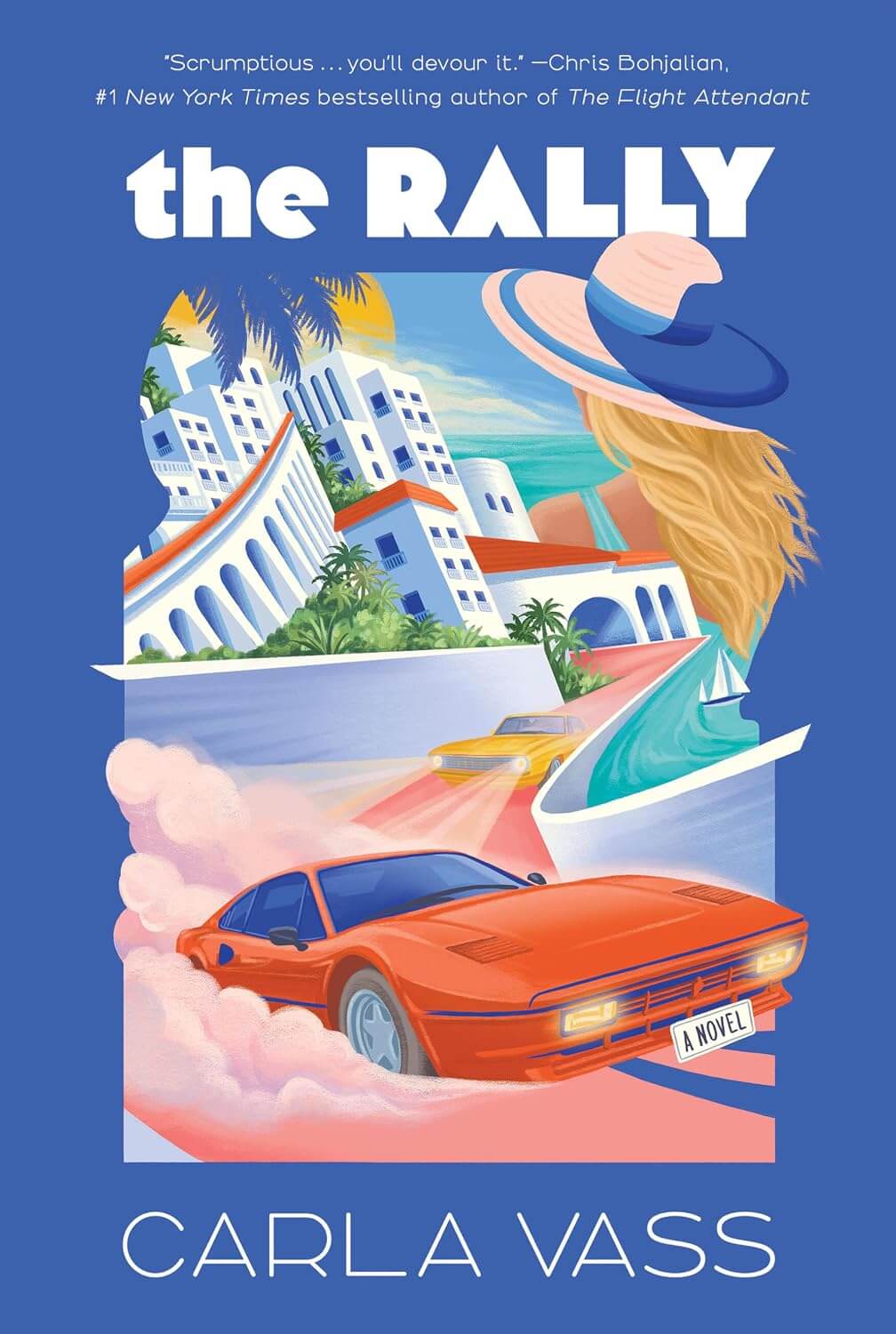 The Rally by Carla Vass
Despite her minimal dating experience, Charlotte “Charlie” Walker has spent the last four years of her life developing a dating app called flutter. When it launches, it is instantly successful. Charlie won’t be able to bask in her accomplishment for long. Rejecting her cofounder’s romantic advances leads to Charlie being pushed out of the company. Hoping to lift her spirits, she joins her best friend on the Rally–an expensive, hedonistic road trip full of fast cars, extravagant parties, and beautiful scenery. Once feeling out of place, Charlie begins to relax in the Rally’s freedom. Charlie is starting to feel better about herself, but realizes that no matter how fast you drive, you can’t avoid your past. She must face her former company’s, the aftermath of being ousted, buried secrets, and an surprising love interest that complicates things.
Buy the book now: Bookshop.org | Amazon













Leave A Comment