

Susan Wiggs is the author of more than fifty novels, including the beloved Lakeshore Chronicles series and the recent New York Times bestsellers The Lost and Found Bookshop, The Oysterville Sewing Circle, and Family Tree. Her award-winning books have been translated into two dozen languages. She lives with her husband on an island in Washington State’s Puget Sound.
Every writer knows the heady exhilaration of the first draft—that breathless sprint where characters come alive and the plot unspools in a glorious rush. But eventually, almost all of us encounter the dreaded mid-book doldrums. You hit chapter twenty, and suddenly, the narrative engine begins to sputter. The middle of the book sags, the stakes feel low, and tension evaporates.
When a story loses its grip, the instinct for many of us is to keep pushing forward, hoping a burst of inspiration or a sudden explosion in chapter thirty will inject life back into the manuscript. But, as my construction-expert husband says, “You can’t fix a foundation by building a higher roof.”
Maybe the solution isn’t to keep writing forward. Maybe it’s to look backward.
Suggestion: Try a Reverse Outline.
Unlike a traditional outline—your roadmap before you journey into the draft—a reverse outline is created after the draft is written, or underway. It’s a diagnostic tool that strips away the prose, the dialogue, and the description, focusing on structure: What happens? Whose point of view is it? What is the turning point? And most importantly, how does it move the overarching story forward?
When my narrative sags, it’s usually because I’m lost in the weeds. The structural complexity has overwhelmed the drama. One of my worst crimes is letting a subplot take up space without generating momentum. By creating a reverse outline, you can look at your manuscript from a bird’s-eye view, isolating the clunky parts of the plot.
Wayward Girls has a complex structure, spanning multiple characters and literally fifty years. The narrative relies on a dual-timeline, shifting from the intense, claustrophobic atmosphere of a real-life, Catholic-run reform school in 1968, and moving forward to the lingering mystery and psychological echoes in the present. The challenge is compounded by multiple point-of-view characters, secrets to be meted out to maximize dramatic tension, and historical subplots that run parallel to the main mystery.
With so many moving parts, a story like Wayward Girls could easily collapse under its own weight. If the past timeline stays in one place too long, the present-day momentum stalls. If a subplot fails to feed the central thematic question, it turns into dead air.
When editing a structurally ambitious book, you might need to pause and create a reverse outline, so you can track every thread independently to ensure that as the complexity increases, the tension doesn’t evaporate.
How to Build Your Reverse Outline
To diagnose your own manuscript, set aside your writer’s cap (or coffee cup or cocktail) and put on your editor’s goggles. Open a blank document (or a spreadsheet if—unlike me—you’re good at spreadsheets), and read through your draft scene by scene. For each scene, record the following points:
- Who is steering the narrative in this scene?
- Summarize the concrete events in one or two sentences. (e.g., “Mairin (the main character) makes a daring escape attempt from the Good Shepherd.)
- Record the turning point. Every scene needs to end in a different emotional or narrative place than where it began. What changes? What new information is revealed?
- Conflict and Stakes. What does the character want in this scene, and what goes wrong?
- The “Furthermore” Link. How does this scene connect to the next? Try this test: If I delete this scene, will it affect the story at all? This is a painful take on the common advice, “Kill your darlings.”
Once your reverse outline is complete, you’ll have a snapshot of your entire book.
Now, read through your notes, looking for the red flags:
The “And Then” Syndrome
Look closely at your narrative links. If the relationship between your scenes is something like “Scene A happens, and then Scene B happens, and then Scene C happens,” your structure is probably more episodic than not dramatic.
In a high-tension novel, scenes should be linked by causal events: “Scene A happens, and therefore Scene B must occur, but then an obstacle arises, and therefore Scene C happens.” If a subplot doesn’t force some kind of reaction or a consequence in the main plot, then you can probably do without it. Try cutting it, or weaving it into the story so it directly affects the central narrative or raises the stakes.
Timeline
If you’re writing a dual-timeline or multi-POV novel like Wayward Girls, look at the distribution of your chapters. The reader is probably reading to discover how the past and present collide. The trick is to keep her engaged in both storylines without pulling them away from the high-stakes question.
The prologue of Wayward Girls poses a dramatic question that doesn’t get answered until late in the book. I had to drop in reminders to make sure the reader knew what she was reading toward—without losing interest.
That outline you made might reveal places where something is given short shrift—or goes on too long.
Stakes
I’m often wary when my outline reveals a turning point where “They talk about the past” or “The character ponders her choices…” Often, it’s a scene where someone is driving, or having tea, or otherwise artificially pausing the narrative.
Sure, you need reflection and backstory to give the story depth, but beware of a succession of scenes that don’t lead to an external shift or a raising of the stakes for your protagonist. Every scene should cost your character something.
When the stakes escalate page by page, so does the tension.
Once you’ve dragged yourself through this admitted painful but revealing exercise, you’ll have a better understanding of how to take on the revisions. You no longer have to look at a 400-page manuscript with a sense of dread, wondering why it feels slow. Instead, you can address the process scene by scene.
Revisions are just that—an opportunity to re-imagine your story with clear eyes. By creating that reverse outline, you made yourself a map for moving forward. Stripping your story down to its bare bones is a humbling process, but it might transform that sagging first draft into a taut, page-turner that holds the reader captive from the first page to the last.
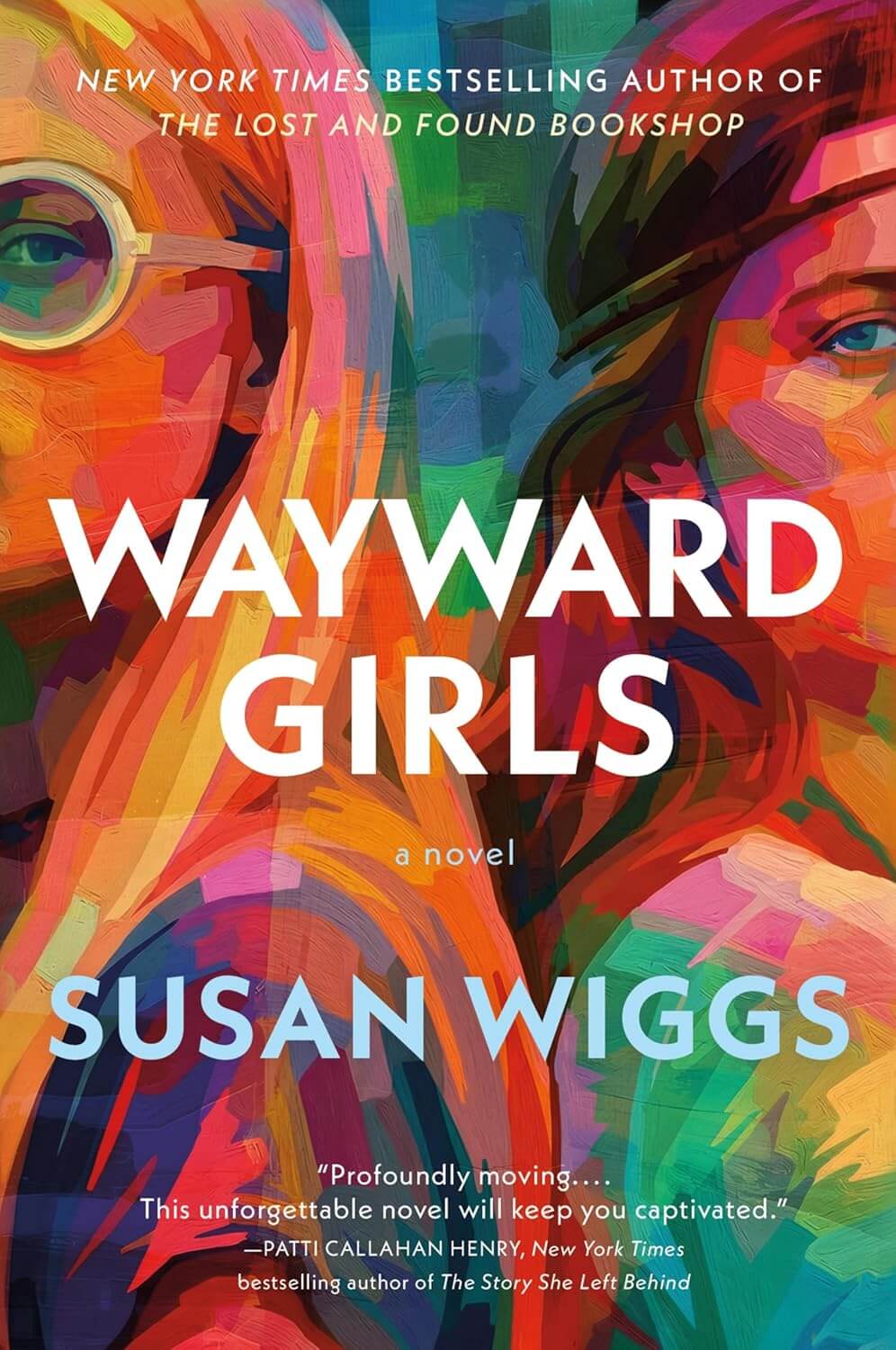
Wayward Girls by Susan Wiggs
In 1968, six teenage girls are confined to a brutal Catholic reform school in Buffalo for reasons ranging from pregnancy and being gay to simply being deemed “unruly.” As they endure forced labor and abuse, they forge powerful bonds of friendship and resilience, ultimately finding the courage to seek freedom, justice, and redemption.
Buy the book now: Bookshop.org | Amazon











Leave A Comment