

Rhys Bowen is the New York Times bestselling author of more than sixty novels, including Mrs. Endicott’s Splendid Adventure, The Rose Arbor, The Paris Assignment, Where the Sky Begins, The Venice Sketchbook, Above the Bay of Angels, The Victory Garden, The Tuscan Child, and In Farleigh Field, the winner of the Lefty Award for Best Historical Mystery Novel and the Agatha Award for Best Historical Novel. Bowen’s work has won sixteen honors to date, including multiple Agatha, Anthony, and Macavity Awards. Her books have been translated into many languages, and she has fans around the world, including more than seventy thousand Facebook followers. A transplanted Brit, Bowen divides her time between California and Arizona.
I had just turned in The Castle in the Glen, my latest historical novel set in 1965, when I received a note from the sensitivity editor. This was a new experience for me. The editor had gone through the manuscript and pointed out anything that might offend readers today. I was surprised, because there was no offensive language, racism or rape scenes.
The sensitivity editor noted the casual way that my female characters accepted being treated as sexual objects. When one of them is invited to a young man’s room because he claims he left a letter he had to mail and he immediately comes on to her, her friend comments, “Oh, not the old ‘I’ve forgotten something in my room’ trick! You can’t have been so naïve that you fell for that.”
My editor questioned whether the friend shouldn’t be more shocked. As it happens, I was one of those girls at that time, and unsolicited sexual advances were the norm. I worked for the BBC and a grope or a kiss was part of daily life. It was wrong then, as it is wrong now, but it was rarely acknowledged as such. Nevertheless, I revised the text to make the friend more sympathetic, while still trying to maintain the tone of the era.
Balancing past realities and current sensibilities is always a challenge when writing historical fiction. I want to be true to the bygone period, yet there are often aspects of those eras that would rightfully disturb a reader today. When I wrote Love and Death Among the Cheetahs, set in 1930s Kenya, I included a note warning readers of the shocking ways that white settlers treated the native Kenyans — but it was all true, and I didn’t want to soften it so much that readers wouldn’t be able to see the awful truth.
In The Last Mrs. Summers, set in nineteen thirties Cornwall, I included a character who behaves inappropriately with the girls who work in his home, as well as his young niece. My editor was concerned, but that was the reality of the early 20th century. Young maids were always in fear of the master of the house, who could easily discard them if they didn’t comply.
Readers of the Molly Murphy mystery series, set in the early nineteen hundreds in New York, have commented on the way Molly Murphy’s husband Daniel treats her. In fact, he was relatively modern in the way he treated his wife, as husbands at that time had absolute control over their families. Everything Molly brought to the marriage legally belonged to Daniel. If she tried to leave, he would have sole custody of their children. With just the opinion of one doctor, he could have her committed to a mental institution for life. He was legally entitled to beat her with a stick, albeit no thicker than his thumb. Et cetera. Daniel admonishes Molly when she takes risks he believes she should not. So he is, relatively, a modern husband.
It is always walking that fine line. There are things I would never do, even though I know my characters likely would. I tend to stay away from needless racism.
I know the disparaging ways that people speak about gay men up to this day. I try to avoid that too.
I also try to stay away from anything that I myself would find too painful to read. In my World War II novel, The Paris Assignment, my heroine is captured and tortured by the Nazis. I know what was really inflicted on those young women, but when I came to write it, I couldn’t.
The problem is that my aim is to take my reader back in time to a place for them to experience themselves, but like any responsible guide, I need to care for them along the way. I never want to write historical fiction in which the characters are anachronistically modern in their sensibilities and merely dressed up in the fashion of their time. I want to be honest and accurate and even gritty when necessary, while still ensuring that I’m speaking to my readers today. And that’s always a challenge.
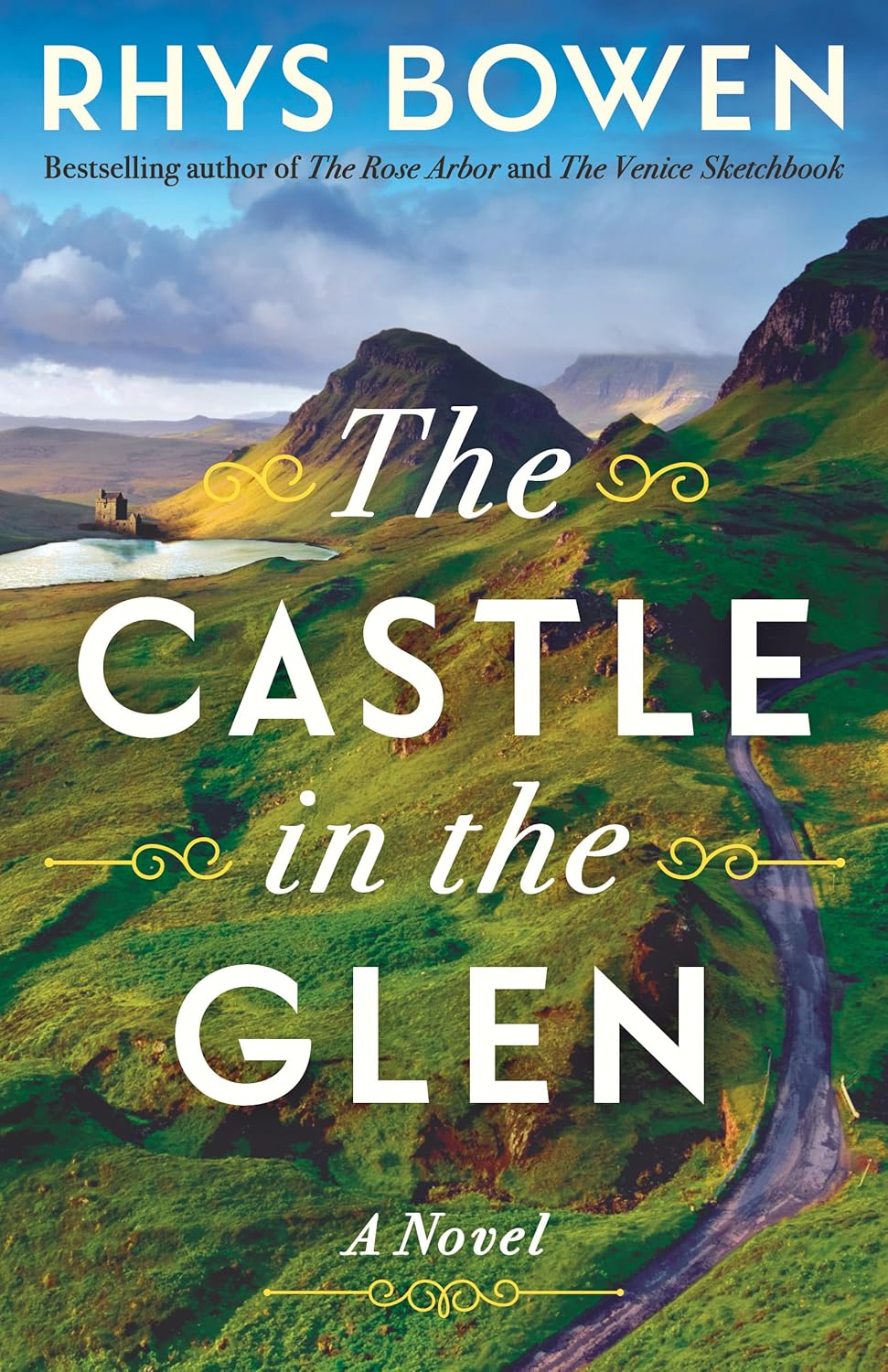
The Castle in the Glen by Rhys Bowen
In 1965, celebrated author Iris Blackburn is beginning to have memory issues so she enlists the help of Australian writer Emma Callander. Iris is confident that Emma will finish the last mystery in her series and do it well. Emma travels to Scotland to research but instead she finds out that the story she is researching for is not a fictional tale but an unsolved crime. In 1904, a couple drowned suspiciously and shortly after a local girl nicknamed the “Wild Girl” disappeared. With the help of Iris’s attractive lawyer, Emma investigates what really happened but she learns that aristocratic families will do anything to keep their secrets hidden.
Buy the book now: Bookshop.org | Amazon











Leave A Comment