
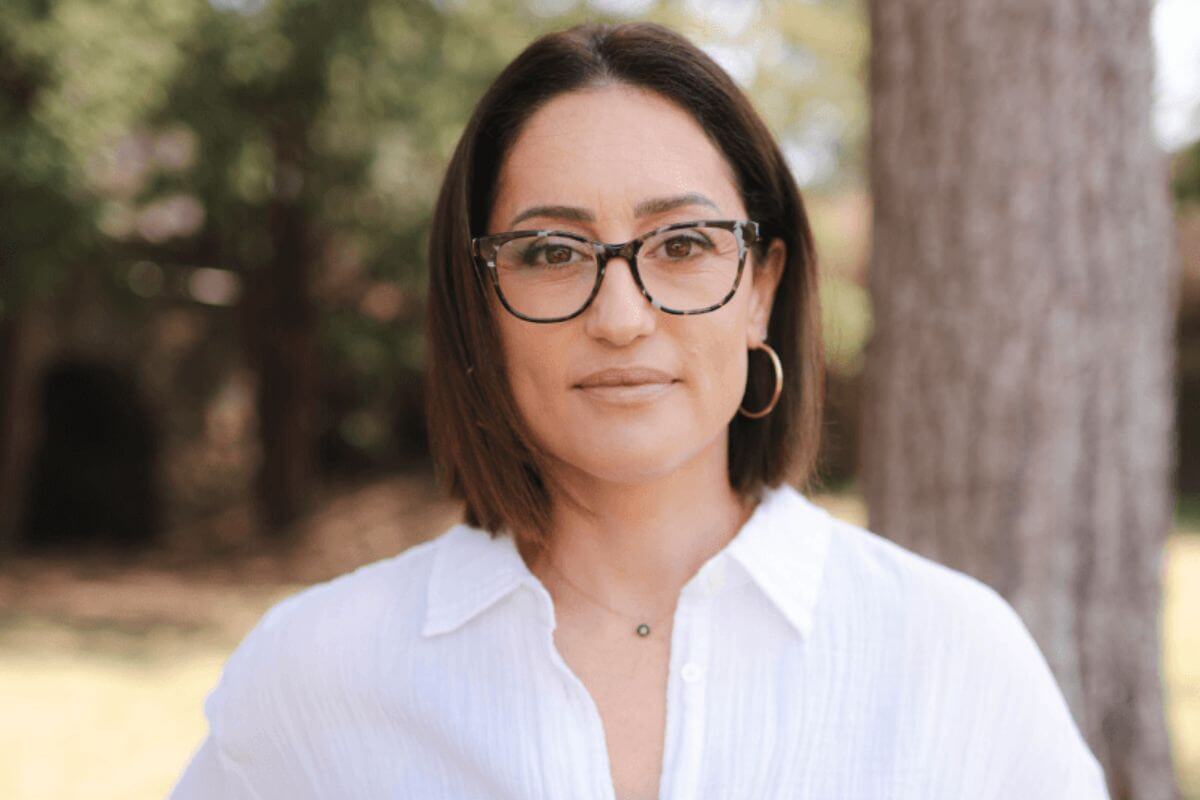
Lauren Wise is a book editor and publishing strategist who has guided hundreds of titles to publication across fiction, memoir, YA, and creative nonfiction. The founder of Midnight Editors and former associate publisher at She Writes Press, she’s spent 20+ years in journalism and book publishing. With bylines in VICE, LA Weekly, and Phoenix Magazine, she’s interviewed cultural icons ranging from Dolly Parton to Nicholas Sparks to Alice Cooper. In her mission to help educate indie authors, she serves on the IBPA’s Industry Advisory Committee and as an IBPA Book Awards judge. She lives in Arizona, where she wrangles desert critters, a toddler, and a paper allergy that doesn’t deter from her 700+ book collection.How to read your editor’s tracked changes without falling apart
You finished the book. You researched, found, and hired an editor. Then, you handed it over. And after weeks of waiting, the file finally lands back in your inbox.
Before you’ve read a single note, you see it: color everywhere. Red, blue, whatever your editor’s chosen “pen” color happens to be. There are strikethroughs running through sentences you labored over, so many track changes lines flaring to the right it looks like a laser light show, and a margin stacked with comment bubbles, each one a tiny flag planted in your prose. And somewhere in your chest, a quiet voice says, it’s worse than I thought.
But I want to stop you right there.
Hopefully, your editor was in touch with you throughout the editing process, and when they returned the manuscript, it came with an editorial letter offering encouragement, high-level feedback, and next steps for how you can process and begin revisions.
(Disclaimer: This is how I work with authors, because it’s easy to spiral once you open up the doc and see those track changes. Not all editors include this for line or copy edits, so maybe include a request for an editorial letter as part of your collaboration!)
But the number of marks on your manuscript is not a measure of how good your book is. It’s a measure of how closely someone read it. A page covered in changes doesn’t mean you failed. It means a professional sat with your words long enough to notice the comma that wandered, the paragraph that could land harder, the moment your voice briefly slipped. That’s attention your manuscript needed. And you paid for that attention. Your marked-up file is just what that attention looks like.
So before you spiral, let’s walk through how to actually open that file—and keep breathing.
Don’t read it the day it arrives
I know the temptation. The file comes in and you want to know right now how bad it is. But try to resist that.
Edits hit hardest in the first hour, when the book is still fused to your sense of self. So first, read any general feedback from the editor or the editorial letter. Then just give yourself a day. Make some tea, take that walk. Let your nervous system understand that nothing in that document is an emergency.
You may have anxiously waited for your editor to return it, but now is the time to have that patience. You’re officially stepping into the next part of your writing and publishing journey. The edits will read completely differently to a rested, curious version of you tomorrow than to the version refreshing her inbox at 4:30 p.m. on the due date your editor promised.
Do a first pass where you change nothing
When you do open it, resist the urge to start fixing. Just scroll.
Read the whole thing once, top to bottom, with your hands off the keyboard. You’re not deciding anything yet—you’re just getting the lay of the land. Where are the marks clustered? Where are whole stretches clean? What’s the editor actually responding to?
Almost always, this first pass deflates the panic. The “sea of red” turns out to be seventy percent small mechanical fixes—commas, hyphens, a repeated word—and a handful of real conversations. Depending on the type of edit, there may be questions for clarity, positive exclamations (I’m a big fan of calling out great imagery and dialogue), or suggestions for cuts. You can’t see that ratio when you’re reacting to every mark as it appears, but you can see it when you read for shape first.
Hide the tracked changes and read it clean
If there’s one practical thing I can give you, it’s this, and many writers I talk to somehow don’t know it exists.
In Word, your view of tracked changes is a setting you control. If “All Markup” is overwhelming you—if the strikethroughs and underlines are making the page feel like a crime scene—switch the view to No Markup or Simple Markup (it’s in the Review tab). The changes are all still there, untouched. You’re just choosing to see the clean, finished version instead of every revision at once.
Read the polished draft that way. Let yourself feel how good the book reads with the edits accepted. Then switch back to All Markup and go through them properly. Toggling between “here’s the mess” and “here’s the result” is the single fastest way to stop reading edits as damage and start reading them as improvement.
Look at marks as a question—and feel free to answer
Shift your mindset about the tracked changes. A lot of tracked changes can feel like a verdict—this is wrong, you got it wrong. It isn’t. With every mark is your editor asking a question:
• A positive call-out lets you know what to lean into more, Great show vs tell with this scene! Or This foreshadowing is strong; pepper a few more in the coming chapters
• A deleted word or sentence is asking, Do you need this? It the point still coming across without it?
• A reordered sentence is asking, Does it land harder this way?
• Comments in the margin help strengthen your writing by asking, What did you mean here? Or The reader should know this earlier/later Or Removing these 3 dialogue tags will make this conversation stronger
You are allowed to answer these sometimes-invisible questions. Sometimes the answer is yes, and you accept the change and move on. Sometimes the answer is no, I meant exactly what I wrote—and you reject it, or you reply in the margin and explain why. A good editor is not waiting for total obedience; she’s waiting for your half of the conversation.
Accept the easy eighty percent first
Momentum is a real thing, and you can use it.
Go through and accept all the small stuff first: the punctuation, the spacing, the obvious typo fixes, the changes you don’t even have feelings about. Batch them. Watch the document get visibly cleaner and the mark count drop. By the time you reach the changes that actually require thought, you’re not staring down two hundred marks anymore. You’re looking at the twenty or thirty that matter, with a calmer head and a tidier page.
If there are ones that sting, save those for last, when they’re all that’s left and they’re easier to see clearly.
Sit with the ones that hurt—then decide
Speaking of edits or comments that may sting, there are some notes that WILL catch you. Think a whole scene questioned, a line you loved, gone, or a comment that names the exact weakness you fear as a writer.
Just remember that the sting is information, sometimes education. While it can mean the editor found something true, it’s not meant to be personally hurtful. And not always—but sometimes it means they misread you, and that’s worth saying out loud in a reply. If an editor felt confused while reading, that calls for some action the writer’s end to figure out why.
However, give the hard notes a beat before you defend against them. Ask yourself honestly: is this uncomfortable because it’s wrong, or because it’s right?
You get to keep what’s essential to you. Voice is not a typo to be corrected, and any editor worth working with knows the difference between fixing your prose and flattening it. But you owe the hard notes a real read before you wave them off.
The marks are never the measure
Once you reach the end of your review—accepting, rejecting, answering editor queries—it’s okay to feel a little drained. But the hope is that you’ll soon feel motivated and strong, if you don’t already. Look back at how far the document came, not at how marked-up it started.
Your editor did not cover your pages in changes because your book was a disappointment. She did it because she took your work seriously enough to touch every line of it. That’s the story of a manuscript getting close, careful attention, not the story of a writer who fell short.
So open the file, take the day, read for shape, toggle the view, turn each mark into a question, and answer in your own voice.
The relationship between editor and writer is a collaboration, a conversation. And the writers who come through edits strongest are the ones who engage with everything.












Leave A Comment