
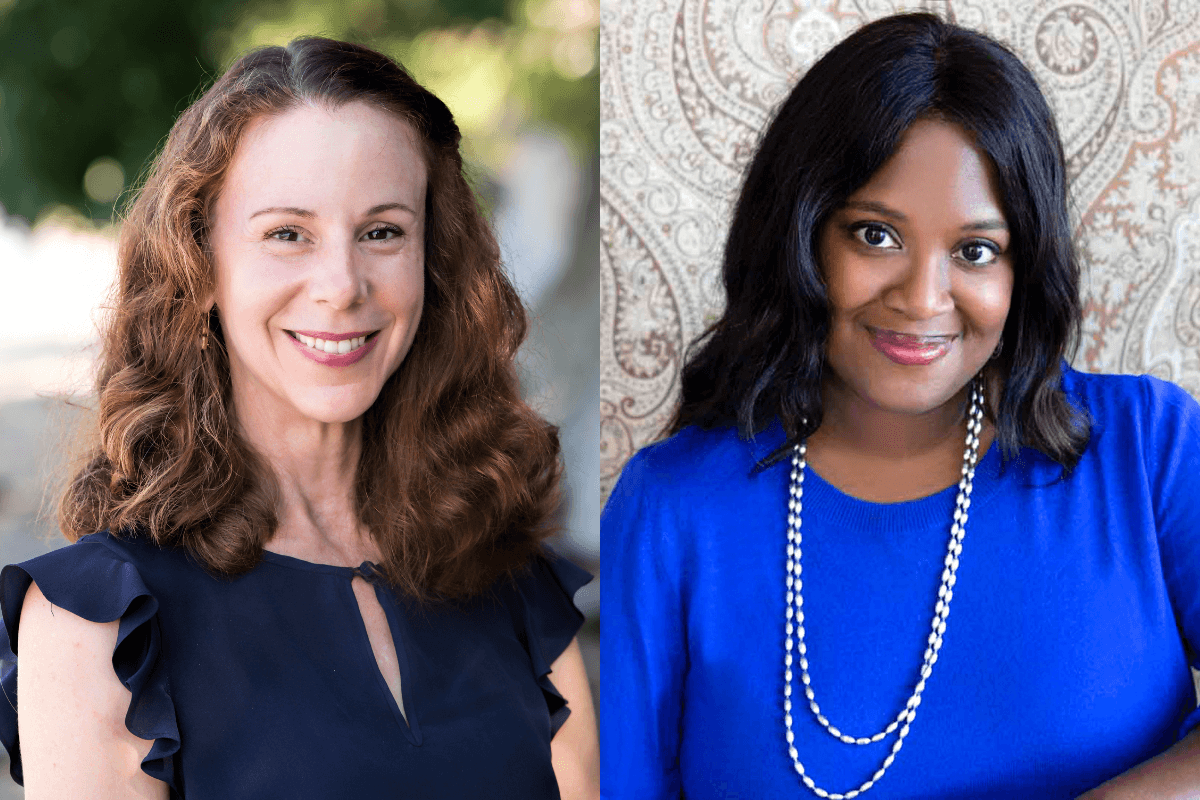
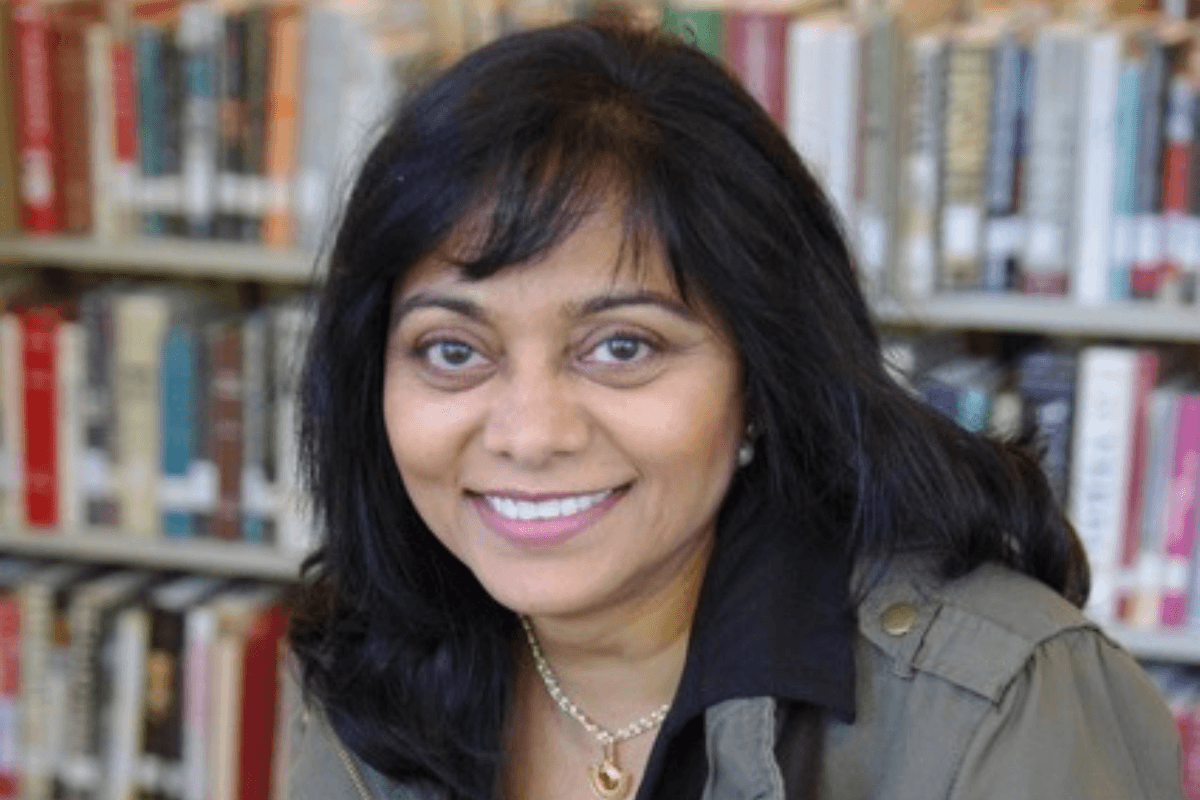
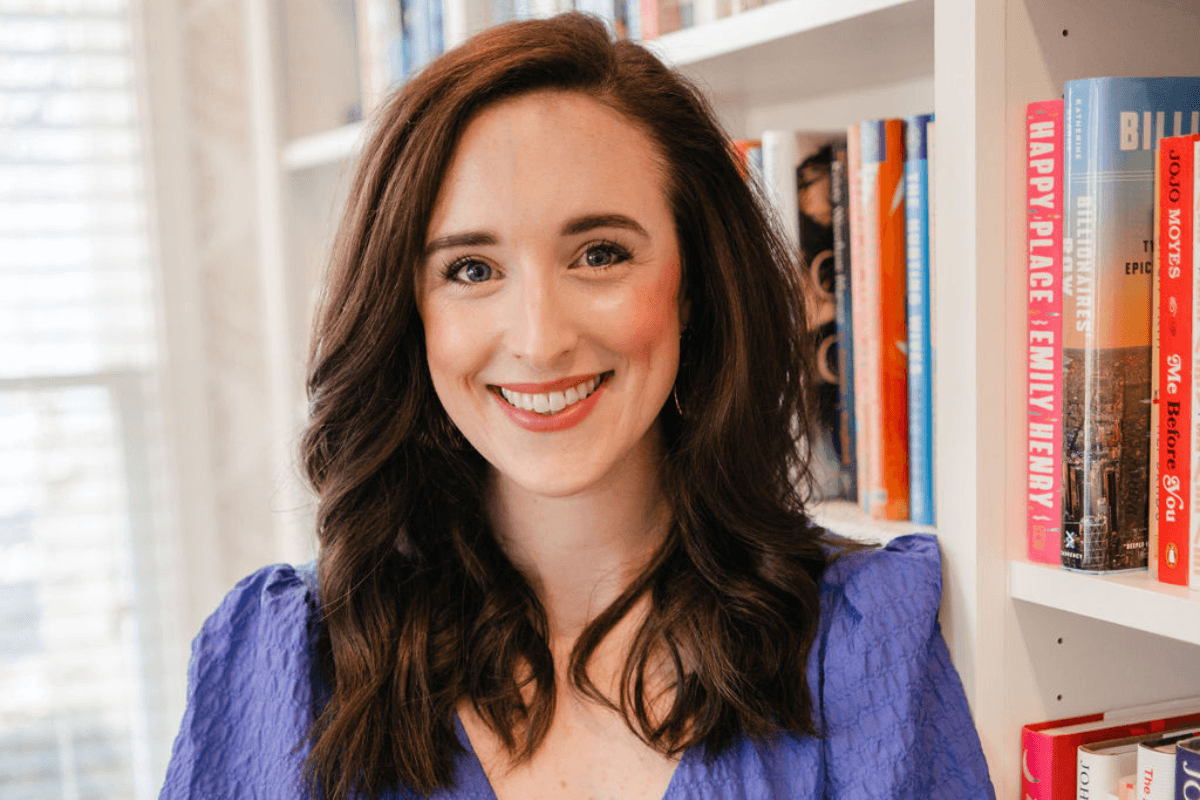
Alyson Richman graduated from Wellesley College with a degree in art history and Japanese studies. She is an accomplished painter and her novels combine her deep love of art, historical research, and travel. Alyson’s novels have been published in 25 languages and have reached the bestseller lists both in the United States and abroad. She lives on Long Island with her husband and two children, where she is currently at work on her next novel.
Shaunna J. Edwards graduated from Harvard-Radcliffe College with a degree in English & American Literature. She received her JD from New York University School of Law. A former corporate lawyer, she now works in talent management for an international law firm. She is a native Louisianian, raised in New Orleans, and currently lives in Harlem with her husband and her son.
We’re writing this piece on Juneteenth – our fifth anniversary. To be clear, Alyson and I are both happily married to two different thoughtful, opinionated, men. But five years ago today, we embarked on a writing partnership that we hope and expect will extend for years to come.
The traditional gift for a fifth anniversary is wood, symbolizing deep roots, stability and continued growth. Our roots run deep. Like the best partnerships, we started as friends 20 years ago at a serendipitous meeting in Las Vegas. What started as Shaunna fan-girling over a “real life” author has yielded a powerful collaboration. Books have been the foundation of our friendship and that conversation was our first glimpse at the synergy we could harness to create a powerful creative project together. In 2022, we published The Thread Collectors (Harper Collins), a Civil War novel that traces the interconnected fates of a Black couple and Jewish couple and is inspired by our own family histories. However, the seeds of inspiration were planted years earlier in 2016.
Alyson had just seen Ric Burns’s incredible documentary: Death and the Civil War and had an idea for a novel after learning that during the Civil War, soldiers sometimes created maps to mark where they’d buried their fellow soldiers. The documentary also spotlighted the injustice that the Black soldiers who had enlisted endured, often being relegated to menial labor rather than being able to take up arms to join the fight for freedom. Alyson immediately had a vision of a Black soldier who creates a map to guide the family of a White comrade back to his gravesite, and how their lives would be connected by that map. While Shaunna was intrigued by the idea of the map, she highlighted that it would be unlikely that a Black Union soldier who had been enslaved would create a traditional written one – it would have to be sketched. Drawing from her own history, she suggested that the Black soldier could give the map to his beloved and she could recreate it by embroidering it onto cloth.
We didn’t know it then, but our exchange of ideas embodied the fundamental rule of co-creation: you have to feel like two voices are better than one for the story you are trying to create.
As an established author, Alyson immediately recognized that the narrative became more layered by Shaunna’s additions. Melding our two perspectives allowed us to create a palimpsest of our respective families, people and a shared vision of creating hope in a complicated world. That unity set the tone for how we would embark on the technical aspects of our writing. There are great co-authored works in which writers took sole responsibility for certain characters of chapters (check out Alyson’s great collaborative work The Friday Night Club!). Many readers of The Thread Collectors assume that Shaunna took the lead on all of the Black characters and Alyson took the lead on the Jewish characters. However, we decided our first session that we would write each character, plot twist and chapter together, reinforcing our message of focusing on what unifies us, rather than what divides us.
Writing is typically a solitary task, so the first obstacle we had to overcome was how two people would work as seamlessly as possible. Google docs became our go-to tool, allowing us to work both together in real time and also leave notes to each other, whether questioning a word choice or inviting a deeper conversation about a chapter’s direction. We also knew that for our writing partnership to be stable, we needed to navigate our preferred writing style at the outset; many successful writers thrive on getting all of their ideas out on the page. That’s not us! Alyson and I discovered that we are similarly perfectionistic, preferring to polish and refine our chapters before moving on, while still leaving room for character development and serendipity. (Our perfectionistic tendencies are probably fodder for some “couples therapy,” but so far it’s served us well.)
We consider ourselves lucky – we find that a collaborative project makes one a better writer and teaches one about oneself. We have different, complementary skills that make our work stronger. Alyson is a scene-setting, lyrical artist, able to deftly transport readers into an historical era. Shaunna has an ear for dialogue and can untangle any knotty plot problem. As a nascent writer, Shaunna admits that the benefits of co-authorship have been invaluable. Getting the story on the page is only the first of many steps in the daunting journey to becoming published: having Alyson as a guide eased her path. From understanding the editorial process, to discarding dozens of potential book titles, to the delicate task of crafting a book cover, what could have been nerve-wracking became moments of apprenticeship, laughter, and compromise. (And we know everyone is wondering ⸺ Alyson’s agent graciously agreed to take Shaunna on.)
Naturally, a partnership also has potential conflict, those moments in which you find that you view the world through a different lens. We made an early pact that we’d be willing to speak the truth to each other. This is paramount as we write about challenging subjects, including race, religion and building bridges across differences. We have challenged each other to listen with trust that we both want the same thing: to craft a beautiful and impactful novel. There are moments when the same word lands differently, innocuously to one of us and perpetuating stereotypes for the other. We look at each other and silently agree to “shut up and listen”. These points of artistic tension are where we feel ourselves growing as authors and friends.
It has been a special journey and we’re now embarking on another collaboration. It seems that the stories that can benefit from our shared voice now find us. We stumbled upon the little-known history that Louis Armstrong’s musical talent was nurtured by a family of Lithuanian Jewish immigrants in New Orleans. We’re hard at work on a new novel that charts Louis’ relationship with his two matriarchal influences – his birth mother Mayann Albert and Tillie Karnofsky. Like our first project, we hope to bring a new lens to the question of how we find commonality in creativity. We can’t wait to share it with our readers!


Leave A Comment