
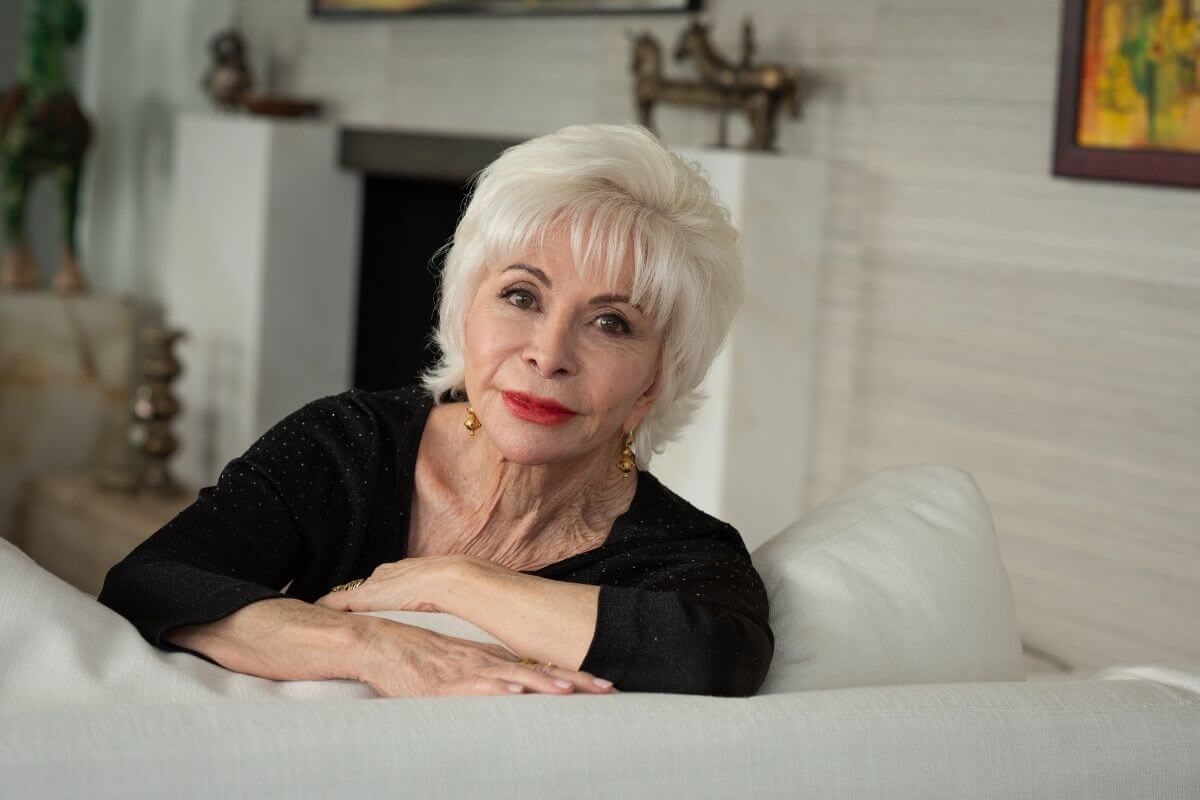
Isabel Allende is a pioneer in not only Latin American literature, but for all women telling stories. Though she wouldn’t take full credit for any of that, this humble and headstrong author has built a lasting career based solely on her drive to tell the next story that calls. But she doesn’t get too magical about her commitment to the craft, this labor of love is something she shows up to over and over again. Allende sat down with She Writes to discuss her decades-long career, her relationship with legacy, and how she sort of fell into her latest release, Story Telling, a memoir that reflects on her life as an author. This interview is packed with everyday wisdom about writing, life and publishing that authors at all stages of their career will want to absorb.
She Writes: After an amazing 40+ year career, what inspired you to write Story Telling now? How do you view storytelling?
Isabel Allende: [Story Telling] wasn’t my idea at all. I would have never thought of it. But the BBC has a thing called MasterClass, and they came to my office, and we filmed 21 lessons about writing, and the class was called magical storytelling. And it was a huge effort. I didn’t have to prepare anything, because they would just sit me in a chair, with the same clothes, the same hair, do the same light, so that it would appear like one take, but it was really a week of hard work, and they would ask you questions.
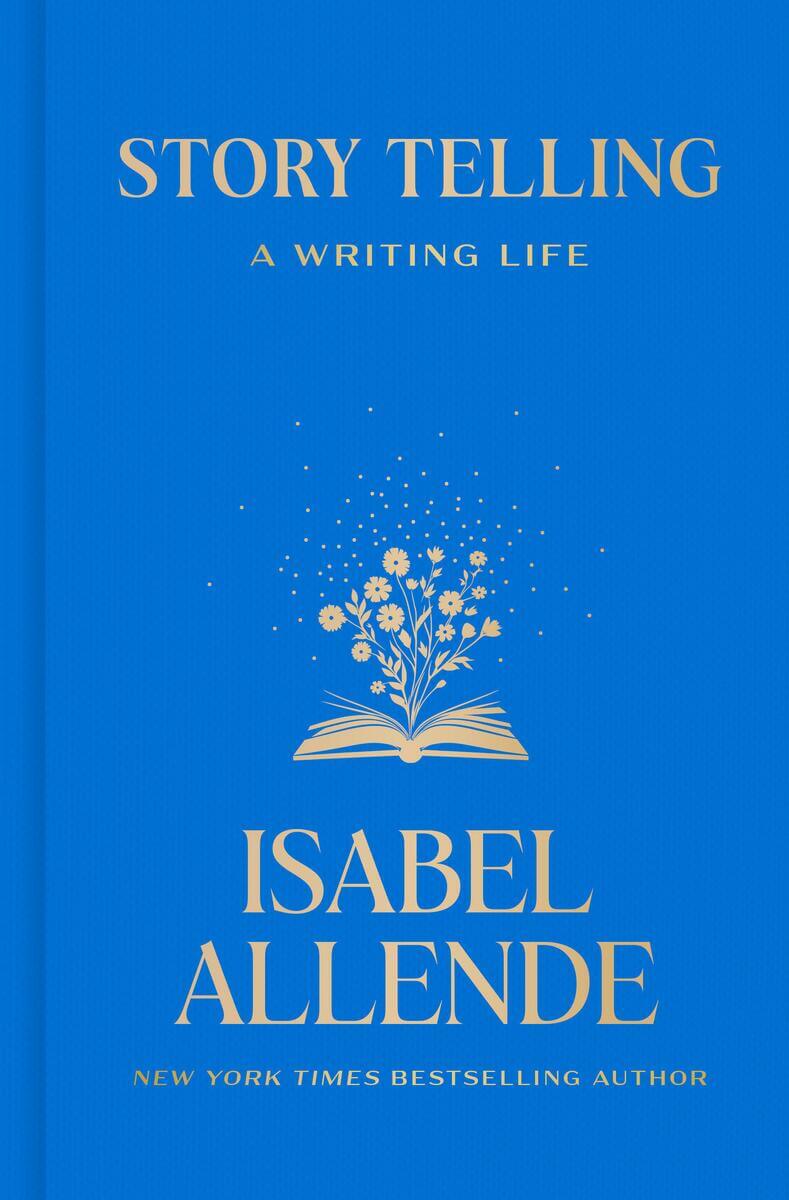
Buy the book now: Bookshop.org | Amazon
For example, how do you develop a character? And I would talk for 45 minutes, and then there would be another question, and so forth. So when I finished this, I thought, this is what I have learned in all my life. This material is mine. It’s my copyright. I should write a book with all these lessons. So, there was a huge fight about the copyright, but then, I realized that I couldn’t use that material because they have a manual. So they do the class, but every class has a booklet. So everything was there.
What could I say?
And then I started thinking about the philosophy or the experience of my writing, not as a class, but more like a memoir. And that’s how this book came to be.
And so you asked me, What is Story Telling for me? One thing is writing, and I think you can teach writing, like you can teach basic music to almost everybody. But storytelling you have to have an ear, for what is interesting, for the highlights, the low lights, the tension.
It’s like some people have talent to tell a joke. And I know the joke. I can repeat the joke, but it will not be funny because I don’t have that thing, you know, that a person who tells jokes has.
She Writes: Would you say that this is about how you do it personally or how writers can foster that ability to develop that ear?
Isabel Allende: I’m not trying to say that everybody can do it. I’m just telling what my experience has been. And maybe some people will connect to that experience, but that was not the intention, the intention of the book was not to teach anybody about storytelling or writing. It was to tell people just do it. To lose the fear. We are all afraid of failure. If you’re afraid of failure, you don’t, you get nothing down. You can always correct a bad page, but not a blank page. So just do it.
She Writes: What do you understand about storytelling now that your younger self didn’t understand?
Isabel Allende: That I can do it. It took me many, many books and years to have the confidence that the stories don’t come to me, like gifts from the beyond. I create the story. But I know now that with enough work, if I stay with the story long enough, I will be able to write it.
I didn’t know that for years and years and many books. Still today, when I confront the first page—I start on my books on January 8th—so January 8th, when I start, I come always insecure. I always feel that maybe this time I won’t be able to do it. Maybe this is not the right story. Maybe this story is stupid. Or whatever. Two, three weeks of uncertainty until I, I remind myself, you can do it. You’ve done it before. You’ve done it 30 times before. You can do it.
But it takes a very long time. And I’m telling you, things happen, and then you lose the confidence immediately. And that, oh my lord, it’s so easy to lose confidence, even if you have been writing for 45 years.
She Writes: Is there a particular moment in your career that really stands out, either as a turning point or, a place where you really learned something and it changed the trajectory of your career?
Isabel Allende: It didn’t change the trajectory of my career, but it taught me a huge lesson. After my daughter died, I wrote a book, a memoir about her death and about life. And then I couldn’t write for three years. I was stuck in a sort of void, with the idea that I would never be able to write again, that, that was the end.
But I learned an important lesson. First, Anne Lamotte actually told me “There’s no such a thing as a writer’s block. Your reservoirs are empty. Fill them up.”
And how do you fill them up? You get out of your comfort zone. You experience new things, you take risks. I went to India, and that sort of shook me out of my grief and mourning. Because it’s such a different experience from everything else. And the other thing I learned is that I am a journalist by training. So if you give me a subject and enough time to research, I can write about almost anything. So I gave myself a subject that would be as removed from grief and sorrow and death and mourning as possible. And I wrote a nonfiction book, as I would have done it if I was still a journalist.
So that was a huge lesson. I know that now that being stuck means that you are obsessed with one formula, one idea. You have to get out. Get out of your mind, get out of your comfort zone, try something else. And for me, it’s non-fiction. If I do, nonfiction gets me back into the writing, without the stress of inventing a story.
She Writes: Thank you so much for sharing that. I’m so sorry for the loss of your daughter, but that’s really beautiful advice. Thank you.
Was there ever a mistake that taught you more than success could have?
Isabel Allende: No, because, I’ve learned from all the mistakes I’ve made, I think I’ve learned enough not to repeat them, but I always come up with new mistakes. But I’ve learned to see them. Before I didn’t, and now I’m more critical, I know more, I have more experience. So I know when something is not working.
One thing that I’ve learned from my mistakes is that sometimes I cling to something. A scene, let’s say. Or a characteristic of a character. And I cling to it because I think, oh, this is interesting. And then I write it, and it doesn’t work. And I read it again, and it doesn’t work. And for the third time, the third time I let it go, and I skip to something else, and then I go back after some time, and if it still doesn’t work, it shouldn’t be there.
She Writes: How would you say you balance discipline with creativity? Do you have a very structured writing routine? Has that changed with time?
Isabel Allende: It has changed because before, I had to make a living. So I had another job. Then, when I had, like, 4 books, I was able to quit my day job, and have time to write. But I had kids, and I had a life, and then I immigrated to the United States, and it was a very complicated situation. But now, I’m old. I don’t have to take care of my parents. They died. I don’t have to take care of my grandchildren. They are adults and they live. So I have free time, and I have more space in my head and more space in my life to write in a much more comfortable way.
Before, I had to be very strict with my schedule. I didn’t work at home, so that would force me to keep the schedule. I start all my books, as I said, on a certain date. And then I write every day, and I would go to my office and stay those hours writing. And nothing would interrupt. But now that I have more space and time. I write at home. And I can be writing 10 hours a day and I don’t even notice it because I get up, I make tea or whatever, which I didn’t before. So now it has changed. It’s more relaxed. But I still work many hours a day. Every day, except usually Sunday, because Saturday is a day of chores, but my husband exercises and has things to do, so I write.
She Writes: May I ask why you start a book on the same day every year?
Isabel Allende: Discipline, discipline. You can always procrastinate and say, no, I have to go to the dentist or I have this or I have that. And you move the date and then it doesn’t happen. And then a month goes by and you haven’t done it. So having a day to start means that no matter what, by January 7th, you have cleared your life, your calendar, your desk, and you are there with your text. And let’s see what comes out of the keyboard.
She Writes: Did something make you choose that particular date, or is that just where it started?
Isabel Allende: I started my first book on that day (January 8th). I was working in a school. I was administering school, working 12 hours a day. And [that date], that’s vacation, you know, it’s the holidays. So, I wasn’t working that week in particular. And we got a phone call from Chile that my grandfather was dying. I was living in exile in Venezuela. And I started a letter for my grandfather that became my first book.
I could only write at night. I would come home at 7 o’clock and have dinner with the kids, they would go to watch TV in the living room. We lived in an apartment. And I would lock myself in the kitchen and write until I couldn’t write anymore because I was exhausted. But I would do that every night around the weekends. The main holidays that kids have in school.
She Writes: I think it’s so beautiful to see how it started for you and that it is a labor of love that you have to show up for.
Isabel Allende: Oh, you have to show up. That’s the first thing. Show up in front of your screen or your blank page. And even if you’re not inspired, even if you’re going to throw in the trash, whatever you do today, it’s all training.
That means that it was necessary to do it today, so that tomorrow, you will be better. You will have learned something, something will happen tomorrow, or the day after tomorrow.
I think a lot of new writers or aspiring writers are stuck on the idea that they’re kind of waiting for the perfect moment to show up and it’s just about you showing up.
And as I say also, there is no room of your own. If you want to be perfectly comfortable writing, to have the room of your own and silence and your cup of coffee and everything, it doesn’t happen, especially if you’re a woman.
So the room of your own is in your head. And it’s a space that you have created for yourself and for your writing, that is sacred. And it can happen anywhere. I wrote a collection of short stories, the stories of Eva Luna. I didn’t have a place, [I wrote] in cars, in coffee shops, in a park, in the storage room of an office, anywhere, it didn’t matter. And I didn’t have a computer. I wrote by hand on yellow pads.
She Writes: You write across multiple genres. Do you change genres in an effort to sustain creativity or do you have a story come in and then the genre starts to fill itself?
Isabel Allende: It depends on the story. I think that very few times I have had an idea of the genre before I came up with a story, and that was when I wrote a trilogy for young adults. I had never done that before, but I researched what kids like, or young adults. I also talked to editors, and I interviewed innumerable kids. I conducted a sort of course in a bookstore with kids, inviting the kids in to see what they like. And I found out that boys and girls, like fantasy, until puberty, and then girls, like, real stories, stories that they can connect with the protagonists, with the problems they have, of being bullied or not being accepted or boyfriends. But boys don’t care about any of that. They go from fantasy to science fiction, and from science fiction, to the stock market. They never land in real life.
So I have to combine these 2 things and create the stories. So in that, in that sense, the, the, the genre determined what story I was going to write. The other time was when I decided to write a crime novel. And also, again, it’s a job. You have to create suspense, you have to plant the red herrings, all the clues. It’s a formula. And I had to stick to that formula.
And then the other time was because I was asked to write a book about Zorro. And so they’ve done everything with him. They’ve done movies, miniseries, costumes, you name it. But they didn’t have a literary work of art. And so they wanted me to write it because I had written about California. I have a Spanish background. I had written an adventure for kids, so they wanted me to do it. And then I had to, sort of, create an outline, and that determined much of thestory.
But otherwise, the story… The story forces you into one thing or another.
She Writes: Do you have a preferred genre and also a genre that when the idea comes and you know you have to write in it, you are challenged by that?
Isabel Allende: The genre I like the most is historical novels. If I can place it in some other time, in another place, and there is an event, that gives me half the book. I research and research and research, and then I get, I have the, the foundation. And I can move my characters. in that foundation. It’s limiting because you have to stick to the facts and do the research, but it gives you a lot of help, in a way. And the genre I like that scares me the most is memoirs. Uh, that scares me, because it’s not only about me, it’s people around me also. And then, again, you have to stick to the facts, but all along knowing that it’s your point of view. It’s not… facts at random. It’s how I see things, and it may be that someone who was there with me at that time sees it in a completely different way. Or might be offended by something, I say. It’s terrifying. And then you have to put out your own life, your intimacy, your private thoughts, everything.
She Writes: Could you talk a little bit about what your publishing journey has looked like?
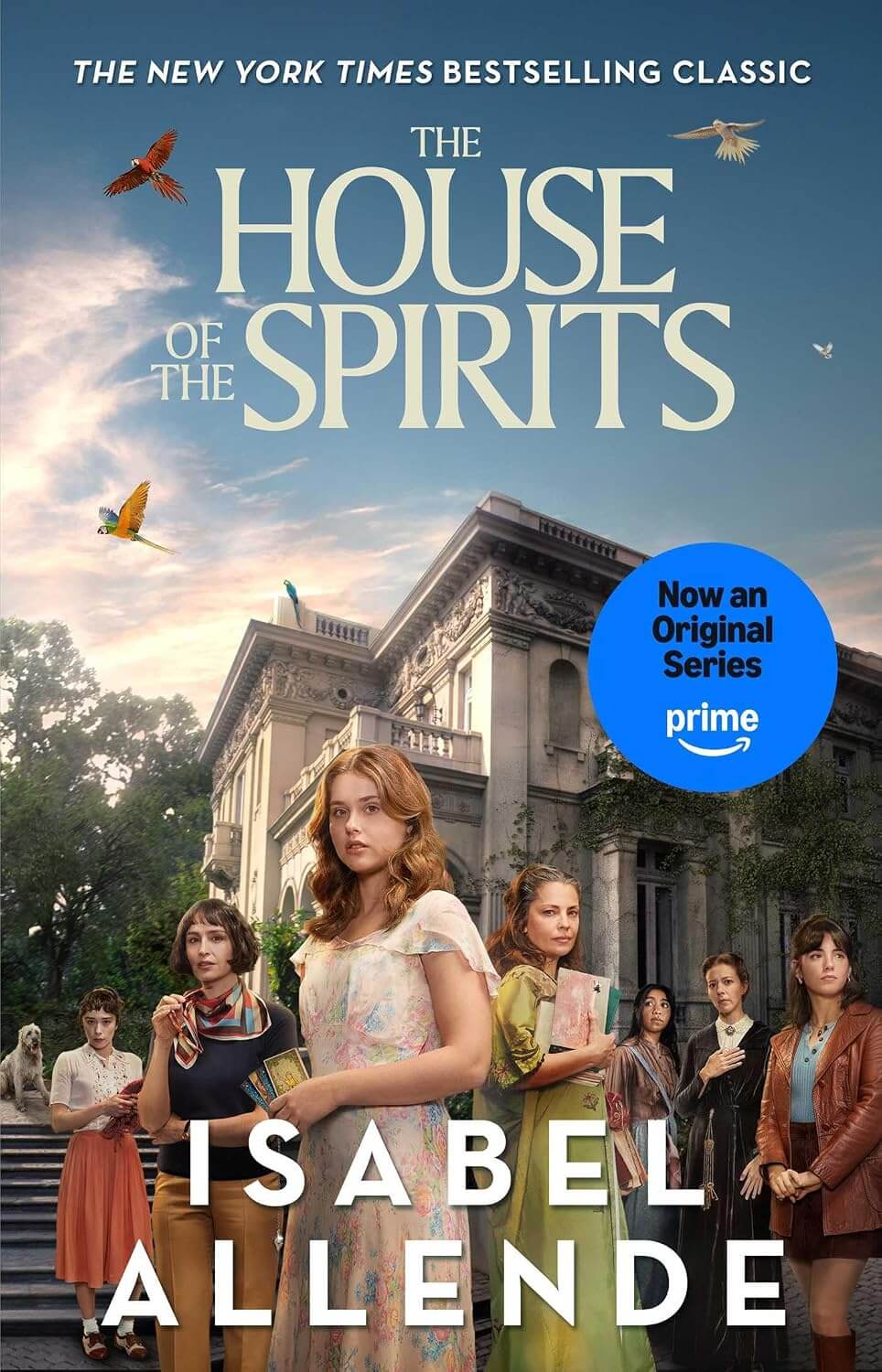
Isabel Allende: I was very lucky. Imagine I published The House of the Spirits 45 years ago. The book industry, especially in Latin America, in the Spanish language, was very different from what it is today. First of all, no one paid any attention to women. So there was a boom of Latin American literature, not one woman in that boom of men. And women were not respected as creators or writers or anything except you could be a dancer, but not a choreographer. You could be a pianist, but not a composer, or a conductor. All those limitations I faced when I started, though they don’t exist anymore, or they have mellowed down a lot.
But in my career, I would have never been able to publish my first book without an agent. And it was the best agent for Spanish writing. So that helped me a lot. I became the first internationally known writer in the Spanish language that was competing with all the men. And actually, I ended up selling many more books than they did. So that opened the door for other women because the publishers realized that there was a market out there. More women than men buy fiction. And read fiction. So they were waiting for these women writers. And so now there is a boom of women writers. Not that I created it, but that helped open the door.
So things have changed since then. But once my books became well known, published in many languages, many books in the market, then things became much easier. But the best advice I’ve heard about publishing, I heard it from Elizabeth Gilbert. She was on stage, and she said, somebody asked a question in the audience, and she said, “Don’t expect your writing to give you fame or money. Write because you love the process.” And I would add, don’t even expect to be published. Write because you love the process, and then we will see. But if you are writing to please the market, unless it’s romance or fantasy, but let’s say literature, if you want to please the market, you are not going to do that. It’s not going to work.
It depends on the circumstances, the world changes suddenly. Say you’ve written a novel about Haiti that nobody would read. And then the earthquake hits, there’s an international crisis about Haiti, and then it becomes news and suddenly your book has some interest that maybe it would not have had without all that. And that’s why you just keep writing, because it could be a book you wrote a decade ago that all of a sudden has relevant.
Don’t think that you’re going to write a bestseller. I get, as you can imagine, hundreds of emails every week, and among them, many people say, “I want to write a bestseller”, I say, huh, doesn’t work that way. Write a book, and then, maybe, it will happen, most probably not. And they write three sentences. And they want me to read them and see if it has potential. First of all, I don’t read them. But three lines potential? Finish 500 pages, and then we talk.
She Writes: Is there a book that you think every writer should read?
Isabel Allende: Not for writing. There are books that have helped me in my life a lot. Books about feminism, books about that kind of stuff. But for writing, I have never taken a class. I have never belonged to a workshop. I have never had a teacher or a mentor. I have not had one writer that I have followed closely. I have read almost all the books written by all the writers of the Latin American boom, between the 60s and the 80s. And I think they taught me a lot, but I wasn’t consciously trying to learn from them because I wasn’t a writer. I was not. And I wasn’t even imagining that I would become a writer. But they gave me a love of language, an idea of Latin America, an idea that dimensions of reality are beyond the reality that we perceive.
Many of the books I have read in my life have influenced me in that way. I remember, I was very young, 14-years-old, when I read One Thousand and One Nights and it’s a fantasy book about the senses. So it’s storytelling first, but it’s color, smells, the fruit in the market, the adventure of the thief that climbs the balcony to sleep with the odalisk. You know, it’s a combination of sensuality and fantasy. And I read it very young, and I think that in many ways, to this day, it has impacted me.
She Writes: Okay, so for our last question here, I wanted to ask you about legacy and how you feel about legacy in general and what your books represent in terms of your legacy and what you hope to be remembered for?
Isabel Allende: I don’t believe in legacy.
You know, that’s a very male thing. The idea that they can transcend, that they want a study of themselves, their names to be remembered. They want to control from the beyond, their name, their story, their family, their money, whatever it is.
Women are much more practical and rational, and we know that with death, everything ends. And if we are [remembered], I don’t know if it’s luck or not, we will be remembered, by our children, and maybe a little bit by our grandchildren, depending on the person and the connection. But that’s it. So I will die, and nothing of me will be left, and the books will disappear. How many books survive the passage of time? Very few. And for how long? So even if my books are remembered by 10 years after I’m dead, that’s it. They will end up in the trash, no matter what.
So, I don’t care about that at all.
However, my agent and my son, think that there is a legacy because I have accumulated so much stuff. I mean, we have an old Victorian house where the office and the foundation are. And it has a huge double garage that is full of first editions of manuscripts and the 24,000 letters my mother and I exchanged. The correspondence of all that is there. So, an agent who specializes in legacy came and took a look. She couldn’t believe that everything was organized perfectly, preserved, and there was so much. And so she created a catalog, and she is trying to place, is what they call the legacy, in different universities or libraries. I don’t give a shit, to tell you the truth, because I’ll be dead. It wouldn’t matter to me at all. I think that’s about as perfect an answer as I can ask.
She Writes: You seem to live very much in the present moment, which I think is as good as anyone could do.
Isabel Allende: I’m real realistic. I know how everything is temporary. Everything passes, everything changes. And memory is very short.
She Writes: I love that, I love that it’s not a priority, and they’re forcing it upon them anyway.
Isabel Allende: Not at all. I just want the book that I’m writing, the book that I just published, to touch some people. To entertain somebody, to give somebody a few hours of another world. That’s it.
She Writes: Well, and it really isn’t something that you get to control in the long term. So writing with that goal in mind feels a little futile.
Isabel Allende: Yep, completely. I hate it when people tell me, “oh, I am writing this story so that women who have been abused can learn from my experience. Forget it. That doesn’t work. You just tell your story, and that’s it. Don’t try to teach, to give a message, to change somebody’s life, that never works. Unless you’re writing a self-help book, that’s different.

Leave A Comment