

Talya Jankovits is the author of the novel The Very Unremarkable Life of Mrs. Etty Bloom (Running Wild Press, June 2026) and the poetry collection girl woman wife mother (Kelsay Books), which received First Place in Contemporary Poetry in the 2024 Bookfest Awards. Her essays, fiction, and poetry have been widely published. She is a multiple Pushcart Prize and Best of the Net nominee. She holds her MFA in Creative Writing from Antioch University and resides in Chicago with her husband and four daughters.
Rejection numbers can often circulate like badges of honor for many debut writers. I think it’s safe to say that I have more than earned my badge.
Five hundred.
My number is 500. Five hundred and twenty-two to be precise.
Let us start at the beginning, all the way back to my first rejection.
In 2012, I was 27 years old and ready to begin querying the historical fiction manuscript I worked on during my MFA program. It is fair to say that I did not have a realistic grasp on the competitive nature of publishing. My MFA taught me so many valuable skills about craft and community, but the one thing I didn’t graduate with was a firm handle on the brutal road that is querying.
My first query received a full request from an agent at a powerhouse agency within two hours of hitting send. I couldn’t believe it was that easy. It wasn’t. He turned the novel down, and then, over the next two years, so did another 119 agents. I took a break to radically revise the novel, returned to querying, and accumulated another 132 rejections. During this time, I wrote a second novel and then a third. In 2016, I made the difficult decision to shelve my first manuscript and shift my focus to querying the next one.
My third manuscript accumulated another 155 rejections over the next four years. At this point, I felt like I was drowning under the weight of rejection. I was starting to think that this would never happen for me. But I refused to give up on another novel. So, I hired a developmental editor to critique the manuscript.
Her feedback was fairly simple, but was still a substantial undertaking that radically restructured the narrative framing, ultimately creating a whole new storyline, a better one in my
opinion. In 2022, I once again returned to querying and received another 93 rejections. I found myself slipping into a state of despair.
The numbers were staggering. Ten years. Three manuscripts. Five hundred rejections. I was full of self-doubt. Was I writing the wrong stories? Was my writing not good enough? Despite the vast collection of rejections, there was no real consistent feedback.
I needed to reevaluate.
I always had a vision of how my writing career would progress, but it was clear I had approached it with a level of naivete. I mistakenly thought that with hard work and due diligence, the novel would be published. But the reality is, it’s a saturated and competitive industry, one in which wide-scale marketing, sellability, and profits often take precedence. Here I was with what many deemed a well-written book, yet it lacked the kind of marketability most agencies were looking for.
I thought I was at the end of the road. My understanding was that there was a gatekeeper, and that without an agent, I would not be able to access the promised land. This is when my developmental editor suggested I consider submitting directly to independent presses.
I was initially resistant. I had spent so long chasing an idealist image of what it meant to be a respectable writer. I had only been fed one narrative, the mainstream one, which consisted of a literary agent and publication with a Big Five. I struggled to comprehend the nuance of the publishing world. I could only process the rejection as a manifestation of my own shortcomings as a writer. Landing an agent became synonymous with success, with validity and relevance. I was convinced that they alone had the capacity to advance my writing to the next step and that without one, I was irrelevant. I was growing frustrated that all these gatekeepers were in place, and without them, I had no access to an audience.
And then a fellow writer told me a groundbreaking secret: There are no gatekeepers.
All that time, I had refused to consider alternative routes, holding on to a stigma that my legitimacy lay in the hands of literary agencies. My myopic view of idealistic publication was limiting my access to viable and reputable alternative means of publication. All along, I had been my own gatekeeper.
I started researching indie presses and learned they were challenging the status quo in publishing. Books published by indie presses were increasingly receiving nominations and wins from some of the most prestigious literary awards. I discovered that many books I admired were published by indie presses. I was further surprised to learn, after speaking to several writers who published with both Big Five publishers and indie presses, that they preferred the latter. I decided it was time to change my perspective.
In 2023, I began querying indie presses that were open to un-agented submissions. Two out of 23 offered me publication. I chose the press whose mission felt aligned with the conundrum my novel had been facing all along: that not all great stories fit neatly into a box.
In November of 2024, I signed a contract with Running Wild Press.
No, I did not land a powerhouse agent or publication with a Big Five, but I am working with a small, independent press that passionately believes in the merit of my book. There was never a concern about the marketability of my novel. At no point was I asked to provide data on my social media footprint, how many followers I have, or if I have any particular platforms that would help guarantee sales, because the press’s primary concern was the book itself. Those 500-plus rejections led me right here, on the cusp of the June 2026 publication of my debut novel, The Very Unremarkable Life of Mrs. Etty Bloom.
Despite my badge of honor, rejection is still a tough pill to swallow. Five hundred might seem like a click-bait number, but the reality is, that was over 500 individual moments in which I was turned down. Though these rejections were painful, they taught me a great many things. The first of which is that I was able to finally internalize that rejection is not always a reflection of the quality of my work. This frame of mind helped me create an emotional buffer and consider that timing, personal preference and a myriad other contributing factors might lead an agent or press to pass on a submission. I also learned that a strong work ethic cultivates tenacity. Rejection can be a great fuel for new work, and new work can serve as a welcomed distraction during rejection. Writing through rejection is also writing towards acceptance.
And finally, perhaps my most valuable takeaway is the realization that there are no gatekeepers, only alternative paths. There was no need for someone else to open the gate for me. The only thing that needed to be opened was my mindset.
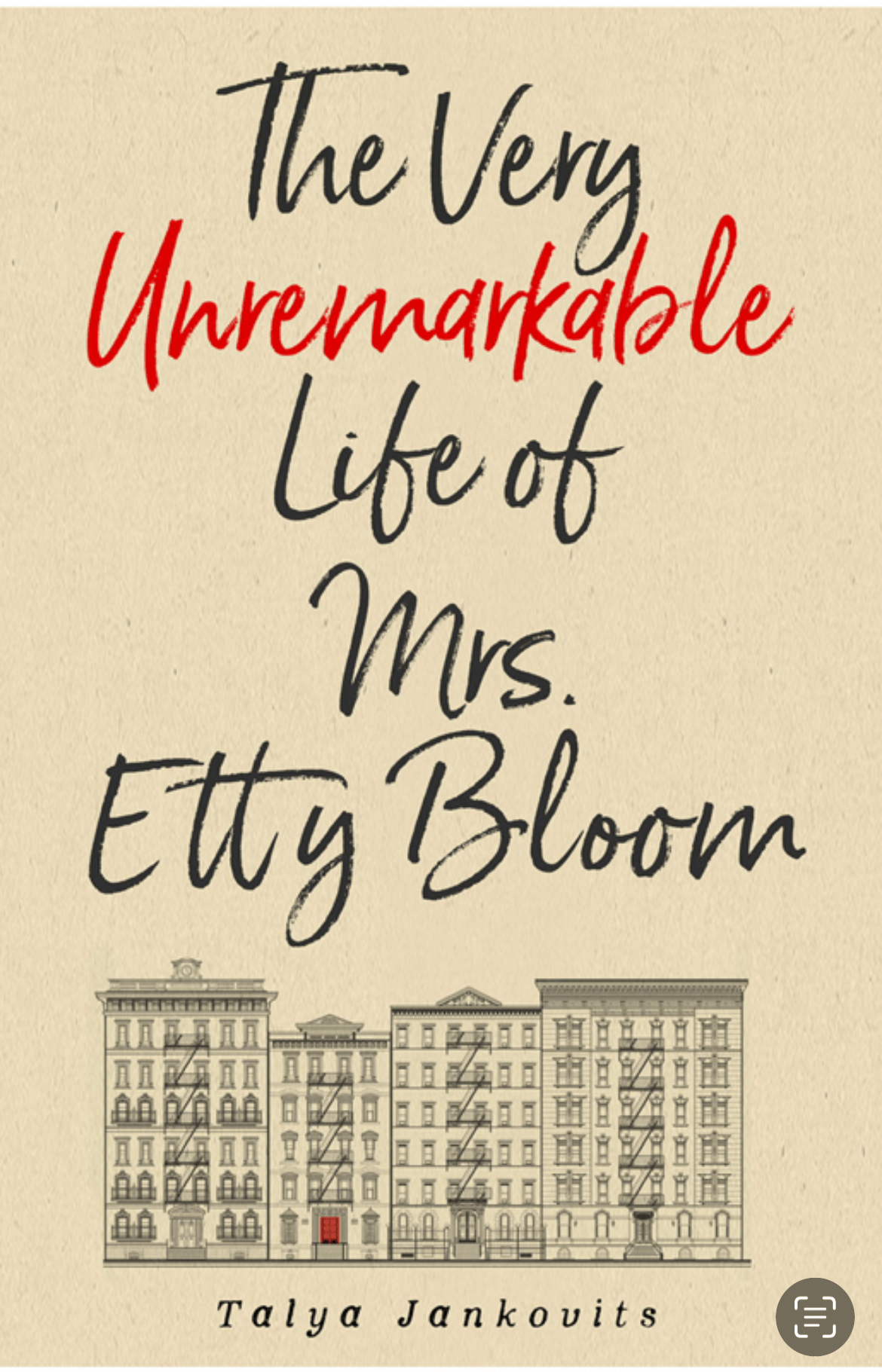 The Very Unremarkable Life of Mrs. Etty Bloom by Talya Jankovits
In Williamsburg’s insular Hasidic community, Etty Greenberger fears she’s ruined her future after a reckless mistake leads her into a disappointing marriage below her ambitions. Over time, as she faces grief, motherhood, and unmet expectations, her life drifts far from what she once imagined. Yet through unexpected friendships and small joys, Etty ultimately discovers meaning and beauty in a life she once considered ordinary.
Buy the book now: Bookshop.org | Amazon








Leave A Comment