
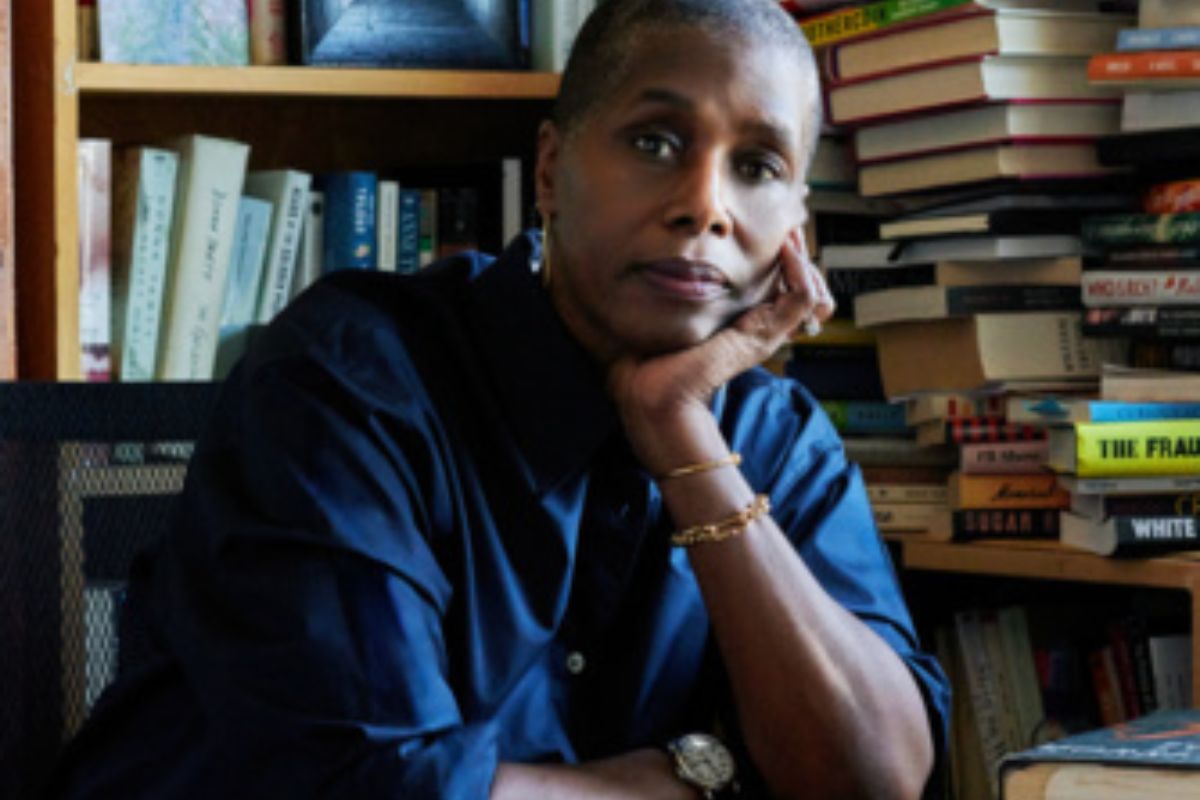
Everyone’s publishing journey is different. Yet, certain assumptions become global that can really grip a budding writer. That’s why this month we are talking specifically about The Publishing Journey. And to kick that off, we sat down with Natalie Baszile, author of Queen Sugar and her new release, Friends and Family. Natalie hit the ground running in publishing with a breakout debut that promptly landed an adaptation produced by Oprah’s network. And now, it has been 12 years since her debut and we are thrilled to be getting her sophomore novel.
For many authors though, it may come as a surprise that you are not required to write a book a year or align to some mysterious publishing production timeline in order to find success. In fact, your career is for you to build. That’s not to say there aren’t challenges and expectations, but what is so delightful and inspiring about Natalie’s story is that she truly followed what called to her. She didn’t worry about presumed expectations, and she never stopped working. She earned an MFA, spent over a decade on her debut, pivoted to filmmaking and now she’s back here in publishing, loving her career, writing all along, but creating her own path towards success.
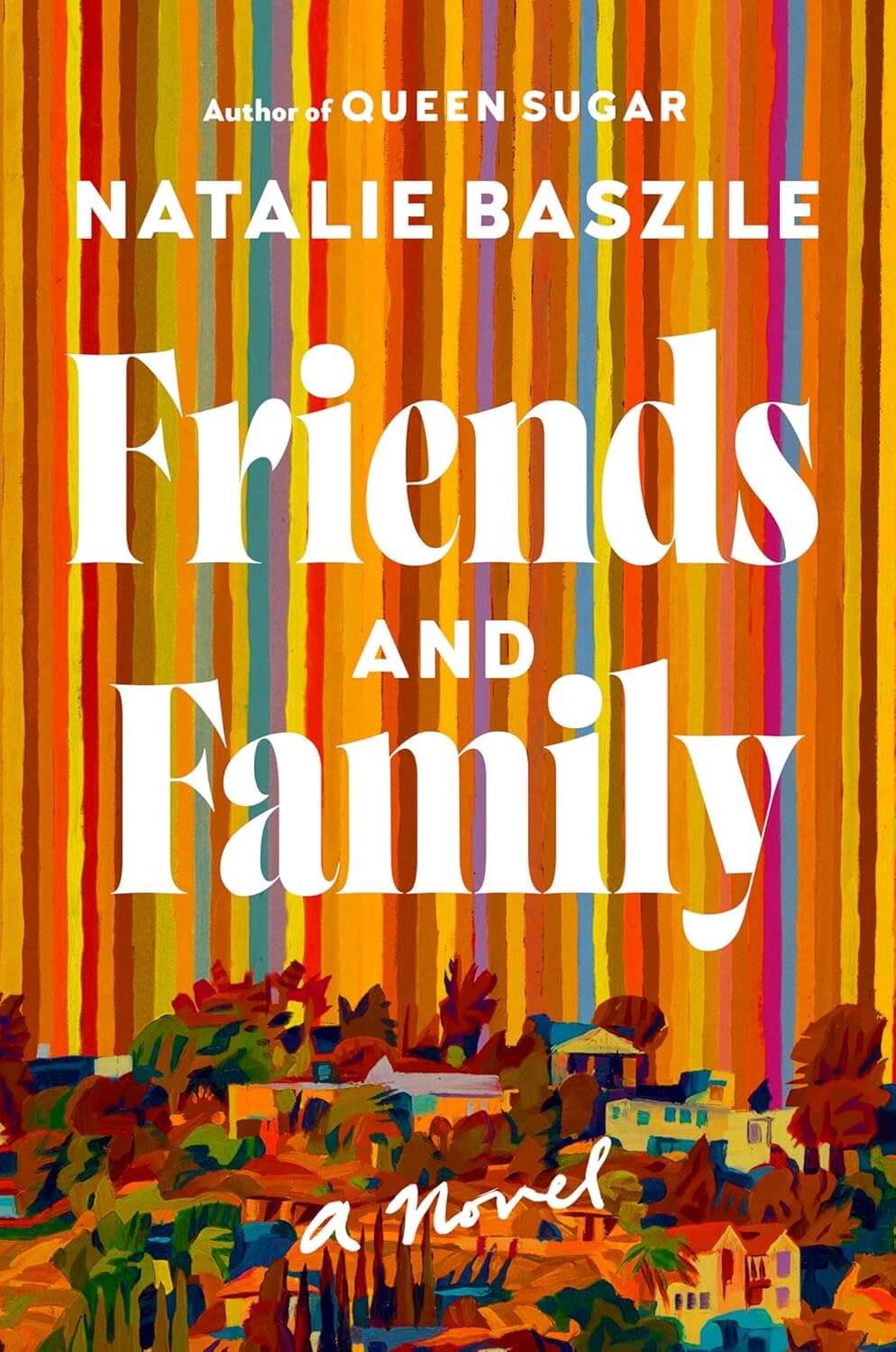
She Writes: Tell us first about Friends and Family. What inspired this new novel?
Natalie Baszile: Okay, well, Friends and Family is the story of two best friends, Nora Lockman, who is a wealthy white, third-generation San Franciscan, and Babs Holloway, who is an African American woman. They both love each other and have really been friends for many, many years. They’ve raised their kids going to the same school. They really have that mother-friendship bond.
And this is the story of what happens in their friendship in the wake of a police encounter, when Nora’s adopted Black son, Nathan, has an encounter with the police. It reveals that as much as these two women really know and love each other and have this great fondness, they really have made very different assumptions about lots of issues.
And the question for the book is how and whether they will really be able to find their way back to each other after what happens.
The story was loosely inspired by an incident that happened to my family back in 2016, when a neighbor here called the police on my daughter and a small group of her friends who gathered at our house one afternoon. Nobody was hurt, but in the wake of that encounter, where the only other African American kid was questioned, part of me responded to the incident as a parent. Most of my reaction was as a parent. But about 25% of me reacted as a writer, just watching the dynamics unfold.
And I thought, this will be a fascinating incident to be the kernel of truth that sparked a story about two women and their friendship.
Buy the book now: Bookshop.org | Amazon
SW: Such a personal tie to it. Did you feel like you really had to balance what you felt internally with what you’re trying to express through the characters, or was that a really balanced flow between the two?
NB: Well, you know, the kernel of inspiration came from this incident that happened. And it was really a question of me trying to figure out what the bigger truths were for this book, trying to explore my own feelings and my own reactions, but then also to try to imagine my way into this bigger story, to really look at women’s friendship and to really look at how these dynamics play out.
I wouldn’t say that it was a struggle, but the book had many iterations as I kind of worked through my own feelings and then had to think about what works best in a novel. So it was a process.
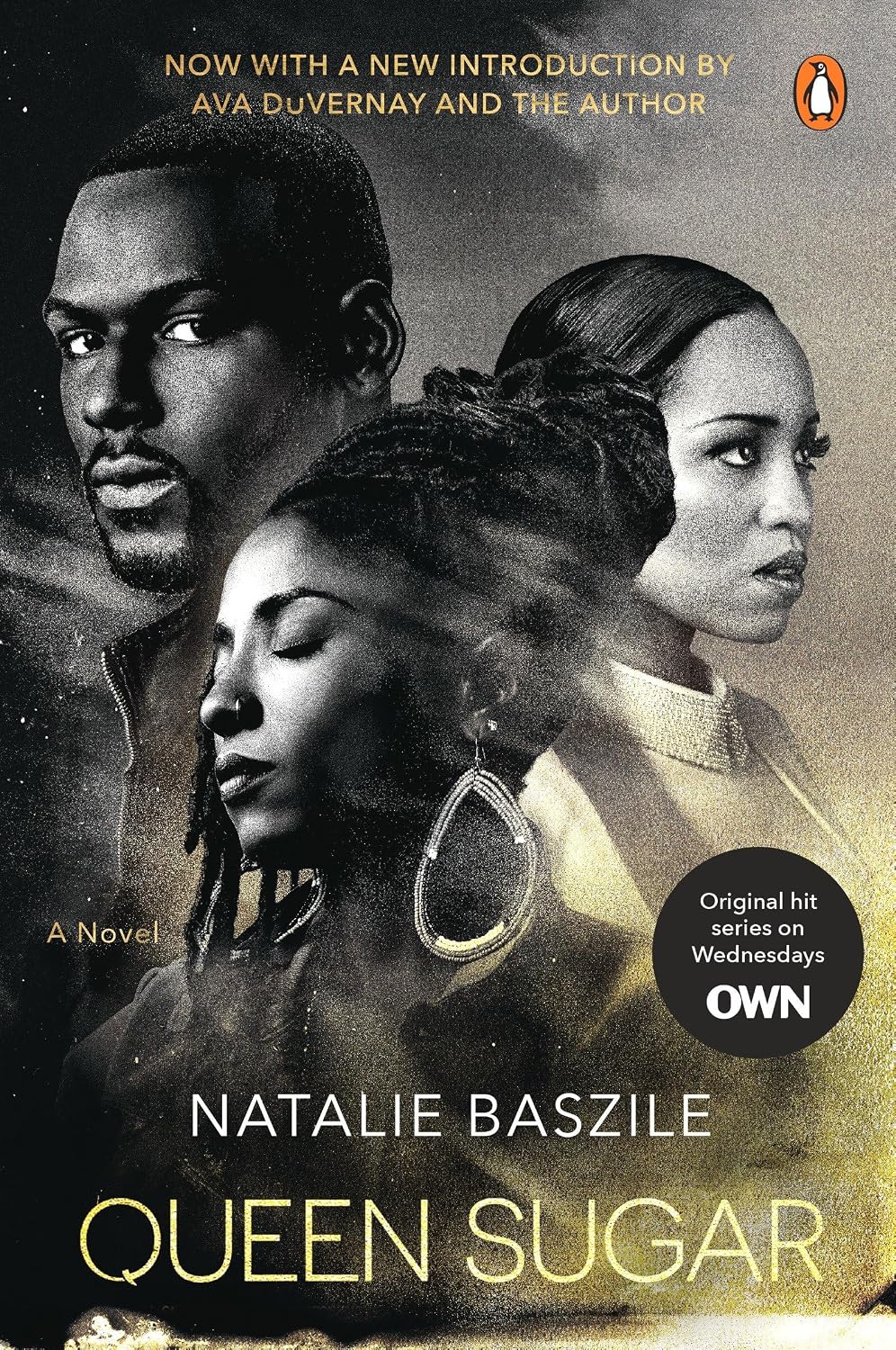
SW: So it’s been about 10 years since Queen Sugar was published, and from a publishing perspective, there can be a lot of pressure or there can be a lot of fear around the speed at which you publish and how you publish.
So I’m curious about how you’ve approached your career. Is it by choice, or has it been working your way through the publishing system? What’s led to this gap, and what were you able to do in that time that you feel was beneficial or possibly even a struggle?
NB: Actually, I really appreciate that question. I am shocked that 10 years have passed since Queen Sugar came out. I mean, the time has flown. I have been working this whole time.
And I never felt, in terms of my career, I never felt the pressure to match the success of Queen Sugar. I know for a lot, especially for a sophomore novel that follows on the heels of a book like that, authors can feel a lot of pressure to kind of ring the bell again.
For me, it was really a matter of going where my curiosity led. So I was actually, to be perfectly honest, working on an entirely different book, a big historical novel, in the wake of Queen Sugar, when this book, Friends and Family, really dropped into my lap because of this incident that happened. And it felt so urgent and so immediate that I put the other novel aside to focus on Friends and Family.
I also wrote a nonfiction book in this same gap of 10 years, kind of as a follow-on to Queen Sugar, and that book came out in 2021. And I also—I sound insane—I also wrote and directed a short film and a documentary that just premiered at Tribeca, a full-length documentary.
So I’ve been a little quiet on the novel front for the last 10 years, but I have definitely been working on all of these other projects while also bringing Friends and Family into into reality.
SW: I knew that you would have had a lot going on in between, but from the publishing perspective, sometimes they don’t allow you that time, or sometimes you end up having to change agents. Did anything happen in the publishing process itself in that window that you had to adjust to, or were they just ready when you were ready?
NB: You know, they were really ready when I was ready. Back in 2020, during the pandemic, I had been working on Friends and Family. I had not shown it to my agent or my editor. I really had just kind of been working on it on my own.
And then I posted something on Instagram, just this little photo I have. But it really captured the way I feel, and I think a lot of authors will be able to relate.
View this post on Instagram
I posted that picture on Instagram and said something like, “Oh, this is the way I’m feeling about this new book.” And Pam Dorman responded saying, “What are you working on? What are you working on?”
And so I shared probably the first 150 pages of the novel with her then, and she bought it in short order. Within a few months, I had a home for the book.
There are pros and cons of selling a book on a partial, of course, but at least I knew that the book would have a home whenever I finished it.
SW: I love that. I think it’s optimistic in a way we don’t always talk about publishing, because I think a lot of people feel like they’re getting walked around by publishing and they have to meet this deadline, they have to do that, or they don’t have time to let a story marinate.
And it’s funny because I talked to Tayari Jones at the beginning of the year, and she had a very similar experience except the reverse, where she was writing a contemporary and working it and working it and working it and it didn’t fit, and switched to a historical, and that’s what ended up being Kin. But I think seven years passed for her.
I think it’s encouraging for writers to hear that there isn’t one recipe or one formula for what success can look like in publishing.
NB: That’s right. That’s right. I think that publishers, editors are actually accustomed to writers having to take their time, and they appreciate giving authors the space to let a book really marinate and form.
And I’m trying to think if I know of any authors who have really felt the pressure to deliver because their editor is saying, “I haven’t heard from you in X number of years.” I think most of the time editors are pretty forgiving about timelines and just the creative process.
SW: Yeah, that’s nice to hear. And I hope that they do allow that, because I look at a situation like—well, romance writers tend to have a very quick turnaround time, and I think people can get stuck in the mindset like a book a year is what’s expected based on that particular schedule, which sounds awful.
And then you have someone like Rebecca Yarros, who produced her Fourth Wing books very fast and was completely burned out and needed to take the time. And so I think we hear those kind of extreme stories and think that if we’re entering the publishing space, they’re setting the tone for our creativity from that point forward.
NB: Yeah, I think that that’s true. That’s true. I admire authors who can publish a book a year, a book every 18 months. I don’t know how they do it. I wish I had that gene.
SW: What was different about writing this book compared to Queen Sugar? What did you feel were the strengths you had to exhibit in this book, or what sort of obstacles did you have to overcome in this book that were different from Queen Sugar?
NB: Great. Another great question. Thank you so much. When I look back on the difference between writing Queen Sugar and Friends and Family, I’ll tell you, when I wrote Queen Sugar, I was figuring everything out. I had to figure out how to write a novel. I had to figure out all the craft elements to refine the story. All of those things were new to me.
And I think when I started working on Friends and Family, to be totally honest with you, I put too much pressure on myself. And I thought, okay, I’ve learned these lessons from Queen Sugar, and I have all of these questions that I know to try to answer up front, right?
And I think I approached the early drafts of Friends and Family with this expectation that I had to bring all of this knowledge, all of this experience, all of this expertise into writing this book. And that really paralyzed me for a good chunk of time.
Even though I knew the story, I still had to answer these questions, like, What is the point of view going to be? Is this going to be present action? Is this going to be retrospective? And trying to figure those out all at the same time meant that, I would say, for a few months early on, I was kind of paralyzed because I thought, Natalie, you should know these things. You should have the answers to these questions. You’ve been down this road.
And I remember I got to the point where I was actually in some kind of weird physical pain because I just could not figure out how I was going to write this book.
And I remember telling a friend once, I said, “You know, I just want to write something. I just want to put some words on the page. I don’t care if I have to change it up later on.”
I almost had to back my way into the actual writing of this book. I had to trick myself by saying, okay, I’m going to take all the pressure off. I am not going to worry about anything. I’m just going to start, right? Wherever I start, I’m just going to start.
And that was really, in the early days, the only way I could write this novel, even though it had kind of landed fully formed in my lap.
And so I appreciate that question because, for me, it’s not like I felt the pressure for this book to be anything like Queen Sugar, but I did put pressure on myself to bring my experience into this book so that I could get to it faster. And that was really a huge learning experience for me.
I thought, let me just start where I start and see what happens.
SW: Well, each book is a new opportunity to learn, but it also feels brand new every time you sit down to write the next one.
NB: Very much so. Yes. And you’re not the same person you were when you start a new book. You’ve come a long way, you’ve developed, you’ve learned things. And so it’s that new person who’s sitting down with the new book. I don’t know, it’s just an interesting experience.
SW: I think so many people would love that debut success, right? To feel like that hit happens right out the gate. But it does put, even if it’s not super conscious, some pressure on the sophomore novel. And it does put an expectation in yourself and then potentially in the people around you that you can replicate that success. And that’s a lot to ask of any writer as they sit down in front of a blank page.
NB: Yeah, that’s true. That’s very true.
SW: So, because you were a former instructor at She Writes University, you discussed the importance of place in your lesson with us. And so I was wondering how you approached place in this novel?
NB: Well, you know, it’s so funny, because place is still one of the most important things to me. And I love writing stories where there is that strong sense of place.
And I think the difference between Queen Sugar and Friends and Family—Queen Sugar was set in South Louisiana, so I had to go there and I had to learn everything. I had to absorb the atmosphere and the culture and all of those little details to bring that place to life.
Friends and Family is set in my backyard, literally. It’s set in San Francisco. And so I had to allow myself to see the city that I’m out and about in every day. I had to really train myself to see it through fresh eyes so that I could bring it to life, and so that I could see all the little magical elements and the things that are charming or the things that are difficult.
I had to see it in a different way than I do when I’m just going about my day.
And I loved it. I loved discovering new places in the city or going to familiar places and figuring out how to describe them so that I can bring the reader into this world of San Francisco. And it was a joy. It was a joy.
I had just as much fun with that part of the book as I did bringing the magic of South Louisiana to readers. So it was really fun.
https://youtu.be/bhrAw41L82s?si=1taHahOMq8ADgq1G
SW: Okay, so I did kind of want to pivot to your filmmaking work and your documentary, as well as the adaptation of Queen Sugar. I’d love just kind of a broad overview of what your filmmaking career has looked like and how you’ve approached it as a novelist as well. Are these two separate writing endeavors, or do they feed each other?
NB: Well, first of all, when I decided to expand into film, I foolishly thought, oh, this won’t take as long as writing a novel. And I could not have been more wrong. Filmmaking is its own process.
One of the things that I love about it is where novel writing, book writing, is very solitary, film is very collaborative. You’re bringing in a director of photography and an editor and a composer and a sound mix. There are so many people who are part of that process, even if it is your idea.
And I love that. I love that kind of exchange of ideas and the conversations, and I love working with people who have also dedicated themselves to their particular craft, right? And we all come together to make this thing.
It takes just as long.
I think where the beauty of writing a novel is, there’s no barrier to entry. There’s nothing stopping you from sitting down and writing. Nothing.
Where in filmmaking, it is very expensive. And I don’t shoot. I don’t know how to operate a camera. So I literally can’t do anything without the funds to be able to pay someone, unless I’m going to pick up my iPhone and do something.
So, in that way, it’s similar and it’s different.
Writing is obviously very—it’s all about the words on the page. And with filmmaking, it’s about the image. The image is what has to speak.
And so I think one of the big lessons that I have learned is backing away from language, which I am in love with and which I rely on so heavily, and not relying on language. Learning to be comfortable with silence, learning to be comfortable with what is happening on the screen.
And so it’s almost like left brain, right brain, you know?
The things that work on this side are very—they complement the things that work over here, but the rules and the priorities are almost the reverse.
And so I had to train myself, both in our narrative—my narrative project, which is an adaptation of a novel—and in my documentary project, which is about farming and all that. I had to almost resist the urge to speak and to rely on the chattiness. And we had to go back and actually rake out a lot of the talking because it’s too much in a film.
You need to let the silence speak, and it’s just totally different.
And so the way that has translated back to my writing is I’m much more conscious about not over-talking. There’s a little bit more restraint now that I think would come into the writing, even though I have this whole toolbox of language and all of that.
So it’s really interesting. It’s so different, but they do complement each other.
SW: Were you involved in the Queen Sugar adaptation? Now that you’ve done filmmaking since then—I assume it happened after that was made—do you wish you would have been involved, or did you kind of like being able to write the novel and then let the story be taken over by a film team?
NB: By the time I finished Queen Sugar, I’d been working on that novel for 11 years, all told. Thirteen, if you count after it was sold and we were revising.
So I was very happy to give that book my blessing and let another group run with it.
I was curious about the process. And so the promise that I made to myself in the wake of Queen Sugar is that, as I expanded my own creative practice into film, I did want to be involved. And I did want to learn about screenwriting and adaptations and just the nuts and bolts of filmmaking, because I do think that I’m a very visual writer.
View this post on Instagram
SW: You also collaborated on a documentary with your daughter, tell us about that!
NB: It’s called Harvest. And it follows these four young, ambitious African American farmers. They’re fourth-generation farmers who farm together. They’re brothers. And they farm together in northeast Louisiana.
We followed them over the course of a year and a half, so basically from the end of one harvest through the end of another harvest.
But again, the question there was, is there enough story here? Between these brothers and the things that happen, is there enough narrative potential to put in a documentary?
And it turns out there was. There was more than enough.
So that’s really the question that I am always asking myself: is there enough story here to justify a novel or a feature film? Or should it be a smaller container, like a short story, which has its own internal logic and way of being, and the things that have to qualify for a short story? Or is it a short film?


Leave A Comment