

Christine Wells writes historical fiction featuring strong, fascinating women. From early childhood, she drank in her father’s tales about the real kings and queens behind popular nursery rhymes, and she has been a keen student of history ever since. She began her first novel while working as a corporate lawyer and has gone on to write about periods ranging from Georgian England to post World War II France. Christine is passionate about helping other writers learn the craft and business of writing fiction and enjoys mentoring and teaching workshops. She loves dogs, running, the beach, and fossicking for antiques, and lives with her family in Brisbane, Australia.
Why do I need a Premise?
If you want people to read your novel, you need to master the art of formulating a powerful premise. Your premise is the foundation of your story. It’s your sales tool, your calling card. It’s the first thing that agents, editors, and most importantly, readers, ask about your work. What’s it about?
I have given many workshops on this topic over the course of my twenty-year career and I am constantly amazed by the premises people come up with, when given a little guidance. When a writer reads out her premise and the rest of the people in the room gasp, that writer knows they have come up with a brilliant premise that can now be turned into a fabulous, unputdownable novel.
What is a premise?
A premise is more than an idea. Put simply, it is “a statement of character and conflict”—Jennifer Enderlin, Publisher, Macmillan.
Where do I start?
Inspiration for stories can come from anywhere. Most writers have too many ideas, not too few. If you’re stuck for ideas, it might be as simple as leafing through the newspaper, or thinking about the toughest dilemma that you have ever faced in life, or even a strange urban legend you would love to be true. Maybe there is a certain character or unusual type of relationship you want to explore. Many novels begin with a plot or situation, or even a plot twist that the reader will never see coming. These are terrific places to begin, but you don’t necessarily have a premise yet.
To write a winning premise, you need to develop these elements from that springboard of an idea:
Who is your character?
What does she want?
What is stopping her achieving her goal?
Distilled into a sentence, this becomes: [Character] wants [goal] but [conflicting circumstance].
These elements are explained in more detail in Debra Dixon’s GMC: Goal, Motivation, and Conflict: The Building Blocks of Good Fiction but this type of framework has been used in storytelling for thousands of years, at least from the time of Aristotle.
An alternative way to express a similar sentiment is: [Character] wants [goal] but he must [do something completely out of his comfort zone] to achieve that goal.
Arriving at a full premise is a case of extrapolating from what you already know.
Let’s take character as an example. If I want to write about a timid, homebody like Bilbo Baggins in The Hobbit, I still need a goal and a conflict. What does a timid homebody want most? It could be many things, but in The Hobbit, it’s a quiet life at home with his community around him and several meals a day. So what will stop him remaining in that comfortable existence forever? A wizard who brings him a dangerous quest. Instantly, we see the inherent gap between the kind of hobbit Bilbo is and the task that lies before him.
Conversely, if I had a quest in mind where a character was charged with defeating a great evil, I might ask myself, who is the least likely character to want to take on this quest? Who is the least likely character to succeed?
A tip for coming up with a character description for your premise is to think about archetypes. Even stereotypes can help convey the essence of a character. Adding complexity is best left for the novel itself. I like to use a character adjective and a profession as a thumbnail sketch. For example, for The Lost Perfumes of Paris, it was “career-focused chemist, Élodie Limeaux.”
The conflict for Élodie is that she has been so single-minded about becoming a perfumer, she has forgotten to live, and it is experiencing real life that provides the best inspiration for creating great perfume. So the premise became:
“In order to win her dream of becoming a perfumer at the House of Limeaux, a career-focused young chemist is forced to explore Paris with a disturbingly attractive man and collaborate with him to create a perfume that captures the essence of the city.”
Make it Bigger—High Stakes
We writers often limit ourselves by choosing a story premise that feels small because we don’t think we have the skills to write the story that goes with it. When building a premise, we need to forget our insecurities and go for it. Think about big contrasts, big challenges, high stakes. What is your character’s worst nightmare? Bring it on!
Had J.R.R. Tolkien chosen Aragorn as his hero in Lord of the Rings, would the novel resonate in the same way? Aragorn is already a hero. He doesn’t have as much room to change and grow as Frodo. One reason the story is so powerful is that the least likely hero is the one person who can succeed.
Now, when I say high stakes, that doesn’t necessarily mean saving the world. In fact, many writers make the mistake of thinking a quest to save the world automatically makes the readers care. But we don’t care about abstract ideas; we care about people. If the goal is vital to the
character, it will be vital to the reader. That’s why we can be as enthralled by a quiet story about a cup of tea as we can by a gripping murder mystery.
The key is to find a goal that is so vital to the character, they are willing to face almost insurmountable obstacles to obtain it. The major obstacle must challenge the character to overcome some inner flaw that is already making their life less than ideal when the story opens.
By Hook or By Crook
In commercial fiction, or in any fiction, really, there needs to be some element that piques a reader’s interest and draws them in. We are competing with a multitude of alternative media these days. While not essential to a wonderful story, a good hook certainly helps to ensure people actually pick up the book and read it.
In psychological terms, we are appealing to people’s id: that unconscious part of us that is viscerally attracted to stories of danger and survival, of finding a mate or seeking a sense of belonging. People tend to love reading about wealth, love, power, corruption, betrayal, and glamour, to name a few.
Premise as Touchstone
A killer premise is a great sales and marketing tool. But the exercise of encapsulating your story in a short, simple statement of character and conflict can help you to write your novel with a sharper focus. Referring back to your premise can get you moving again when you’re stuck or point you towards what you need to cut and what you need to hone and highlight when editing your completed manuscript.
No matter what stage of the writing process you’re in, I recommend that you attempt to devise a powerful premise, even if it evolves or changes during the writing process. The exercise might even lead you to discover aspects of your story that you didn’t know before.
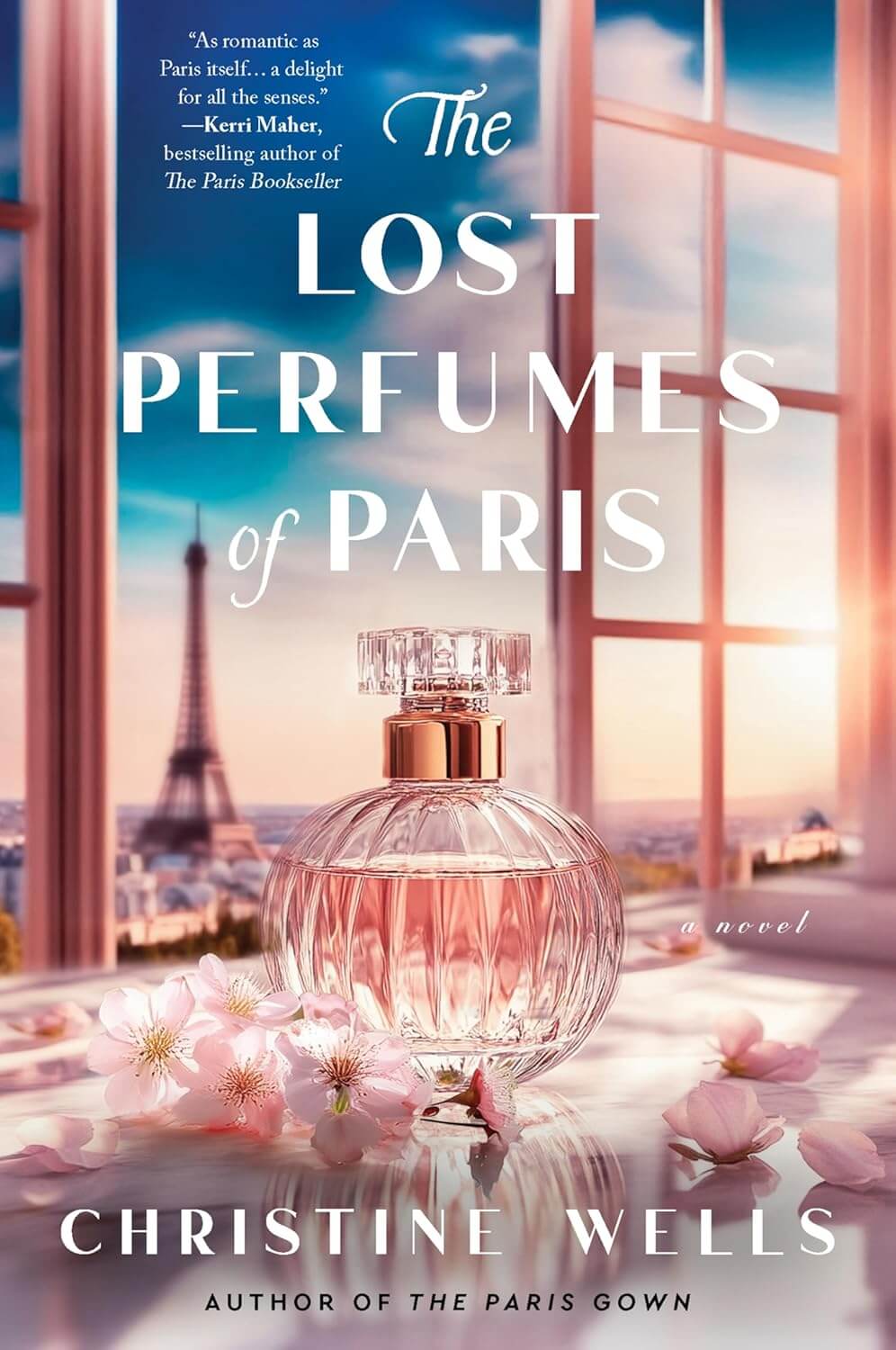
The Lost Perfumes of Paris by Christine Wells
Élodie Limeaux’s mother was the most renowned perfumer in France before World War II. She worked for her family company, the House of Limeaux, which Élodie longs to join. Now that she is in her twenties, she is trying to pursue perfumery. Her father won’t let her follow in her late mother’s footsteps so she if forced to fight for a lowly position at the House of Limeaux. Élodie has a plan though, to enter into the Essence of Paris contest run by the French Perfume Institute. Winning the contest could potentially secure an investment from a Swiss banker and possibly allow Élodie to buy the House of Limeaux. The Swiss banker agrees to back her if she works with his son, Marcelo. Hand in hand with Marcelo, Élodie powers through family betrayals, sabotage, and the search for the perfect perfume to launch her career. Her work might find success but it could also find love.
Buy the book now: Bookshop.org | Amazon













Leave A Comment