

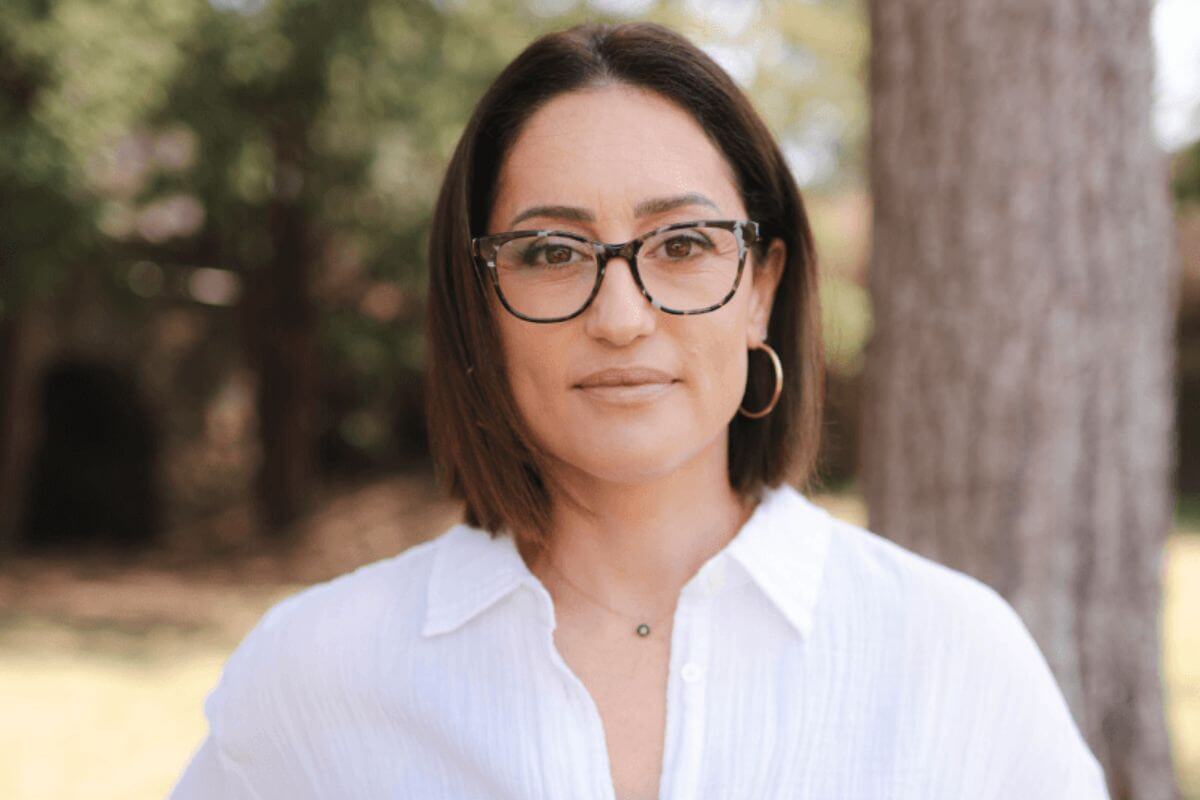
Madeline Martin is a New York Times, USA Today, Publisher Weekly, and international bestselling author of historical fiction and historical romance with books that have been translated into over twenty different languages. She lives in St. Augustine, Florida with her family. Visit Madeline online at madelinemartin.com, on Instagram and X @madelinemmartin, on Facebook at MadelineMartinAuthor.
When I write my historical fiction novels, I generally draft them in a month. People are usually shocked when they hear this, but for me, it’s simply my process.
Think about reading a book that is so good you can’t put it down, so you finish it over the course of a weekend. At the end of that weekend, you can viscerally recall every aspect of the book, from the clothing the characters wore to the adorable banter or the snappy one-liner delivered to the antagonist. If you took six months to read that same book, you would have a different experience.
This is what it is like for me when I draft my book in a month. I’m able to stay immersed in the story and remember everything clearly. I’m able to avoid repetition and ensure my characters’ voices remain consistent.
This means I buckle down hard for a month when I write. It does not, however, mean that I don’t do thorough research. In fact, it’s quite the opposite.
Before I begin writing my book, I spend about ten months in the research phase. During this time, I delve into dozens of nonfiction books for accuracy and inspiration. I have also been fortunate enough to travel to the location of every historical fiction novel I have written. This provides firsthand experience of the culture and setting.
Once I have amassed all my research, I put together character charts. These are not only created for the protagonists, but for every single character. Even the pets. When I’m putting these together, I consider each character’s goals, flaws, triumphs, failures, and even their family life growing up. These thorough character charts help ensure every character has a unique personality.
When I know my characters, I compose my plot. This is also very thorough, resulting in an outline that is usually about 25 percent as long as the final book. Before I write a single word, I know how many chapters my book will have. Based on my average words per chapter, I also know approximately how long the book will be.
I’m usually pretty accurate with this estimate. For example, when I wrote A Time of Witches, my goal was to finish my first draft in thirty-two days at 70,000 words. I wrote “The End” at 68,900 words. Of course, that was only my first draft. I spend the next several weeks doing a full read-through for personal edits before sending the book to my editor.
But how do I write that first draft in a month?
The most important element is one of my least favorite things: math.
I look at my calendar and block off the days when I know I will not be able to write because of travel, family events, etc. From there, I look at the remaining days and try to give myself approximately thirty to work with. Then I take my planned word count of 70,000 words and divide it by thirty. That equates to approximately 2,334 words a day.
Some days, I hit that number. Some days, I don’t. And some days, I exceed it. I have a spreadsheet that updates my daily target based on my progress, which helps keep me on track.
This is not always seamless, and sometimes I don’t get any writing done because I hit a snag. In these cases, my problem often has nothing to do with the plot and everything to do with a character. Instead of trying to rework what is happening in the book, I return to my character chart and reassess.
For example, if a character is supposed to steal something and the story isn’t working: maybe that theft goes against your character’s story, and there needs to be something in their past that makes them able to steal. This will impact the character’s behavior throughout the story.
The most important thing when I am working on my first draft is that I always move forward. If I realize I need to change something in the pages I have already written. For example, if I decide a character needs to have a relevant scar, I don’t go back to my manuscript. Instead, I note that as of chapter six, this character has a scar. Then I know to correct chapters one through five later.
When I do my full read-through after finishing the book, I know exactly where I need to incorporate the scar. For me, making those changes during my read-through helps me find more organic places to insert the information.
I also give myself permission to write a rough draft. My book does not have to be perfect the first time I write it—and yes, I say this even as a perfectionist. It kills me. It does. But I know I can pepper the manuscript with its and thats and justs. I can write descriptions that are sometimes far too ornate and other times too anemic. I can make my characters shrug a thousand times and write he said, she said a million times more. Those are all things I can smooth out later.
Writing a first draft in a month will not work for everyone, nor should it. After writing over forty books, I have discovered this faster pace keeps me deeply connected to my characters and their stories.
Regardless of how long your own process takes, these strategies will help you finish your book: break an intimidating goal into manageable pieces, re-evaluate your daily word count, and give yourself permission to write an imperfect first draft.
Your path to “The End” is your own. The important thing is to keep moving toward it, one word at a time.
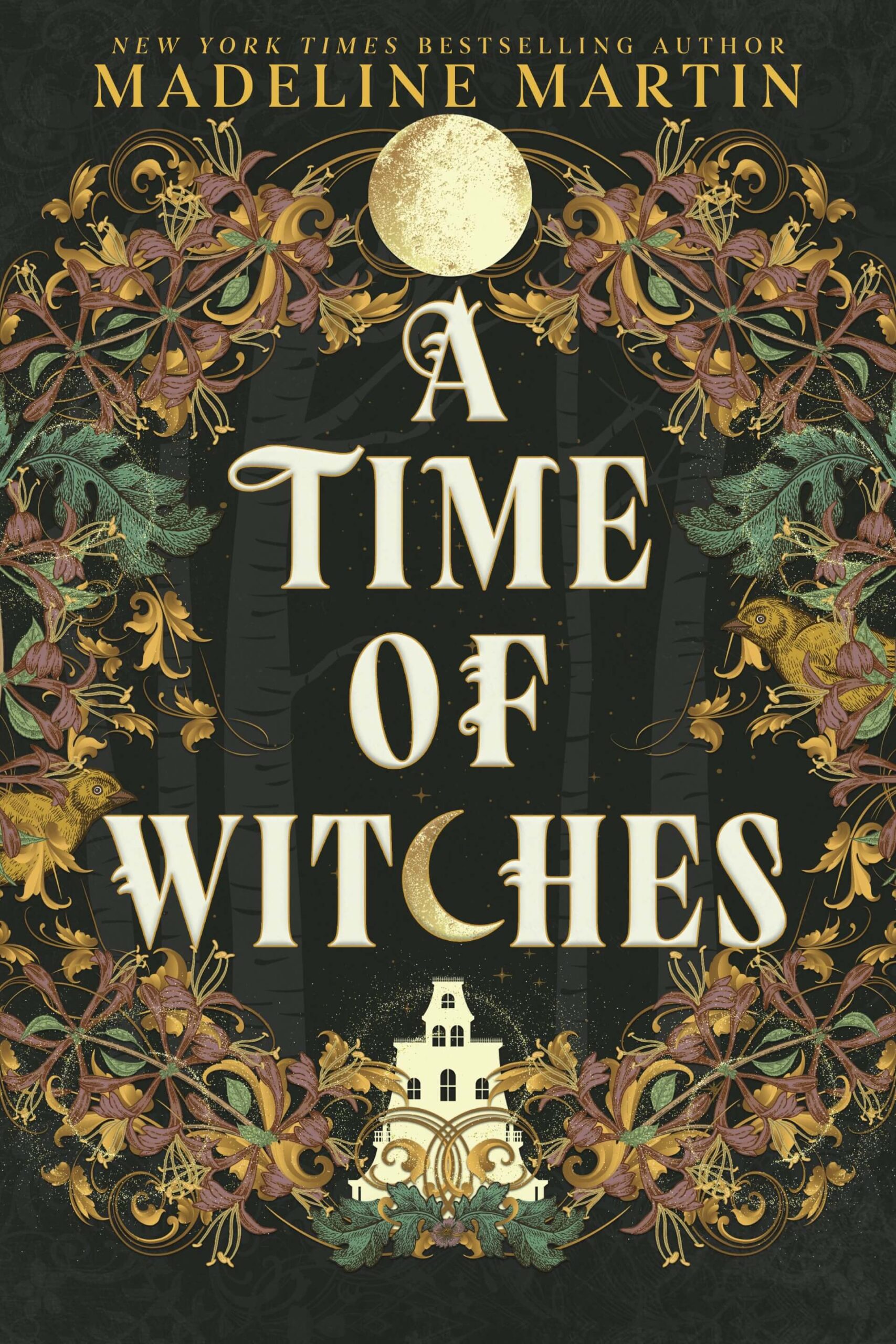
A Time of Witches by Madeline Martin
Since the death of Lilith Legare’s mother, peculiar things have been unraveling — plants reach for her touch, animals desire to follow her path, and the birthmark on her arm has started to tingle. However, none of this tops her persistent nightmare of being burned alive at the stake. Her hunt for answers takes her to the rotting Brackenmere Manor in England where the line between past and present is thin. While there, Lilith discovers an unexpected legacy and a problem: she will die if she doesn’t rewrite history.
In 1645 Suffolk, a woman by the name of Sybil Brantham is accused of witchcraft. As an intelligent, wealthy widow, she stands as a threat to men because of her independence. As suspicions bubble, Sybil must keep her younger sister safe from harm, even while a betrayal is occurring inside her household. Although centuries apart, Lilith and Sybil are tied together by blood and peril. In order to save themselves, they must challenge women’s silence and finally take hold of their voices.
Buy the book now: Bookshop.org | Amazon











Leave A Comment