

Before landing my literary agent, I had shelved three manuscripts and received over 300 rejections. I’ve cried over characters I’ve known would never see the light of day. Tried to reassure myself, after placing each manuscript in the grave, that “it wasn’t meant to be” was enough of a reason for me to say goodbye to this book I’d dedicated my life to. I’m quite intimate with rejection.
Nothing, however, could’ve prepared me for submission.
I went out on submission at eight months pregnant. My literary agent told me I’d have a book deal by the time my baby arrived, and she was right. At first, I felt this immense sense of peace. I believed her, and I’d had such a truly out-of-this-world pregnancy—I lost my job at five months pregnant, three weeks before landing my dream literary agent—that I had to believe everything had happened for a very specific reason.
I felt calm. And then, about two weeks after being on submission, I received the email I’d been waiting for. An editor and her editor and chief at a dream imprint had devoured my manuscript. They wanted to hop on a call.
I immediately started sobbing. I was on my way to my baby shower, my hair curled and my makeup done. I couldn’t believe it, and I couldn’t stop shaking. It had happened.
I was going to get a book deal.
Then, later that night, the anxiety hit. Now that I knew I was going to get a book deal, the next phase began. More editors started cropping up, showing interest and suddenly it became less about will this sell? and more about will this find the right home? Suddenly, the instability I’d experienced over the past several months—newly unemployed, dependent on The Affordable Care Act for my health insurance because my husband’s wouldn’t accept my “pre-existing condition” of pregnancy, the fact that I didn’t even know if I was having a boy or girl and now, the fact that I didn’t know which publisher I would end up with—suddenly became too much. The scaries had hit. How much of it was the scaries, and how much of it was those third trimester hormones, we may never know.
All this to say, the scaries are the most common thing. The thread connecting all traditionally published authors. The seven brilliant authors I’ve interviewed can all commiserate with anyone dealing with those sleepless nights, so for part two of this series, we’ll dive into the emotional side of things.
In part one, we dissected the specifics of being on submission—from preparing to go out to publishers to the financial aspect of a book deal and more. Think of it as your practical guide to submission.
The Submission Scaries:
I’m of the opinion that while the submission scaries are an incredibly valid emotional roller coaster, they are also a bit of a literary trauma bond. TikTok is flooded with authors lamenting their scaries about being on submission, and rightfully so. It’s a daunting time.
However, the scaries don’t have to be so scary.
Kristina Kamen never let herself buy into the submission scaries either.
“There’s a lot of negativity when it comes to the submission process. I would hear writer after writer tell me, ‘It could take months,’ or, ‘Your book could die on submission,’ but I let that negativity come in one ear and out the other without letting it get into my heart.”
Her advice?
“Don’t take those negative voices as your reality. Seek out positive stories too. I promise there are so many.”
Mallory Arnold felt a similar sense of calm at the start of her career.
“I didn’t really have a lot of stress because it was a pipe dream at that point. I felt lucky to have even gotten to the point that an agent was fighting for me…”
That calm, however, has since morphed into stress the further along she’s gotten into her career.
“With more knowledge and experience in the industry comes a bit more pressure and expectation.”
The scaries are, however, the most common experience for authors on submission. Rightfully, so. It’s a literary trauma bond for good reason.
Kate Emilie said:
“Those early days of being attached to your phone with an anxiety stomachache feels rather similar to being a love-sick teenager waiting for your crush to text you back, if they’ll text you back.”
Dana Swift said:
“It’s an odd type of horrible, the submission process. It’s the most hopeful and anxious time that truthfully I can’t compare to anything else in my life. It’s a time where you only have hope to hang on to, but the hope can also poison you.”
Laura Vogt nearly gave up hope.
“About a week before I received the call…I was out to lunch with my dad. He has always been an unequivocal, delusional believer in my work, and he just couldn’t comprehend why my book hadn’t sold…I remember crying—okay, maybe sobbing—devastated that my novel might not sell. I wanted it so much. Desperately. At lunch with my dad, I opened my fortune cookie, and the fortune read: The dream isn’t over, it’s paused.”
The good news? Her offer came in one week later. “It’s brutal, waiting,” she said. “But so very worth it.”
I don’t have any advice for those currently in the submission trenches or about to be because we all deal with things differently. But, I did appreciate Kristina Kamen’s mindset:
“The way I see it, if the outcome is less than ideal, I’ll be disappointed regardless of whether I got my hopes up at the beginning of the process or not. So I might as well get my hopes up, be happy, be excited, and trust God’s plan for me.”
The Nuance Behind A Dead or Dying Book
I’m new to the submission trenches, and while I’ve never had a book die on submission, I’m all too familiar with the pain of a shelved manuscript. There is no greater letdown than watching the initial hope you had for a story deplete with each rejection, and in the submission trenches it’s far worse because once a manuscript has died on submission, the chances of reviving it are incredibly slim.
Agents are willing to look at a manuscript that’s been revived (my agent rejected my book twice before signing me the third time I submitted). Editors, though, want a book that’s fresh.
I can give you a little bit of hope, or at least a little bit of perspective, on why some books might struggle on submission.
Nic DiDomizio’s debut novel was on the cusp between YA and Adult. Within three days of going on submission, he had an editor who was interested but unclear how to pitch to his acquisitions team. He and his agent went back and forth with the editor for weeks while rejections from other editors trickled in, all citing the same reason.
They didn’t know where the book fit in the market.
“Submission,” he said, “is where you learn that the marketing angle—the pitch to booksellers—is so important. Equally as important as the quality of the work…‘Write the book you want to write’ is great advice, but if you’re not paying attention to the market then submission is all the more like a lottery.”
On the contrary—despite noticing editors are acquiring historical romance less and less—Hailey Alcaraz hasn’t been deterred from writing historical fiction. Her priority is writing stories she loves and wants to tell and trusting that the right editor will fall in love with it. This strategy seems to be working, given that she’s sold five books thus far.
Mallory Arnold described the feeling of her book dying on submission as “devastating.” She remembers thinking, “this is it for me.” However, her agent didn’t falter. She said, “This one didn’t work. What else do you have for me?” And sure enough, her next book was what ended up kickstarting her career.
When asked what she learned after watching a book die on submission, she said:
“If anything when my first book died on submission it taught me a bit of resilience.”
Laura Vogt spent twelve years on a now-shelved manuscript. However, she doesn’t view that work as wasted.
“You’re learning craft, stamina, and who you are as a writer.”
Dana Swift views her now-dead book as having:
“paved the way for certain editors to read fast since they had liked my writing in that book…which shows it’s never really a failure, but a building block to your potential later success.”
The Delusion of Publishing
Most authors have been dreaming this big dream ever since they were little, and that’s why, I think, we’re able to handle the sheer volume of rejections we face throughout the path to publication. We’re dreamers, and so we don’t let ourselves consider the possibility that these dreams of ours won’t come true.
That being said, the delusion I had about my own journey to publication has calmed. I’ve become much more pragmatic about my approach now that I understand the behind-the-scenes of landing a book deal.
And it seems, most authors share this same sentiment.
“What I think a lot of writers don’t realize,” Dana Swift said, “is all the stuff involved after the book deal since most spend all their energy making it happen.”
It’s no longer a childhood dream—it’s your career. And nothing is guaranteed.
Nic DiDomizio views the persistence he’s had to adopt as one of his greatest strengths while Hailey Alcaraz now sincerely hopes she hasn’t written her best book.
“Selling a book is very romantic,” she said, “it’s the culmination of your lifelong dream. But hopefully, it’s just the first step.”
The book deal, after all, is just the beginning.
Endlessly grateful to each of the authors who agreed to be interviewed for this piece. In alphabetical order, I’m honored to introduce:
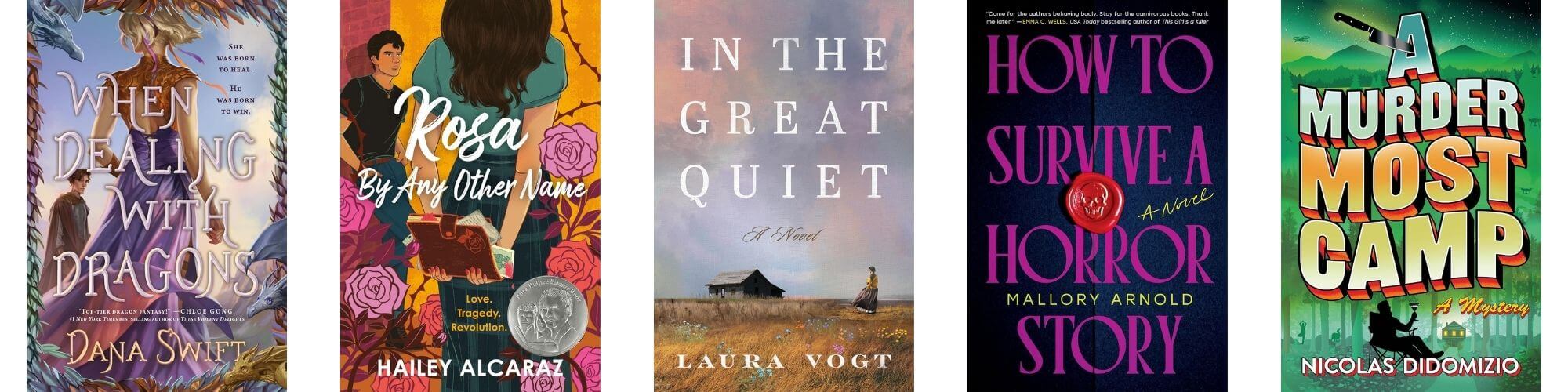
- Dana Swift, who has been crafting fantasy worlds in her head since she was eleven years old and she hasn’t stopped since. Her latest world, When Dealing With Dragons, was deemed “remarkably unique” by the one and only Chloe Gong.
- Hailey Alcaraz who, alongside her characters, is changing the world one multicultural coming-of-age story at a time. Her sophomore novel, Rosa By Any Other Name, just won the Pura Belpré honor.
- Kate Emilie whose forthcoming debut Seven Dishes To Fall In Love was called “a standout YA novel at Frankfurt Book Fair” by The Bookseller.
- Kristina Kamen, author of My Husband’s Family, whose forthcoming from William Morrow in 2027 sold in a major deal following a competitive multi-publisher auction.
- Historian, storyteller and poet Laura Vogt whose debut In The Great Quiet was selected as a March Editor’s Pick for Amazon First Reads.
- Mallory Arnold, author of How To Survive A Horror Story and the upcoming Cross My Heart I Hope You Die (a twisty, campy delight of a novel—it’s no wonder she’s been able to establish herself as a thriller author to know with three books already sold).
- USA Today Bestseller Nic DiDomizio, our resident submission expert whose debut was deemed “unforgettable” by Mr. James Patterson himself. You may have heard from The New York Times that his “voicey, lively writing shines” in his latest release A Murder Most Camp and to that I say, it sure does.



Leave A Comment