

At the impressionable age of fourteen I had a life-altering experience when my parents took our family of five on the holiday of a lifetime. My parents, two brothers and I toured Western Europe and India for a total of six weeks. But before leaving, my dad, a lawyer and voracious reader, insisted we read Irving Stone’s The Agony and The Ecstasy.
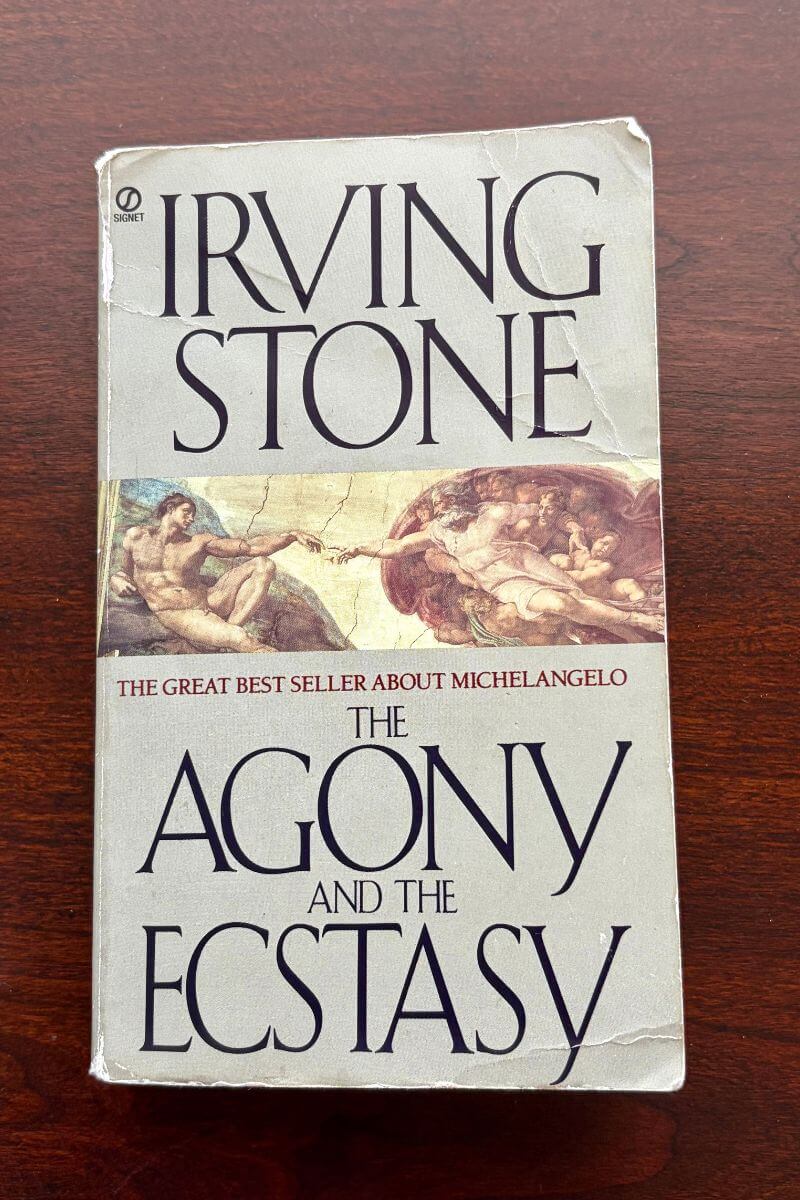
Stone’s book is a captivating biographical novel that traces Michelangelo’s life from his youth to his death. Drawing on the artists own translated diaries, the aptly named Stone, writes about Michelangelo’s love for stone, “To some people, stone was dead; ‘hard as stone’, stone cold’, they said. To him, as he once again ran his fingers along its contours, it was the most alive substance in the world, rhythmic, responsive, tractable, warm, resilient, colourful, vibrant. He was in love with stone.”
One chapter stood out to me. “He picked up the candle from the floor, held it aloft in his left hand to study the body…. Suddenly all the difference between life and death became apparent. This is how I shall end up…. It was a considerable time before he could pick up the knife from the floor.” Under the light of a spluttering candle, Michelangelo taught himself anatomy by dissecting bodies in the ‘dead’ room late at night. He went on to breathe life into stone in one of his most famous works, the Pietà (Our Lady of Pity), in which Mary holds the frail body of Jesus on her lap after he was taken down from the cross.
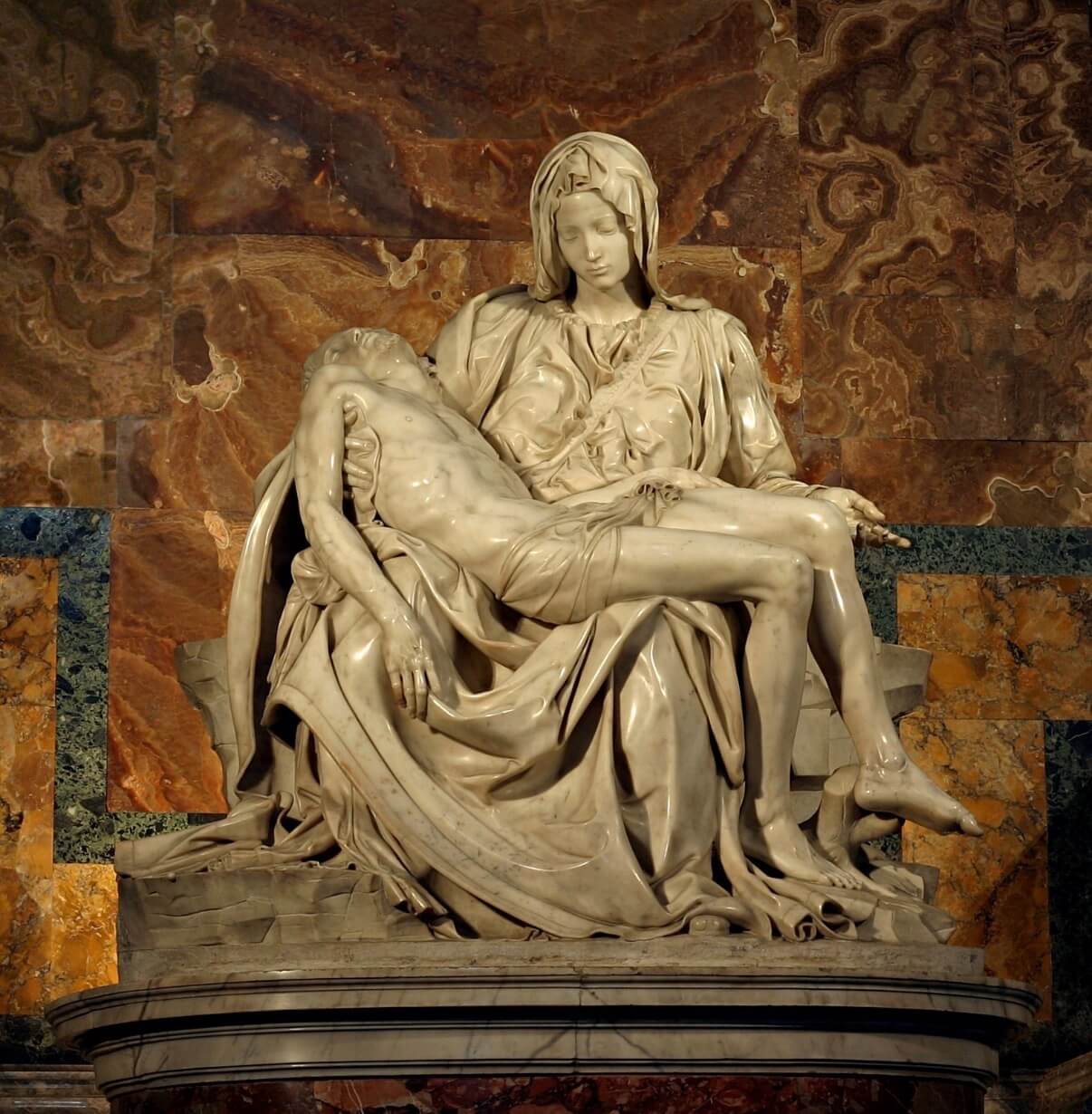
I think I had a mild case of Stendhal syndrome, of feeling faint at seeing art of great beauty, when I first saw this sculpture. Through Stone’s book, I had journeyed with Michelangelo through its creation. I not only saw but felt deeply the grief etched into her beautiful face, his lifeless body so fragile, and yet held firmly in his mother’s lap, the detail of every tendon, vein, and bony protrusion visible through the shiny, almost glassy skin, and for me the piece de resistance, her left palm facing up, as if asking, “Why?”
Seeing Michelangelo’s art through Stone’s book ignited in me a love of anatomy, of the human body, its form, not only of its structure but its function as well. In medical school the subjects I loved the most were anatomy and orthopedics, although being a petite woman with small hands didn’t lend itself to my becoming an orthopedic surgeon. But I enjoyed anatomy so much I returned to medical school as a junior lecturer to teach it for a year.
Why do I love anatomy so much? And how is that connected to writing about murder?
Well for one, anatomy allows one to see what is beneath the skin, to see the muscles and tendons, where they insert onto a joint, to imagine the pulley system they create to move the leg and the body. When I became an eye surgeon my professor said to me the eye is the most complex and interesting square inch of the body, and to this day I cannot think of another more amazing square inch in the human body.
In a murder mystery the sleuth strips away the surface veneer to see the real people and their motives normally hidden in order to solve the crime. In my book The Masala Chai Mystery Club, my librarian sleuth, Neeti Shah, and her chai-loving friends follow the clues to unravel the reason their neighbor was murdered.
Another similarity between anatomy and murder mysteries is anatomy allows one to understand structure. One of our anesthesiology professors would have his residents do a brachial (shoulder) block on a cadaver. He would then lift the skin to reveal exactly where their needles penetrated, on occasion they accidentally injured the major artery supplying the arm. Writing a murder mystery is a challenge in structure, of crafting a plot, the protagonists arc, of devising and planting clues and scattering them strategically to lead the reader on through to the final ‘aha’ moment.
And lastly, anatomy, is basically doing an autopsy. The cadaver we dissected in medical school was that of an African man in his fifties. He was tall and strong, with chiseled features and salt and pepper hair. I could imagine how commanding a presence he was when alive. But we finally learned the cause of his death when we came to the section on the brain, he had died from a brain hemorrhage. As with anatomy, Neeti Shah and her friends dig deep to understand not only the cause of death but the motivation of all the suspects, many who hated the victim, in order to unmask the real killer.
But if I was truly honest with myself, the transition from being a surgeon to writing about murder, for me at least, was not always easy. To diagnose a patient, to come up with a plan of treatment, and then to operate on that patient, requires clarity, analytical thinking, and logic. It’s very much a left hemisphere brain activity.
On the other hand, writing a murder mystery requires the right hemisphere’s imagination, intuition, and creativity. Creating everything from characters, events, the weather, and settings, as well as dialogue demands one let’s one’s imagination roam free. I found it hard to flip from one side of my brain to the other, eventually managing this dilemma by carving out separate times for both my careers, although now I concentrate only on writing.
There is however one fundamental difference between anatomy and crime fiction. The latter goes one step further than anatomy, it tries to bring justice to the victim. It punishes the perpetrator, and in many cases saves the innocent who may be falsely accused. It leaves the reader with a sense of closure. Anatomy on the other hand is static, it looks back but can’t look ahead.
Stone perfectly captures this sense of closure in Michelangelo’s dying thoughts.
“Life has been good…. I have loved marble, yes, and paint too. I have loved architecture, and poetry too. I have loved my family and my friends. I have loved God…. And now I love death as it’s natural termination… the forces of destruction never overcame creativity.”
Thank you for reading.
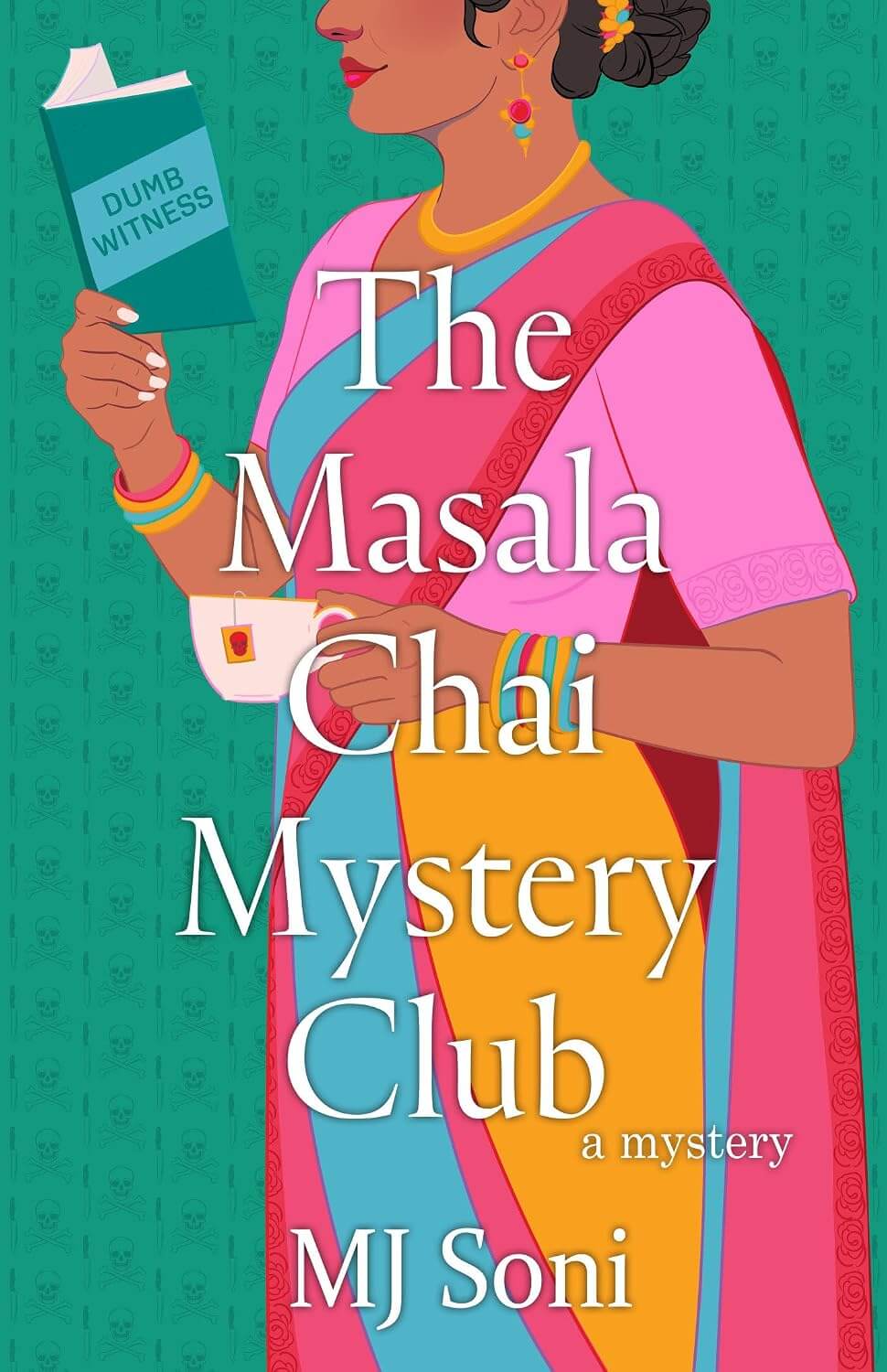 The Masala Chai Mystery Club by MJ Soni – Releases 7/21
When the body of her childhood friend is found, retired librarian, Neeti Shah is determined to figure out what happened. The more she investigates, the more she discovers the murder is similar to Neeti’s most recent book club read. Her childhood friend, Rohit, was not exactly the nicest neighbor but would that be enough to kill him? With the help of her book club, the Masala Chai Mystery Club, Neeti is determined to find the killer but she must be careful or else she could be the next victim.
Buy the book now: Bookshop.org | Amazon













Leave A Comment