

Hank Phillippi Ryan is the USA Today bestselling author of 17 thrillers, including The Murder List and One Wrong Word. Her newest is All This Could Be Yours, an instant USA Today bestseller, the 2026 Mary Higgins Clark Award winner, and now nominated for the 2026 Anthony Award for Best Novel. People magazine called it “A nail-biting thriller” and Library Journal’s starred review says it “should be on everyone’s reading list!” Hank has won every major award in the mystery genre, with her thrillers translated into multiple languages worldwide. Her fiction is inspired by a lifetime of investigating true crime during her storied career as an on-air reporter for Boston’s WHDH-TV, where she was awarded multiple honors for her groundbreaking journalism, including an unprecedented 37 Emmy Awards. Her work has resulted in new laws, people sent to prison, homes removed from foreclosure, and millions of dollars in refunds and restitution for victims. A TedX speaker and in-demand literary moderator, national reviewers call her a “a superb and gifted storyteller.” Hank was a founding teacher at Mystery Writers of America University, and the past president of national Sisters in Crime. She’s co-host of The Back Room, and host of Crime Time on A Mighty Blaze. Her upcoming novel is Mother Daughter Sister Stranger, out September 1 from Minotaur Books. A Chicago native with roots in Indianapolis, Ryan lives in Boston with her husband, a nationally renowned civil rights and criminal defense attorney.
Have you ever stared at your computer screen and realized, in that instant, why they called that thing a cursor?
Yeah, I know. Your previously glorious sure-to-be best-selling manuscript has become stubborn, ugly, derivative, and wheezing toward its last rites.
How many of you have asked yourself, as I do, whose idea was this anyway? Or said, I’m clueless. This book idea is ridiculous. I have no talent. I should just give up. There is no way to fix this.
I promise—you are wrong. It’s not that there’s no way to fix your manuscript, it’s simply that you haven’t figured it out yet. One of my favorite quotations is from Thomas Edison. He said “When you think you have exhausted all of the possibilities, remember this: You haven’t.”
Exactly. It’s not that your writing problem is unsolvable. There’s always a solution. You just haven’t thought of it yet.
Let me tell you first: I’ve been a television reporter for 40 years. I have wired myself with hidden cameras, confronted corrupt politicians, chased down criminals, and gone undercover and in disguise. My stories have to be new and original and engaging. They also have to be finished. No matter how difficult or complicated, that story had to be researched, shot, written, edited, and ready to air on the 11:00 news. And they were often the lead.
Can you imagine if I said to my news director, “Ya know, I’m not feelin’ it, the muse is not with me, could I go on the air at maybe 11:10?”
You laughed, right? Because of course not! The story had to get done.
To prevent that, over the years I’ve created questions that I ask myself at every stage of the writing process, both in television, and now after 17 published novels.
Book-in-progress 18 is no easier than book 1, but at least I know what to do when I think I’ve written myself into an impossible corner. (Which happens every time.)
Are you hitting the wall? Here are 25 questions to ask yourself. And I promise at least one of them will get you out of every writing trap.
1. Is this the first draft? If the answer is yes, and you’re not under an imminent deadline, just relax. Let it be bad! It’s not a test, it’s a process. You’re not writing a book, you’re just writing the next sentence and then the next one. Just write one more thing. Write anything! It’s fine. You can fix it later.
2. Why do I care? Ask yourself what’s important in what you’re writing right now? How does it matter to the book and the character? If you don’t care about what’s happening, the reader is not going to care. Figure out a reason why you and the reader will care. What are the specific stakes?
3. Am I in the right place geographically? In other words, are you being visual? Cinematic? Is the setting the most compelling it can be? If your character is sitting at a desk or at a dinner table or typing on a laptop, is that really the best choice? Where else could they go?
4. Am I at the right place in my story? Are you giving away something you should not be giving away? Maybe your brain knows something the character doesn’t yet. David Mamet has said “If there’s a problem in act three, your trouble started in act one.” Go back and read through your story, and see what you missed.
5. What time is it? Keep track of the time. When you know what time it is, it gives your characters something to feel, or need, or a goal, something they might want to do—and when they do something your story will take off. Maybe your story is not working right now because they need to sleep! How does a tired person behave? How does a hungry person behave? How does a tardy person behave?
6. Are my characters interesting? See what happens if you make someone near- sighted, allergic to dogs, chronically early. Give them a birthday. How far away is that birthday? Might they be thinking about that? If they have a birthday, they have a sun sign. I’m not saying put that in your story, I’m just saying it might tweak your brain to give you some idea of how your character might behave. What would a Scorpio do?
7. What’s the problem? If there is no problem, that’s your problem. A book is a series of decisions that people make, and decisions (and their results) are the engine of your story. Give your character an obstacle. What will they decide? Why?
8. What does my character want right now? This always works. If your character wants something, they’re going to go after it, whether it’s to find their reading glasses or get a drink of water or stop the guy with a finger on the nuclear trigger. When they want something they have to do something. And voilà, your story moves ahead.
9. Can I leave this part out? Hmmm. Maybe you don’t need whatever it is at all. Try a “meanwhile back at the ranch” transition. A jump cut. Move on without all that explanatory stuff.
10. What is actually happening here? If nothing is happening, that’s why you have a problem. Make something happen.
11. How does the character know this? You’re carrying the whole book in your head, and maybe you’ve lost track of all the threads. You may have inadvertently given away something because you know what happens. You know the ending. Remember, your character doesn’t.
12. Who said that? Try thinking about your scene from another character’s point of view: what would they think, what would they want, how would they react? I’m not saying change POV, only that your character might wonder about that, and as a result, do something in reaction. Might they have misinterpreted what someone else was thinking? Uh-oh. Conflict.
13. What are your characters telling you? You may be having trouble because you’re trying to force someone to do something out of character. What would they actually do?
14. Who has the power? There’s a power dynamic in a scene, and your character will behave in accordance with that. Or not. Who is trying to make someone else do something? Or prevent them from doing something? How will your character react?
15. Who has the most to lose? Are you writing from the standpoint of someone who is desperate to keep something or get something? Do they feel they are winning or losing? What will they do to change that?
16. What will happen if your character fails? What is at stake? That’s what drives them, and your entire book. Your character can speculate about what might happen if they fail, and that might spur them to take a different kind of action.
17. What does the movie look like? Be careful of this if you’re tired, but close your eyes and watch your book like a movie in your mind. What do you see? What is someone doing? What do they need? Why?
18. What’s in this character’s past? Is there something in their life experience that connects with the situation they’re in right now? Can you give them that “something”? That will propel your story forward, and, bonus, give your character more depth.
19. What is my intent? Decide why you are writing what you are writing. Is it to introduce that the character has a sister? To give a clue to the bad guy? Is it your happily ever after ending? Ask yourself: what is the one thing this scene is about?
20. What could be sacrificed? You know something must be at stake in each scene, what might your character have to give up to get it?
21. What does this scene sound like? Read your book out loud to yourself. When you’re hearing the story, your brain gets engaged and it will push you ahead. This is a surefire technique.
22. Can you tell someone your story? Just say to someone you respect: “I’m writing this book about XYZ,” and describe it. Say the problem out loud. Most of the time your listener won’t even get to answer, because you will have figured it out for yourself.
23. Am I too focused on the little picture? Don’t forget the big picture of the entire story, what the book is actually about. When you set the big picture in your head, the little picture will be more obvious. (Or—are you too focused on the big picture, and have forgotten a story is a series of steps?)
24. What was my inspiration? When you started writing your book, you loved it, right? It was going to be an absolute bestseller. Remember? Remind yourself what it is that made you feel that way. And fall in love with your book again. That unrequited love will push you forward instantly.
25. Is this really as bad as I think? Here’s a big secret. Nothing is ever as bad as you think it is. And what’s even more powerful, what you think is bad right now might be fabulous tomorrow. Just keep typing. Look at it tomorrow, and you might be surprised.
Remember, writing a book is hard! If it isn’t hard, you’re not working hard enough. So when you write yourself into a corner, or hit a wall, or an obstacle, pat yourself on the back. You’re a writer. And you are about to have a fabulous idea.
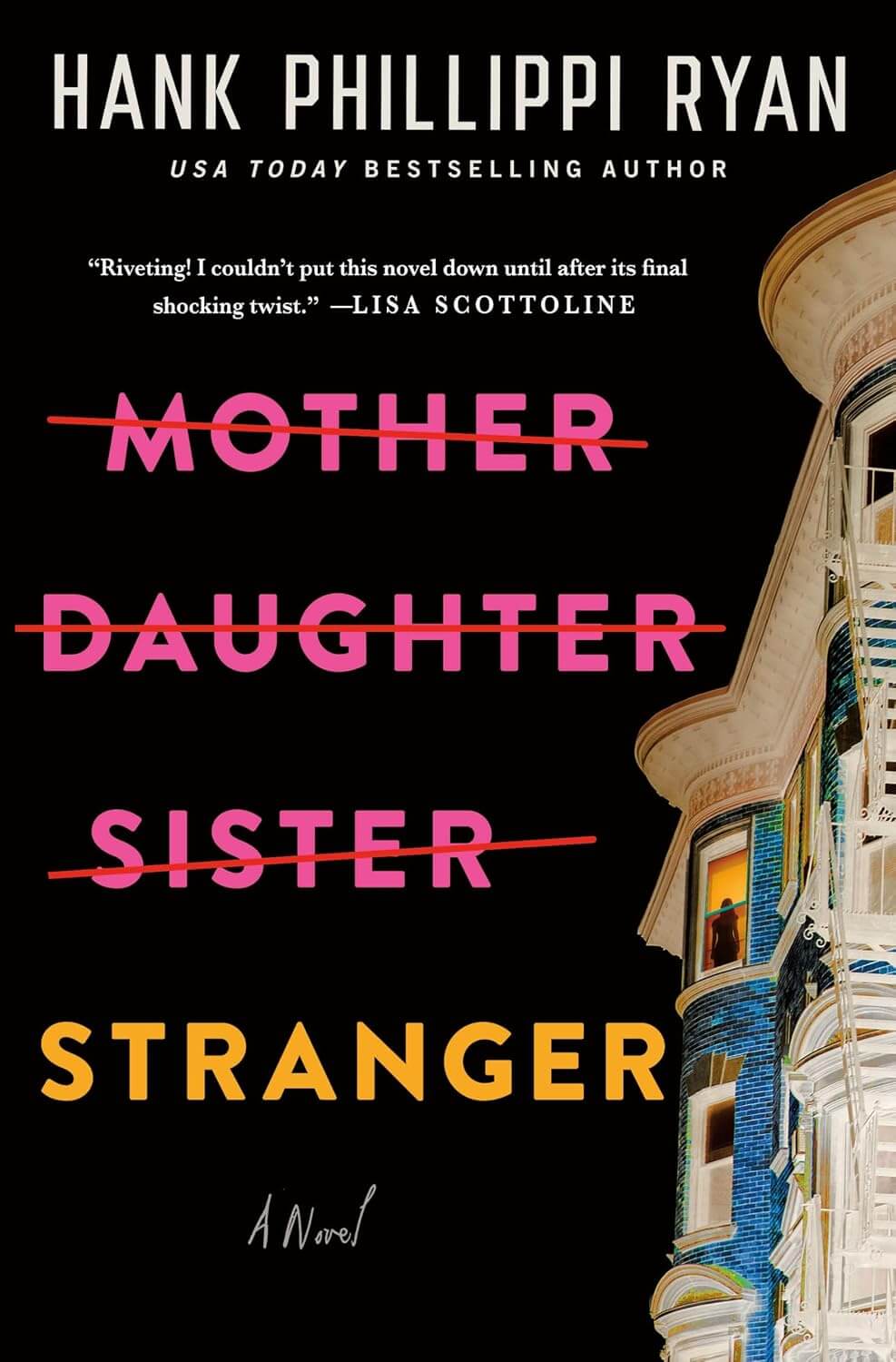
Mother Daughter Sister Stranger by Hank Phillippi Ryan
Sisters Eliza and Bea Ramsey were the only survivors that survived a horrific plane crash that killed their parents. Now eleven years later to the day, Bea has yet to pick her pre-teen daughter up from a sleepover at Eliza’s house. Eliza assumes the worst knowing that Bea would never leave Piper behind intentionally but there is a possibility that Bea planned her own disappearance. The Ramsey’s lives have already endured enough tragedy so Eliza is determined to protect her niece from the sinister past of their family. She must find a way to stop their lives from crashing and burning again.
Buy the book now: Bookshop.org | Amazon













Leave A Comment