
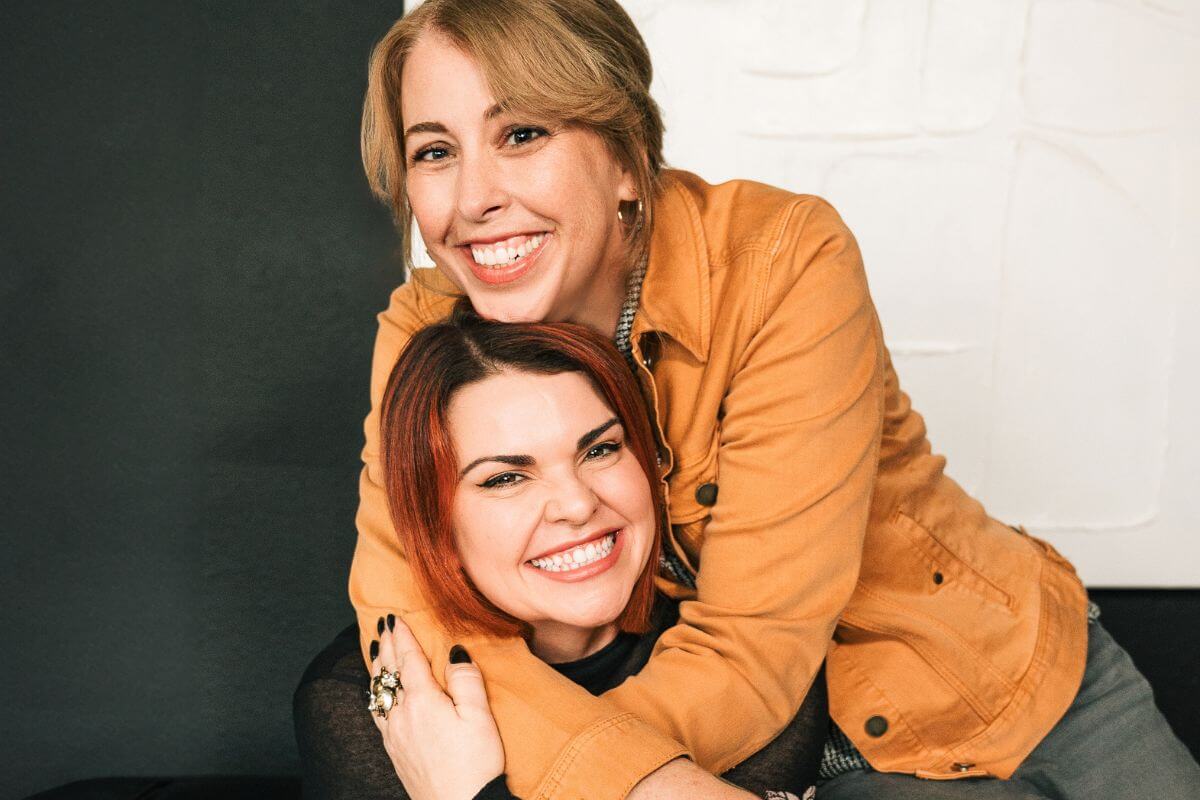
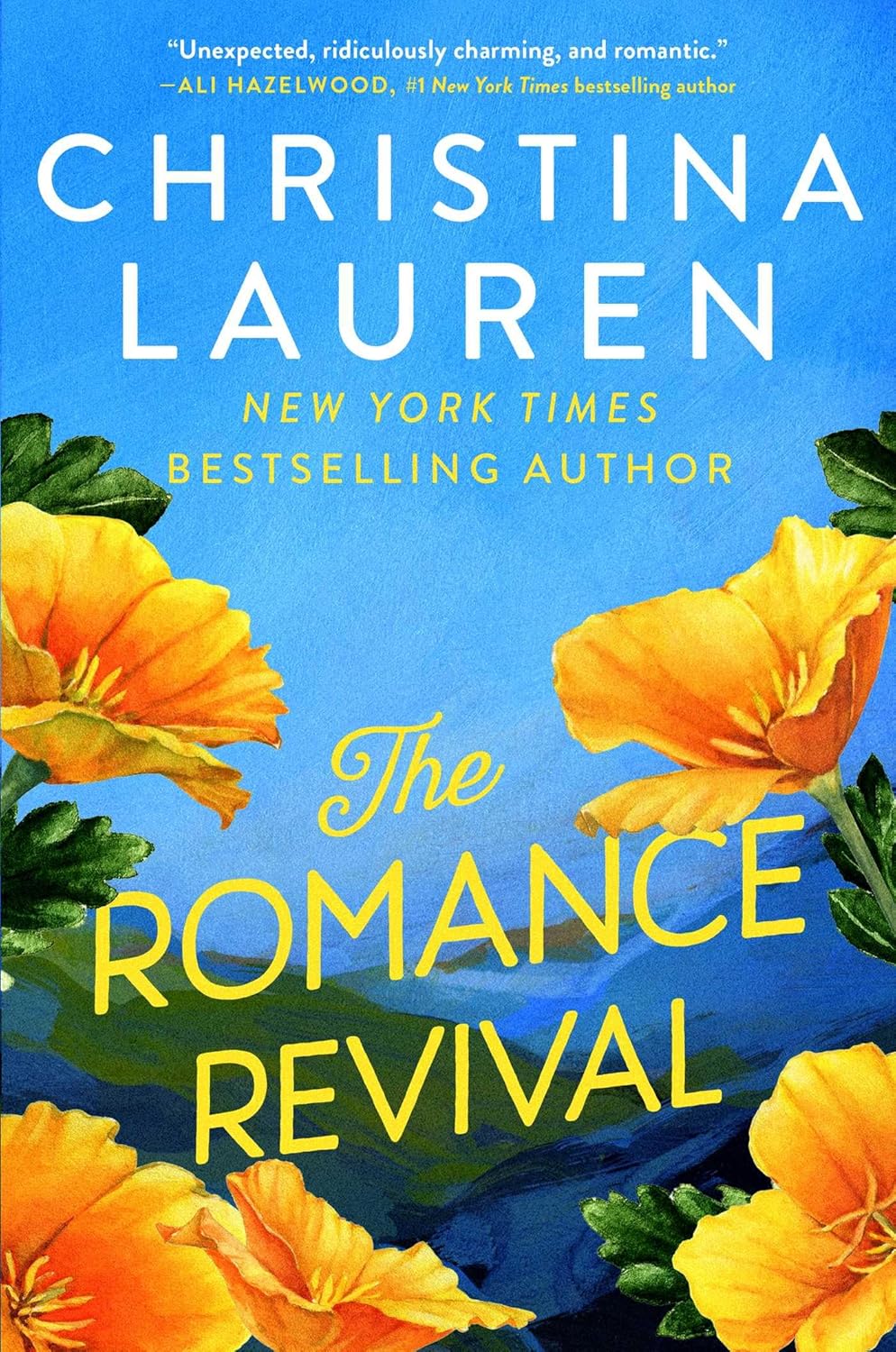
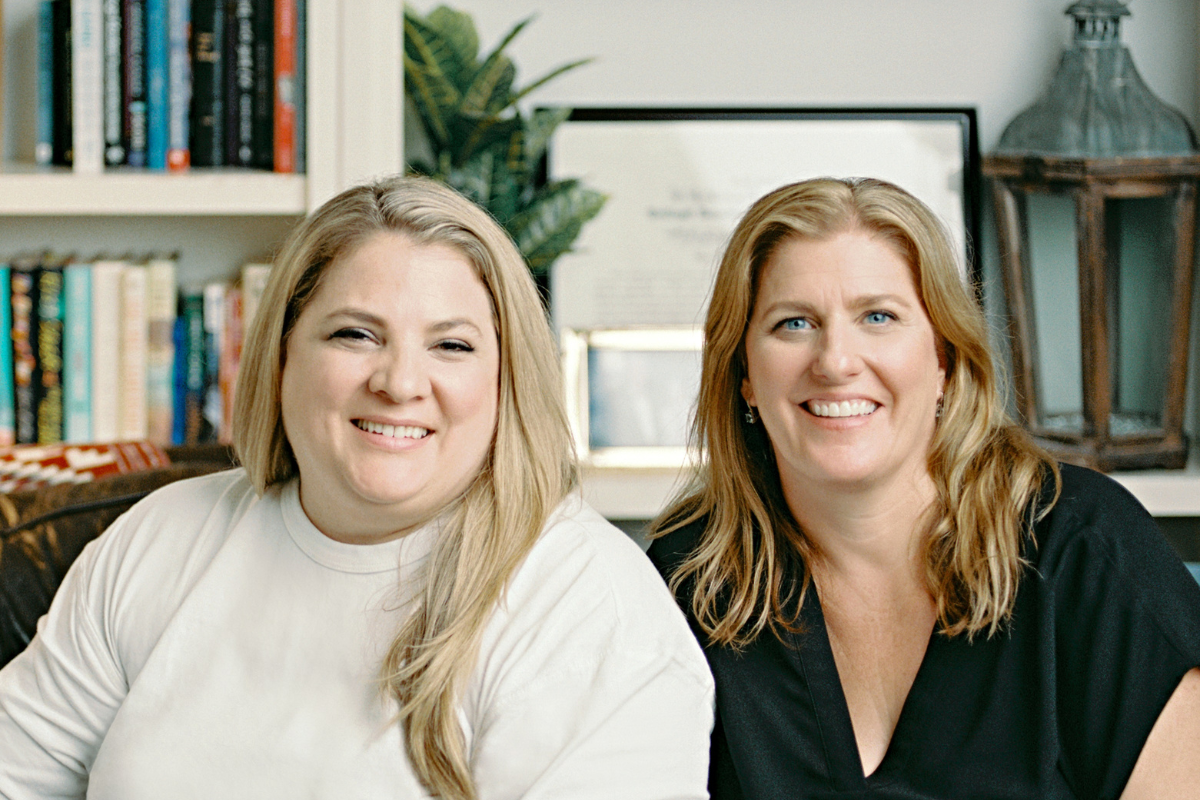
Tell us about your latest book. How did your co-author relationship influence this story?
Lauren: One thing we’re really lucky to have is the ability to bounce ideas off each other. Christina tends to lean toward bigger, more madcap shenanigans, while I lean more toward quieter, emotional stories. That’s usually where we find a good balance between our two tendencies. This novel feels like the perfect hybrid of both of us. It has the science that I love, the murder-mystery component that Christina loves, and an emotional core.
When you first started writing together, did the collaboration feel natural?
Lauren: Both yes and no. If it hadn’t felt natural to collaborate with Christina, we probably wouldn’t have stuck with it, because it is hard to learn how to write a book with somebody. But the collaboration piece was so fun, and we vibed so well creatively. We felt safe with each other right off the bat. We had only known each other for a few days when we started writing together, which in hindsight seems crazy, but I’m so glad we were both ready to jump off a cliff.
We’ve been writing together since 2009—that’s 17 years—and it still sometimes feels like we’re changing the way we do things. That means we’re flexible, though, and we’ve learned how to alter our process to fit our life circumstances and our strengths.
You’ve written so many books together at this point. How has the process itself changed throughout the years?
Christina: When we first started writing together, we were both just writing fan-fic. The amazing thing about writing fic is that you write the thing you’re excited about. We started writing this kind of boring, very serious story, and as soon as we realized we had to write the things we wanted to read, that’s when we went, “Oh my God.” That’s when it all started coming together.
Everything was very important to us back then. We wanted it to be 50/50. We each wanted to do equal amounts of every single thing. But as time has gone on, we’ve learned to embrace that we’re very different people who fit together perfectly. We have different strengths. Now, we lean into those differences and the things we’re good at.
There are also so many things involved in being a writer, and so many things happening at the same time. Sometimes one of us might be drafting a book while the other comes in later. One of the things we’ve been doing is what we call the “vomit draft” or the “trash draft.” I’m driven by plot and the things that happen—that’s my strength. Lo is really good at writing beautiful sentences and delivering the emotional gut punch.
I’ll hand a draft to her, she goes through it, and then hands it back to me. My creativity gets sparked by something she’s done, and I add another layer. Then I send it back to her, and we just keep going back and forth.
You can write a good book in a draft, but you edit a great book. Learning to embrace the things we’re good at has made our books, our stories, our friendship, and our co-authorship so much stronger.
What does your writing process look like today? Does the standard of the “trash draft” stay the same with every book, or does it shift depending on each specific story?
Lauren: I honestly think the trash draft works really well for us. That’s the overarching strategy: we have the trash draft, we have the polished draft, and then we start revisions. That’s become a staple for us. But the world is always changing, and our lives are always changing. Sometimes we’re busier, sometimes we’re less busy. It looks different every time. That actually keeps it exciting because if it were the same process every time, I think we’d get really bored with it.
Christina: We’ve written 30-plus books at this point. I think we’d get bored if we had to do the same thing over and over. Right now, we’re both working on different projects. We saw each other yesterday and gave each other target dates—when we want to be done with something, when we might be ready to switch. That’s exciting because it becomes, “Okay, I’ve got to have this thing ready to show you by September 1st.”
Do you still surprise each other creatively?
Lauren: Yes. I think especially because we gave ourselves permission around three years ago to lean into our strengths and not try to be strong in all the same ways.
If you think about an Olympic team, like a gymnast, one of them is going to be really good at the uneven bars, and one of them is going to be really good at the floor routine. And they’re going to focus on that because they know that’s their strength, and they’re going to win the gold there.
I feel like we gave ourselves permission to let me focus on the prose piece and let her focus on the plotting piece. And because of that, when she has opened up her mind to that being her Christina Lauren chief plotting executive officer, the things that I’m seeing coming from her in that way are just blowing my mind. It feels like she’s opened the floodgates, and it’s really fun.
Christina: I would agree. The best part about being in Christina Lauren is getting to read Lo’s words first. She’s the most beautiful writer. There are so many moments where I wonder if we have the same vocabulary because I’m not sure how she puts words together.
Romance readers are obsessed with chemistry and tension. How do you create those moments together?
Lauren: I think it helps that we’re both romance fanatics, and we know what we love in a book. Most romance authors were romance readers for a long time before they became authors. We have deep roots in the genre and a lot of respect for its traditions, so we know what we want to see as readers on the page. It’s almost a shorthand—a language we can speak between the two of us.
But chemistry is also something that comes through the layering of revisions. You might have a whole character spreadsheet with their name, birth date, siblings, parents, occupation, eccentricities, backstory—all of that—and you still don’t really know them until you start writing them.
A lot of those things come as you get to know the characters as individuals and then as a couple. One thing that works well in successful books is when each character feels very distinct, almost like somebody you know, and that only comes with time for us. The chemistry between them is something we layer in.
What happens when one of you gets stuck?
Christina: That’s the best part of having a co-author. They’re almost always in the same place as you are. And we can just be like, here. And especially if we’re writing the same book. That’s the great thing, because there have been many times when I have had no idea. I do not know where I’m going. We talk all the time. Nonstop. We see each other all the time. And so we can always ask the other person. Always send it to them, always ask for help to fix it.
Lauren: I have literally gotten trash drafts from Christina, where a chapter ends in the middle of her thought, and I’m like, did you have more of this? And she’s like, no, I just realized I was going to come back to it because I didn’t know what to do, and it’s on you now.
Christina: Sometimes, Lo will be like, Christina will add scenery here. And I just go in, because she’s just like, I left it in a place where I can sit and visualize exactly what everything looks like. It’s so great. You can just leave these notes.
She Writes: It’s nice because being co-authors means you basically have a built-in sounding board at all times.
Christina: Exactly. I don’t know how people do it alone.
Do you ever disagree about a character or a plot, and if so, how do you work it out?
Lauren: Not really. I think because we are collaborators and we’ve been in this very tight-knit, unique partnership for 17 years, people are very curious if we fight. And the truth is, we don’t really disagree about too many book things, because we started writing books as a duo.
We never had to bring our individual egos or individual names into the situation where it’s like, “Well, I want readers to feel the Lauren Billings voice here,” or “I need readers to see the Christina Hobbs contribution here.” Nobody knows who writes what. And most of the time, at the end of the book, we don’t either.
We disagree about things the way you would with your sister, or your best friend, or your spouse, or your business partner, because we are sort of all four of those things kind of melded together. But when it comes to the books, there’s not a lot of friction or disagreement. And usually I have strong opinions all the time. Christina has strong opinions occasionally. And so when she does, I tend to really listen, because I know that she wouldn’t put her foot down unless she really felt it.
Christina: It helps that we’re Christina Lauren. It helps that we get to be separate. Everything we’ve done is to build up this person, and the thing that we want is a good book. It doesn’t matter whose idea we went with.
You’ve both written on your own and together. What is the biggest difference between the two experiences?
Lauren: I think for me, it’s just not as fun. I did write a book on my own, and that one was fine. It kind of came out of me like a fever. But I don’t enjoy the process alone as much as I do with her. I think I love talking about the book so much that if I only have myself to do that with, it’s not really very fun.
Christina: Also, when we are working on different things, because sometimes one of us will be using a trash draft while the other is doing revisions, we’re sending each other stuff constantly over time. Even though we’re writing different things, she’ll send me the first chapters. And I usually will say, “I’m going to send you the draft of this every day at the end of the day,” because I’m good with the accountability. And that way, she knows what I’m doing all the time anyway.
Lauren: If we had two Christinas, we would have like four books written, but we would have had a blast for the last 17 years. If it were two Laurens, we would have 72 books, and we would hate each other.
What is the biggest misconception people have about co-writing?
Christina: That it’s super easy for everybody, and everybody can do it. It takes a very specific set of personalities to work. Lo and I are very different, but in such wonderfully complementary ways. And you cannot have any ego.
Lauren: My answer would be that it makes it easier—it makes it lighter work than writing alone. I don’t actually think it’s half the work to write one book if you do it with another person. It’s just a different kind of work.
If you are the person who really thrives in a collaborative vibe, co-writing is for you. If you love getting feedback, if you love giving feedback, if you like talking things out, if you want to share something and you don’t get possessive, it’s a good fit. But it’s not because it’s going to be faster, easier, lighter work. It’s still the same amount of work. It’s just a different kind of process.
What does the balance between your writing partnership and your personal relationship look like?
Christina: We make sure that we always put in as much bestie time as we do work time. They’re equally important to us. We talk about books because we always talk about books, no matter where we are, but we make sure that we have things to do together—go to Disney together, go to concerts together. We’ve had a lot of that lately, and it’s how we refill our friendship well. Our lives are so connected and entwined. It’s kind of hard to see where one starts and one ends.
Lauren: It’s like if you go out to dinner with your spouse, you’re going to spend some time talking about your kids, but you’re not going to spend the entire meal talking about your kids. You’re going to check in with each other about work, your friends, when your next vacation is, your weekend plans, etc. Our kids are the books that we’ve made. So throughout the day we spend together, we’re talking about all of the things in our lives, and the books are a part of that.
What’s one piece of advice you’d give writers who are thinking about writing with a partner?
Lauren: Be communicative. Be honest about what you need, and what is working and what’s not—but of course, do it with a mind to maintaining the relationship. And by communication, I don’t mean “I’m just going to tell you everything I think and feel.” It means also learning how your partner receives communication—how they want to hear things, how they receive feedback, what kind of praise they need, what kind of criticism they need. Because even if it’s not the same way you receive it, you need to learn how they take it. They’re going to be different from you. And if they’re exactly the same as you, then that’s already a problem from the beginning.
Christina: Yeah. And always believe they have the best intentions.
Finally, what are you working on next?
Christina: So many things. We turned in our draft of our book, and we’ve already done one round of revisions on our book that comes out in 2027. It’s a summer romance–a then and now timeline sort of thing. And now we’re each working on a book, and hopefully we’re going to have our rom-com and a thriller done by the end of the summer.



Leave A Comment