
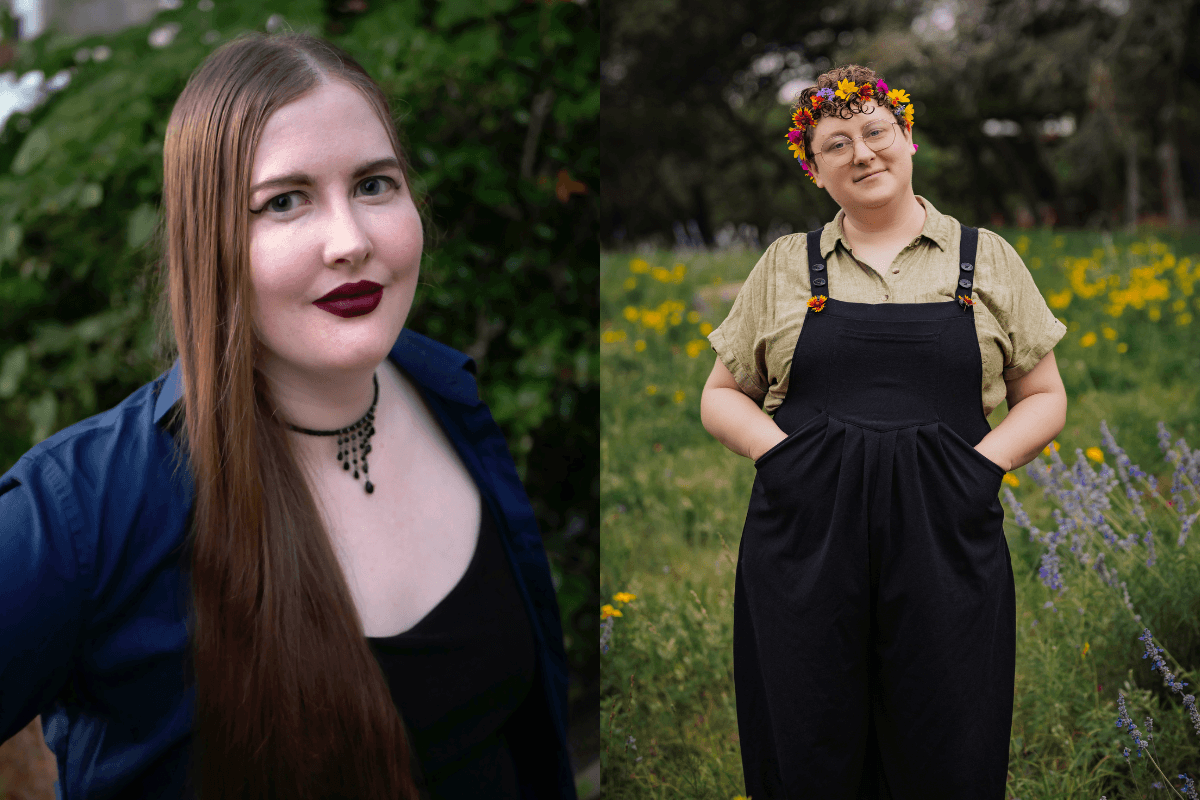
Kat Hillis is an author of queer speculative fiction full of silly jokes and twisty plots. A southerner now living in Alabama, she’s a lifelong fan of vampires, murder, and puns. When she’s not writing or reading, she’s gaming, drawing, or making handcrafted soaps.
Rosiee Thor began their career as a storyteller by demanding to tell their mother bedtime stories instead of the other way around. Now, they write stories for all ages, including young adult novels Tarnished Are The Stars and Fire Becomes Her, the picture book The Meaning of Pride, and tie-in novels for franchises like Life is Strange and Firefly. They live in Oregon with two cats, a dog, and an abundance of plants.
Every writer we know, when faced with the prospect of a completely blank document, sits down and says, Wait, how do I write a book, again? Whether it’s the first book, or the fifteenth, each novel is a new adventure requiring a new approach—and co-writing is no exception. There are as many ways to co-write a book as there are co-writing duos in the world, but the good news is you can find a way to make your own unique process and approach to storytelling work with your co-writer’s in a way that not only makes the work lighter, but a lot more fun.
The first step of a successful co-writing experience (in our experience) is collaborating on a solid plan for the novel, to make sure we’re both on the same page about the plot, characters, setting, themes, etc. To do this, you don’t need to be in the same room as your co-writer. Video or voice calls and back-and-forth texts containing lots of jokes are how we planned our mysteries together. Whatever works best for your team, spend time making a plan, even if the plan is to pants the novel, or discover most of it along the way. Remember that, as with writing solo, the plan you make can and almost certainly will change and grow as you start getting words on the page, so don’t be afraid to have lots of discussions about what’s coming next as you draft.
A lot of authors divide up the work by using multiple POVs. Each author takes one or more characters and is responsible for writing those chapters or scenes, which usually results in a nice back-and-forth. This also makes it easier to establish more distinct narrative voices for each character. A trick to make a book co-written this way still feel like a unified story despite the different styles of each writer is to swap characters for any rewrites or revision passes. That way, the style of the novel as a whole will naturally move toward a synthesis of your voices. Co-writers like Amanda Foody and C.L. Herman or Sarah Raasch and Beth Revis co-write their books this way to great effect!

Our co-written Dead & Breakfast series only has one point of view, so we had to get a little creative about our co-writing process. Luckily, we excel at different parts of the writing process and were able to combine our skills and strengths to create a system that worked well for us. For example, Kat is a great fast drafter, and Rosiee is more skilled at revising, so we were able to design a process that let us each take charge of our favorite part of the process. Kat writes a skeletal fast draft, handing it over chapter by chapter for Rosiee to revise. We trade chapters back and forth, taking it through two drafts in a single day. We like this method because it allows us to both stay immersed in the collaboration and continue to share ownership over the development of ideas. Leaning into your strengths as writers saves time and effort. There’s no need to force yourself into a process that ultimately works less well for you if you have a co-writer who’s happy to split the work this way like we do.
Another strategy is for one author to write an entire skeletal first draft, then hand the book off to their co-writer to revise and flesh out the story. Neither of us have used this method, but it works well for author pairs in which one person can get ideas down fast, and is good at plot structure, while the other is better at tackling big-picture revisions. This can also be useful if you and your co-writer have different scheduling constraints. Sometimes you’re not both available to give your all to a drafting process at the same time, so dividing the work up this way can help to accommodate other deadlines or scheduling conflicts.
If you’re sitting down with your co-writer and trying to determine the best possible way to split the work for your unique writing styles, the most important piece of advice we can give you isn’t flashy or new, but it’s one you can’t take a shortcut around: you have to communicate clearly and honestly with your writing partner about what you want. It’s a lot easier said than done sometimes, but laying a strong foundation of trust and honesty will help in the long run when disagreements arise about where to take the story you’re creating together. It’s also essential to allow yourselves to change tactics when something isn’t working. We started our co-writing journey trading off chapters, but quickly realized Kat would much rather fast draft and Rosiee would much rather dig into significant revisions from the start. We both hesitated to talk about this at first, worried we’d be asking the other person to take on more work, but when we did finally discuss it, we realized how well our strengths and weaknesses were matched by the other. If we hadn’t had that honest conversation early on, we would’ve wasted a lot of time and effort writing in a way that didn’t work well for either of us.
Regardless of how you ultimately approach co-writing, it can be a rewarding and fulfilling creative endeavor. The most fun either of us has had writing books has been doing it together. Writing can be a lonely, solitary pursuit sometimes, but it doesn’t have to be. With a co-writer, you always have someone to bounce ideas off of, send extremely niche jokes to at three in the morning, and work through plot problems with. Writing a novel is difficult, but it’s sort of like assembling IKEA furniture—easier and more fun with someone else to split the work Also, the instruction manual is indecipherable. Good luck!
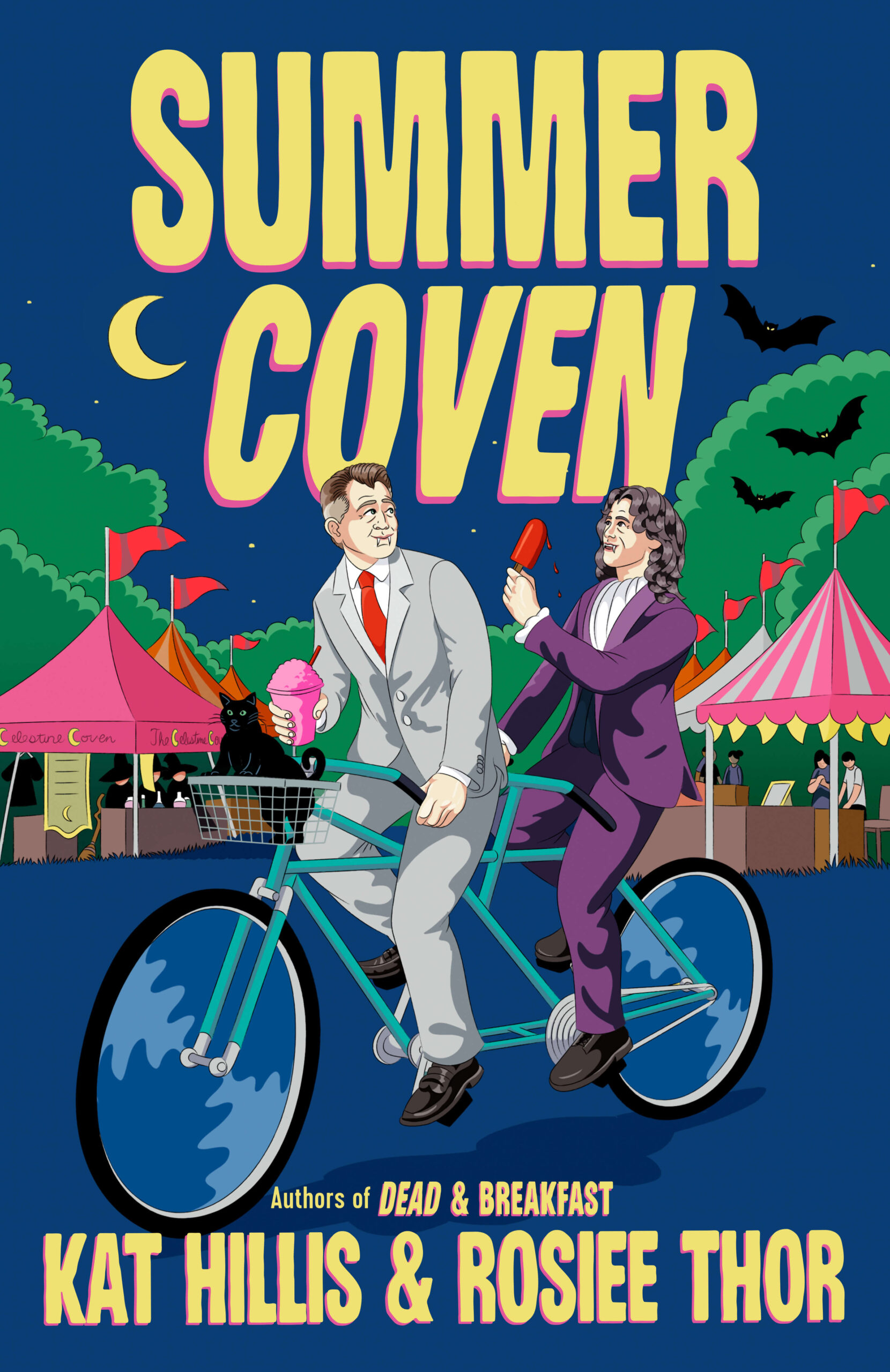 Summer Coven (A Dead & Breakfast Mystery) by Kat Hillis and Rosiee Thor
The supernatural, Arthur Miller and his partner, Salvatore Conte, are adjusting to their new lives in Trident Falls. Their inn is running smoothly and Arthur is investigating his first case as a private detective. He’s been tasked with find his friend Brody’s mom. The investigation takes a turn when a pet psychic is murdered with poison that she somehow didn’t see coming. Arthur uncovers that she was apart of the Celestine Coven, a group of witches that sell charms and spells. Did the pet psychic wrong another member of the coven? Or did an owner not like one of her pet predictions? With Arthur’s cleverness and Sal’s quirkiness, they are sure to solve the murder, find Brody’s mom, and avoid vexing the hexing witches.
Buy the book now: Bookshop.org | Amazon













Leave A Comment