

Canwen Xu is a debut author whose writing has appeared in The Washington Post, The Kansas City Star, Chalkbeat, Areo Magazine, and more. She is a graduate of Columbia University.
I was shopping at Costco with my mom when I got the call. The New York area code flashed on my screen just a day after I’d returned home from my onsite interview. I’d already been trained by the upperclassmen—the veterans of Wall Street internship recruiting—on what this could mean. Bad news tended to be relegated to emails. But who knew if that applied to Blackstone, the holy grail of finance internships, the name that elicited feigned nonchalance when you answered their question, “where are you interning next summer?”—even as their pupils dilated and their opinion of you rose like a swelling tide.
Nine months later, I walked into 345 Park Avenue wearing a tweed blazer I’d splurged on from Nordstrom Rack, too excited thinking about how I’d finally made it in life to remember just a year or two prior I’d been looking forward to becoming a pollster, or a writer, or a professor. I’d followed a trajectory so common to Ivy League students that it’d become a cliche, the topic of self-deprecating jokes rather than serious introspection. Was I particularly interested in finance? Well, I wasn’t uninterested in it. But truthfully, I was more interested in finding an anchor with which I could develop a sense of self, a sense of security and assurance that I was important and valued in the world. I had grown up attending public schools in North Dakota, South Dakota, and Idaho, and arrived at Columbia with just as much naivete as you would expect. I felt inferior to everyone: less interesting, less glamorous, less cultured. And I thought: well, now that I’ve gotten this internship at Blackstone, none of that will matter. I was smart and hardworking: I’d impress the people at Blackstone, I’d land the return offer, and I’d reap the money and social connections that the job would provide. I’d never have to feel insecure again.
The summer passed by in a whirlwind of long hours pouring over Excel, attempting to memorize the different shortcuts, taking baby sips of alcohol at happy hours, flying first class to tour potential investment properties, sleeping in the bedroom I rented in the basement of an East Village duplex that I shared with three other college students. My friends in other industries couldn’t believe I was willingly working 75 hours a week. “It’s not that bad,” I’d say with a shrug. “I like the work.” And did I like the work? I didn’t not like the work, but I didn’t have the self awareness or honesty to tell them that whether I liked the work or not wasn’t the point. I liked the person I could say I was. I liked the tagline on Linkedin. I liked feeling like I was enough.
At the farewell happy hour for the interns, I sipped on my drink while waiting for the restaurant staff to bring a cake announcing we had all gotten return offers. That was what happened the year before; according to the internship coordinator, the return offers were ours to lose. As far as I knew, none of the interns had gotten poor feedback. An hour passed, then two, and I started getting an uneasy feeling in my stomach. One of my mentors, who had told me during our regular check-ins that he’d only heard positive things about my work, was having trouble meeting me in the eye. And so were a few other full-time people I’d worked with. I couldn’t tell if I was imagining it or if they had just been whispering to each other and looking at me. I told the other interns I wasn’t feeling well and went home.
The next day, the woman from HR called me into a conference room to tell me that my “skillset didn’t match what they were looking for” and wouldn’t say much else. I don’t remember what happened next, whether I started crying on the train or whether I managed to hold it together until reaching my room in the windowless basement on 1st Avenue.
Rejection Spiral
When the fall semester of my senior year began, I tried recruiting for other finance internships, but it was an uphill battle without a return offer in hand. Even in the interviews I did get, it was like the synapses in my brain weren’t firing correctly, as though the failure from Blackstone sent a shock through my system that erased the skills gained from years of high school debate and college mock trial. I found myself unable to form a cohesive thought, let alone translating it into spoken words during an interview.
I had already felt dejected from not getting the return offer; but these additional rejections just made me spiral further into a pit of doom and despair. I considered taking a leave of absence and going home; but then, Covid hit, and we all went home anyway.
Developing a Sense of Self Based on External Achievements
The problem with developing a sense of self based on external achievements is that when the achievements are taken away, you’re left with nothing. Well, not nothing, but something worse than nothing: a void, a black hole, that sucks away light and joy and meaning, the things that make life valuable and worth living. For most of my life I’d put off developing a true sense of self in favor of curating a set of labels that I could identify with, the same way I’d put a myriad of stickers on my laptop case to represent the image I sought to exude to my peers with their own sticker-covered laptops. The year between getting the internship and finding out I didn’t get the return offer, I’d managed to mentally consolidate all the characteristics that made up my fragile, amorphous sense of self into a single external marker: Blackstone. Blackstone represented my work ethic, my intelligence, my upwards trajectory in life. Blackstone made me happy and confident in the same way a drug could make someone feel happy and confident, a fleeting, rare sense of peace predicated on a single, volatile thing that doesn’t care what happens after you get left in its wake.
Writing a Novel About Rejection
I accepted a teaching fellowship after college with the goal of giving myself some time to figure out a long term plan. During the fellowship I worked part-time as a content strategist for a startup, which then offered me a full time role. Eventually, I left this job for another startup, and two years later, another startup. I discovered I quite liked working at startups. Plus, while demanding, these jobs didn’t require 75 hours a week. In my free time, I rediscovered my childhood passion for reading fiction. Then, I started writing, and it reminded me of when I was in fourth grade and would spend hours on the computer typing up short stories or poems. Write what you know, people tend to say, and what did I know? I knew what it was like to predicate your self worth on external achievements. I knew what it was like when it all came crashing down. I started writing a novel-length manuscript about a girl who’s prepared her entire life to get into Harvard Law School, only to get rejected—and not just by Harvard, but by all the other law schools she applies to.
In summer of 2024, five years after my ill-fated summer on Park Avenue, I got a very different call. It was from my agent, telling me that Penguin Random House had pre-empted my novel in a two-book deal.
Learning to Like Myself
During my senior year, while I was still in the thick of job hunting, one of my closest friends told me that “someday, you’ll look back and realize that this was the best thing that ever happened to you.” I wanted to believe it, but the more I repeated this to myself, the more I felt like I was lying. Yes, it would make a nice story, but the universe didn’t care about stories. Sometimes you failed, and that was it. There was no redemption arc, no full-circle moment where everything worked out.
But my friend was right. It ended up being the best thing that ever happened to me. Because of the experience, I was able to fulfill my childhood dream of becoming a published author. I also built a career in an industry that was better suited for me. But the main reason was that I became someone whose happiness comes from internal peace rather than external validation: the feeling that regardless of what happens, I’ll figure it out, and that I like myself just because I like myself, not because of what I’ve achieved.
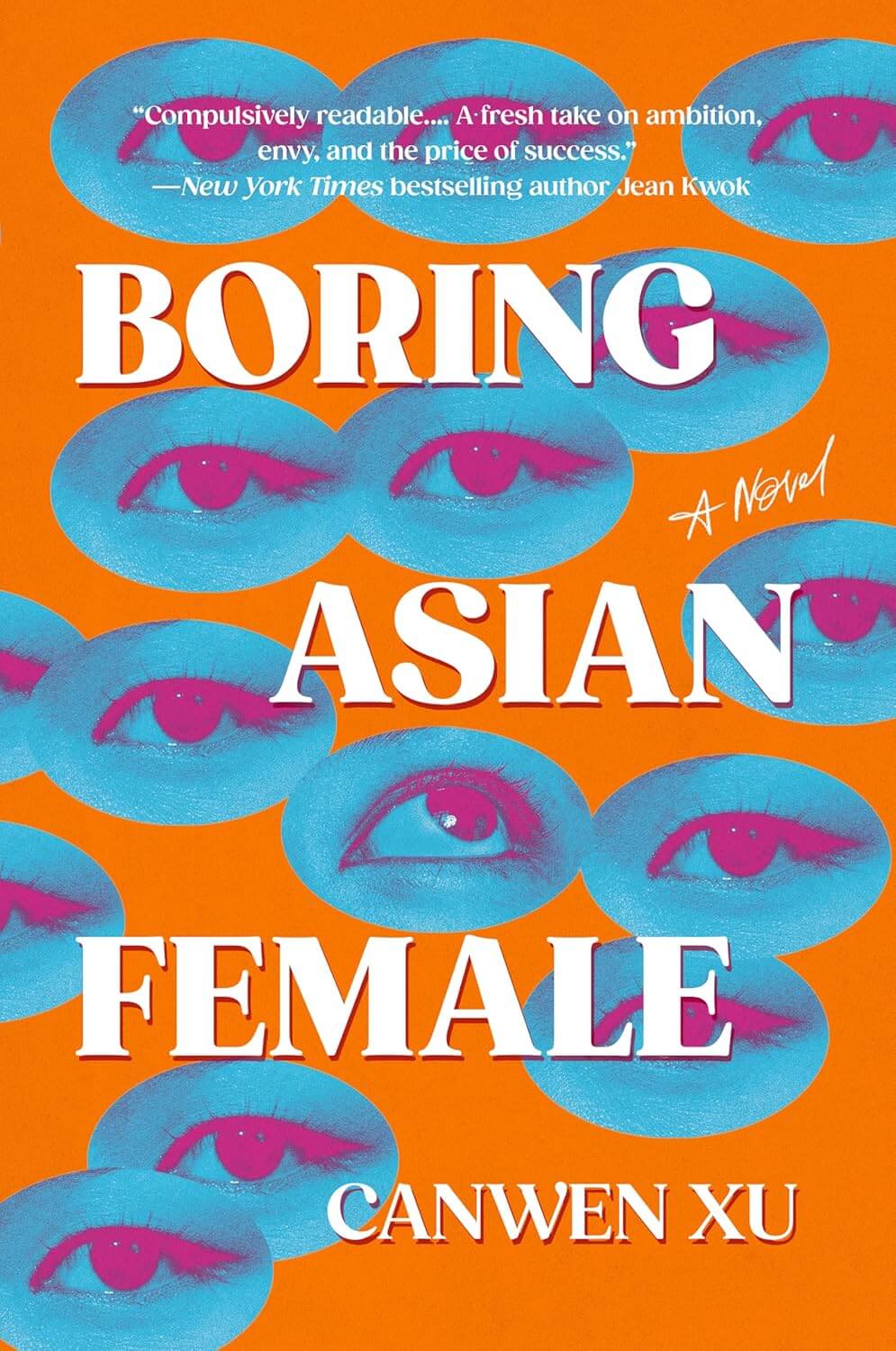
Boring Asian Female by Canwen Xu
Elizabeth Zhang has built her identity on achievement, believing her intellect will secure her place at Harvard Law—until she’s rejected for not standing out. When her classmate Laura Kim is accepted instead, Elizabeth becomes obsessed with uncovering what makes Laura worthy, only to spiral into the belief that the life she worked for has been taken from her. As her fixation deepens, she begins to unravel, revealing how rejection and pressure can push someone toward their darkest instincts.
Buy the book now: Bookshop.org | Amazon













Leave A Comment