

Corey Rosen is a writer, actor, visual effects producer, and storytelling teacher based in San Francisco, California.
He is the author of Your Story, Well Told: Creative Strategies to Develop and Perform Stories that Wow an Audience, and the soon-to-be released A Story for Everything: Mastering Diverse Storytelling for Any Occasion (Dec. 2, TMA Press).
Corey got his start writing for Comedy Central and Jim Henson Productions. As staff writer for Lucasfilm Animation and Tippett Studio, he wrote the screenplays for several films and theme park rides and attractions exhibiting around the world. He has been featured on The Moth Radio Hour, is a regular contributor and on-air personality for Alice Radio’s “The Sarah and Vinnie Show” and is a company performer at BATS Improv, one of the world’s foremost centers for Improvisational Theater. Corey also hosts The Moth StorySlams and GrandSlams and won their first ever Bay Area StorySlam in 2012.
When not writing, Corey works as a visual effects artist and producer. He has credits on dozens of movies, including several Star Wars films, and Disney’s A Christmas Carol. He has taught in the MFA Animation program at Academy of Art University and for The Writing Pad. He has written and directed television commercials and award-winning short films. He lives in San Francisco with his wife Jenny and two children.
Every January, instead of making writing resolutions, I’ve started choosing questions.
I’m probably not unlike a lot of writers/authors in that I tend to find just about any reason (truly any reason) not to write. Doesn’t that desk need to be cleaned? Too early to start on my taxes? Wouldn’t now be a good time to organize family photos from 2009?
For years I’ve tried to do what I thought “serious writers” are supposed to do at the start of each year. I set ambitious goals. Daily word counts. Publishing targets! Clean, confident promises about consistency and discipline. This would be the year that I finally stuck to my goals. Right?
But nearly every year, something has quietly gone wrong. The goals didn’t necessarily fail, but my relationship with my writing did. The joy thinned out. The work felt heavier. The measure I put on my work went to volume and output over attention, care or curiosity.
When I host shows like The Moth StorySlams (which I do on at least a monthly basis), I am forced (thanks to the glorious presence of a ticking deadline clock) into action. I have to develop and craft new stories quickly. Over time I noticed that approaching the pressure with questions rather than resolutions has changed my mental posture entirely. Instead of standing at the edge of a creative chasm, frozen by expectations, I stepped forward with curiosity.
Resolutions tend to ask me to try to prove something (to myself or others). To be more productive. More disciplined. More valuable. Questions do the opposite. They invite listening.
One year my question was, “What am I avoiding writing?” Another year it was, “What story wasn’t ready to be told, but might be now?” Those questions quietly re-shaped my writing habits more than any word-count goal ever did. Starting my year this way removes the strain of chasing output, and replaces it with a dialogue, and a relationship, with my work. That shift, more than anything else, has helped me sustain a writing life.
Another question I’ve come back to periodically (including this year): “What is happening in someone else’s life that impacts mine (or my perception of my own)?” I often begin with my spouse, children, parents, or my in-laws… What are they facing? What are they struggling with? What have I lived through might help me relate, console, or support them?
These empathic questions pull me out of a “me-centric” mindset and place me in a spirit of remembering, reflecting, and appreciating. And when that happens, the stories flow differently. Not louder, but deeper.
Alongside this practice, I’ve returned to something even simpler: a small, embodied storytelling ritual. Instead of writing, I record.
As a Moth Storyteller, verbal and oral storytelling is natural to me. Doing so to “nobody” can feel weird. But doing so to some thing, such as my voice recorder, can trick my brain into going into storyteller-mode.
Every so often, sometimes daily, sometimes in short bursts, instead of writing, I choose a moment (such as while sitting outside with my cats and my morning coffee) to audio-record one five-minute (true) story into my phone’s voice memos app. It could be something that happened yesterday (such as a “mileage run” I made that literally ended with me running as fast as I could to catch my flight) or something that happened years ago. I label each file with the date and a short title, and then let it be.
I don’t always use these stories in my work, but they function like a creativity “stretch,” loosening the muscles and getting my storytelling juices flowing. And on days when the juices don’t flow beyond that five minutes, I’ve still shown up creatively. That’s often enough (at least until tomorrow) to quiet the part of me that likes to punish me for being “unproductive.”
What these approaches have given me, over time, is resilience. I’ve gotten better at protecting myself from the all-or-nothing thinking that quietly sabotaged my writing life for years. They’ve helped me make room for seasons of rest, for personal upheaval, and for doubt. They’ve also taught me that consistency doesn’t have to look like daily production. Consistency can look like ongoing attention.
Questions don’t demand immediate answers. They allow for evolution. They change as we change. And in a year that will inevitably contain uncertainty, interruptions and surprises, that flexibility matters.
If you find yourself approaching a new writing year feeling pressured, behind, or quietly exhausted, I offer this as an alternative: instead of asking what you plan to produce, ask what you’re willing to listen for. Choose a question you can live inside of for a bit. Let it walk with you through the months ahead.
The work might just meet you along the way.
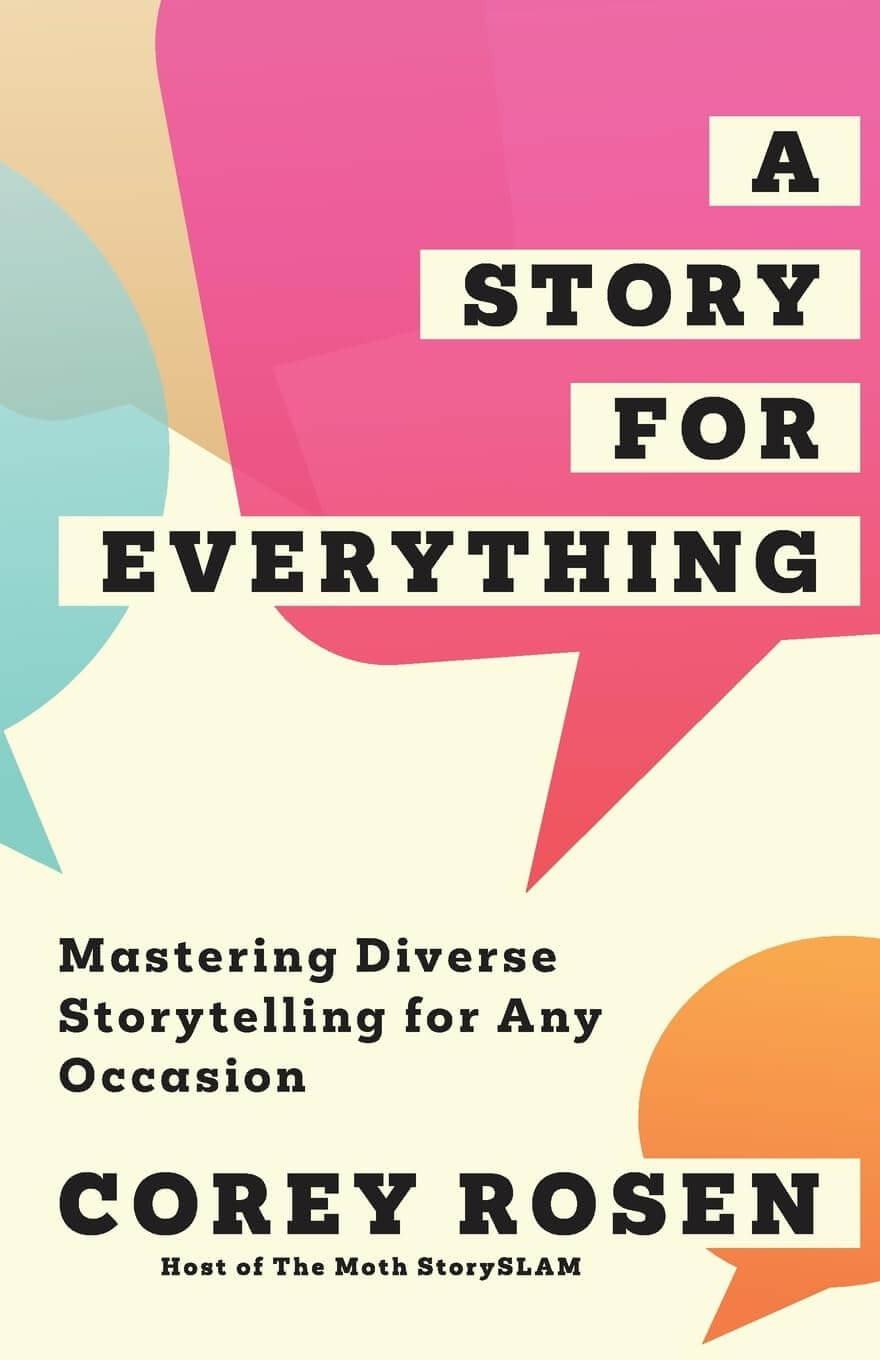
A Story for Everything
This guide book offers narrative and storytelling advice for personal, professional, and familial opportunities. Organized into three sections: business, school, and family, each chapter offers advice, examples, and entertaining instructions for diverse uses catered for any beginner. This book empowers its readers to improve their communication and writing skills for any situation.
Buy the book now: Bookshop.org | Amazon









Leave A Comment