
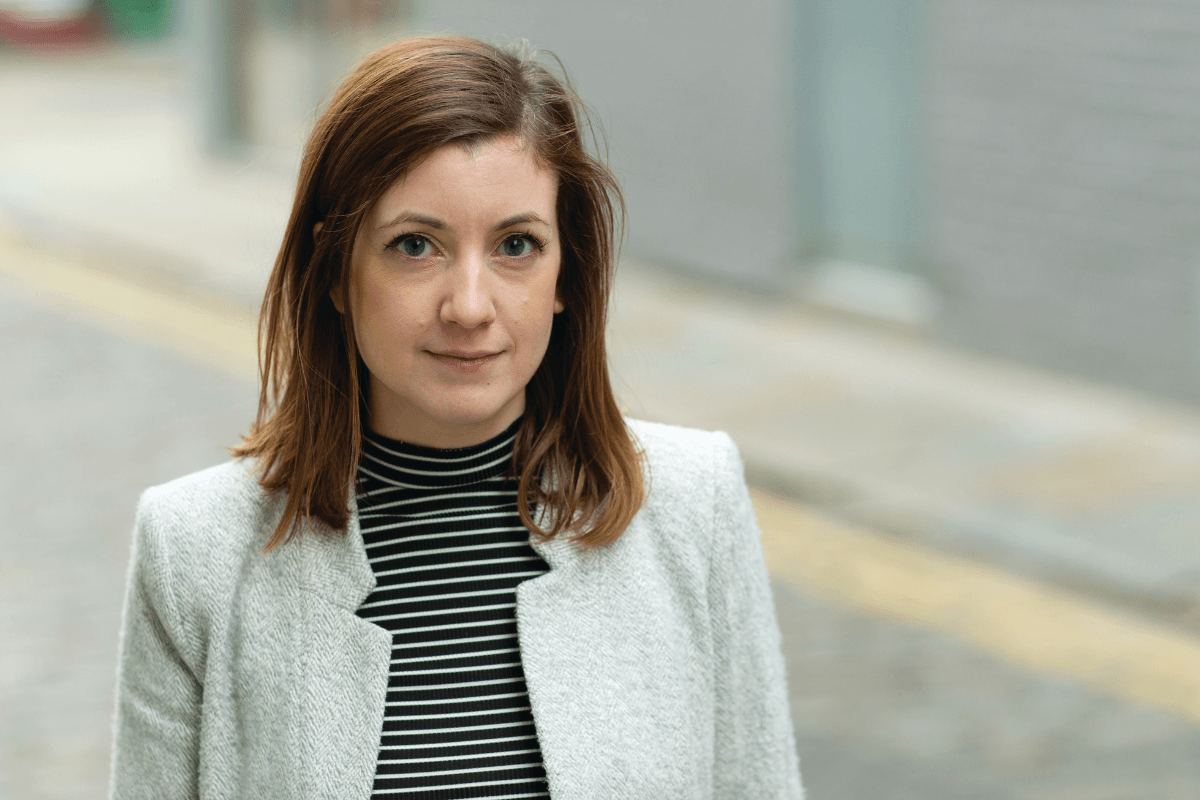
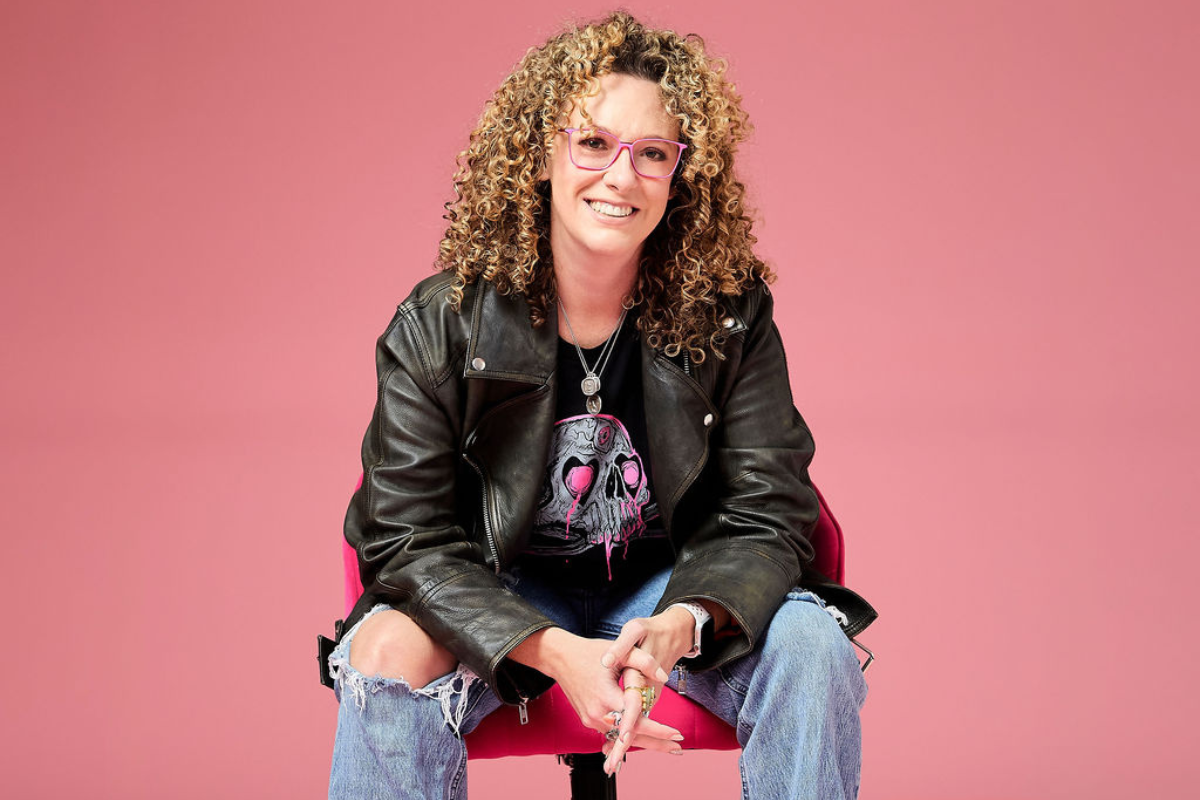
Gillian McAllister has been writing for as long as she can remember. She graduated with an English degree before working as a lawyer. She lives in Birmingham, England, where she now writes full-time. She is the author of the New York Times bestseller Wrong Place Wrong Time and the Sunday Times bestsellers Everything But the Truth, Anything You Do Say (titled The Choice in the US), No Further Questions (titled The Good Sister in the US), The Evidence Against You, How to Disappear, and That Night. She is also the creator and co-host of the popular Honest Authors podcast.
1. You have been sharing a lot on Instagram about your journey. The very real and raw accounts of authorship have made such a big impact. What inspired you to start sharing some of the realities of being a published author?
I think, in simplest terms, that I had never seen it done before. Most traditionally published authors have perhaps a more polished veneer, and I found myself thinking that I’d love to tell the world, and my readership, what it’s really like to live this very strange and contradictory life.
2. One thing you represent best is this false perception that if you’re a bestseller, all your dreams come true. When did you start realizing that, even with success, there is still difficulty and less glamorous elements to this career?
Actually very early on! I have struggled on and off with an unknown physical health problem, most recently diagnosed as lupus, and this flared up only two years into my career, in 2018. I had the strangest dichotomy of being a bestselling author who was laid up for an entire summer. I could write, but not much else. It’s pretty humbling to have an Achilles Heel not fixable by having a great job, a great life, and creative freedom.
3. You also show how you juggled full-time work with writing and how your personal life is interwoven with your creative one. What myths are you hoping to debunk by showing the real side of your journey?
I think it’s the myth that writing must be done in controlled conditions. I know some writers who are quite ritualistic, or even take long retreats to get a draft down, and I just wanted to send a semaphore to all the people out there who do it like I do: on changing tables, at midnight, on phones, in soft play. On car journeys, in the bath. We make it work.
4. In this issue, we’re talking specifically about rejection. You’ve shared openly what you had to face to get to where you are today. Was there ever a moment of rejection where you considered walking away? What helped you keep moving forward?
I really never once considered walking away, but I had a constant high-level anxiety that it wouldn’t ever happen for me, and that I would keep trying with no results – that I would write an unpublished (and unpublishable) book a year, forever. In hindsight I can now see that actually of course I would get published, because with each novel I finished I became a better writer. It was a pretty linear curve up, and is for most people willing to try for that long.
5. What do you think writers most misunderstand about the publishing process?
That you will be edited into a writer you don’t want to be – this just never happens.
6. If you could start your career over, what would you do differently?
I may struggle to answer this question because everything so far has led me to where I am today, really, but I do think perhaps I would have understood a little more about genre and hooks in the very earliest parts of my career. I didn’t know I was consciously writing a genre blend, at times, between women’s fiction and thrillers, and I think I could have been clearer about that to readers who like both.
7. What advice would you give an author who is in the throes of rejection and struggling to hold hope?
There’s a meme somewhere out there with a little guy mining his way through a tunnel – you can see he’s about to hit diamonds, but at that moment, he turns around and gives up.
8. You’ve discussed how even after—what appears to be—the pinnacle of success, you can still face challenges and rejection. What do you think is the characteristics authors need to develop to persist in publishing?
It is of course resilience, but it is also the ability to strategize. Where getting published has to be an act of faith, staying published is a game of chess. When you publish books is almost as important as what they are. It’s worth giving thought to what your readership expects from you, how to tell if they are satisfied, when to re-brand yourself, how much to test the boundaries of where they will follow you. My most popular novel was speculative, and that was a risk, but a calculated one. The business side of it directly tessellates with creativity, for me, but I think some authors don’t see it this way. For example, writing a high concept novel is an act of fine art, but it is also an act of commerciality, and I don’t really separate the two.
9. What assumptions did you have about publishing before you were in it that you’ve discovered are not what you thought?
I think I assumed a ‘happy ever after’, especially after my debut became a bestseller. When the reality is that there have actually been plenty of lows since getting published. And more highs too!
10. Rejection isn’t all bad though, right? Was there a time when you were rejected but it actually turned into something positive?
I parted ways with my first US publisher in a risky move. I rejected their offer because my first two novels hadn’t worked with them. It wasn’t their fault – they were tricky books in a tricky market. But I wanted and needed change, so I took Wrong Place Wrong Time out on submission, found a home at William Morrow/Harper Collins, and just a few months later, it was selected for Reese’s Book Club.
11. Do you feel like rejection—or success for that matter—impacts you creatively, or do you still write the story you want to write and hope of the best?
I do manage to keep them separate, actually. For all I have said about art and commerce, there is a purity to writing fiction where the story simply wants to be what the story wants to be, and all I do is follow that.
12. When a manuscript or idea isn’t working, how do you personally tell the difference between a project that needs persistence and one that needs to be let go?
You feel it deep inside in the same way you know a relationship is on its last legs. The difficulty isn’t identifying this feeling – it’s acting on it even though that is painful.
13. Tell us about your latest book, Caller Unknown. How does this book fit into the arc of your career?
I had a desire to write just the best suspense novel I could. I had just written a big, sweeping intricate crime novel in Famous Last Words, and next I wanted to write a book that just goes off like a rocket from page one. It has only two characters; Simone and Lucy. Lucy is kidnapped, and Simone, her mother, must get her back. I adored the simplicity of it, the road trip across the Texas deserts. It scratched an itch, as each book does.
14. What is the next big goal on your list as an author? Or do you avoid setting goals now and just aim to write the book that’s calling you?
I never set goals, but I always try to write a book that would be picked up as a debut, without my name attached to it. That said, I’d really love to see more of my work on the screen.
15. What are you working on next?
I have a new novel coming out in 2027 which has scratched a new itch for me. I can’t say too much, and it’s still very much a Gillian McAllister novel. But it is also about spies.
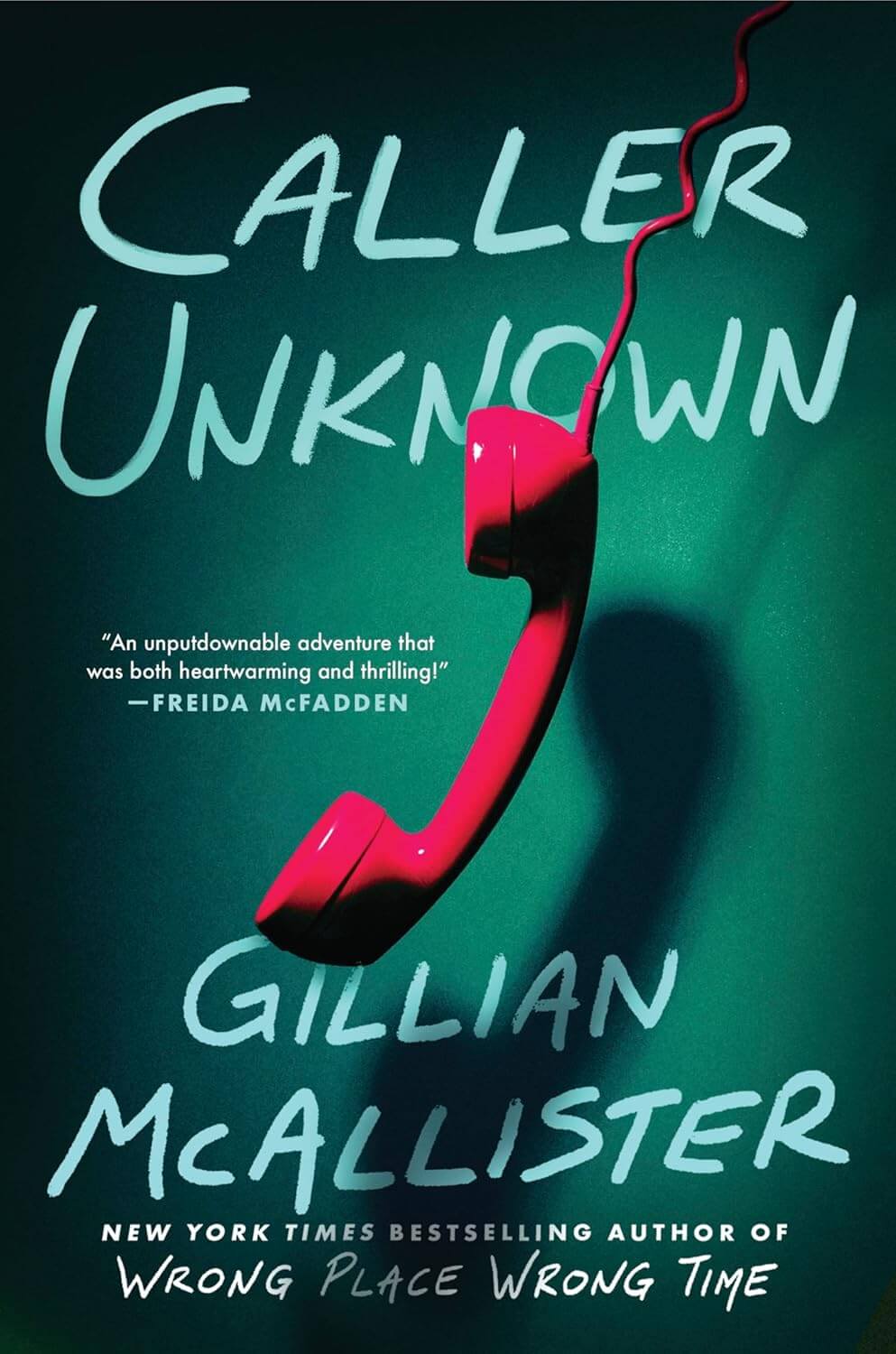
Caller Unknown by Gillian McAllister
Simone and her daughter Lucy go on a vacation to Texas before she sets off to college. Traveling from the UK to the US is quite the taxing journey made worse when one morning, Simone wakes to find Lucy missing from their vacation cabin. Then comes the call, it’s the kidnappers; The deal: no authorities, a meeting location, and a deal to be made. Though Simone’s husband implores her to contact authorities, she does not out of fear for her daughter’s life. Without help and desperate to save Lucy, Simone drives to the meeting location. She finds out they do not want money for the return of her daughter. No. The kidnappers want Simone to do something that compromises her morality and tests the lines she will cross to bring Lucy home.
Buy the book now: Bookshop.org | Amazon




Leave A Comment