

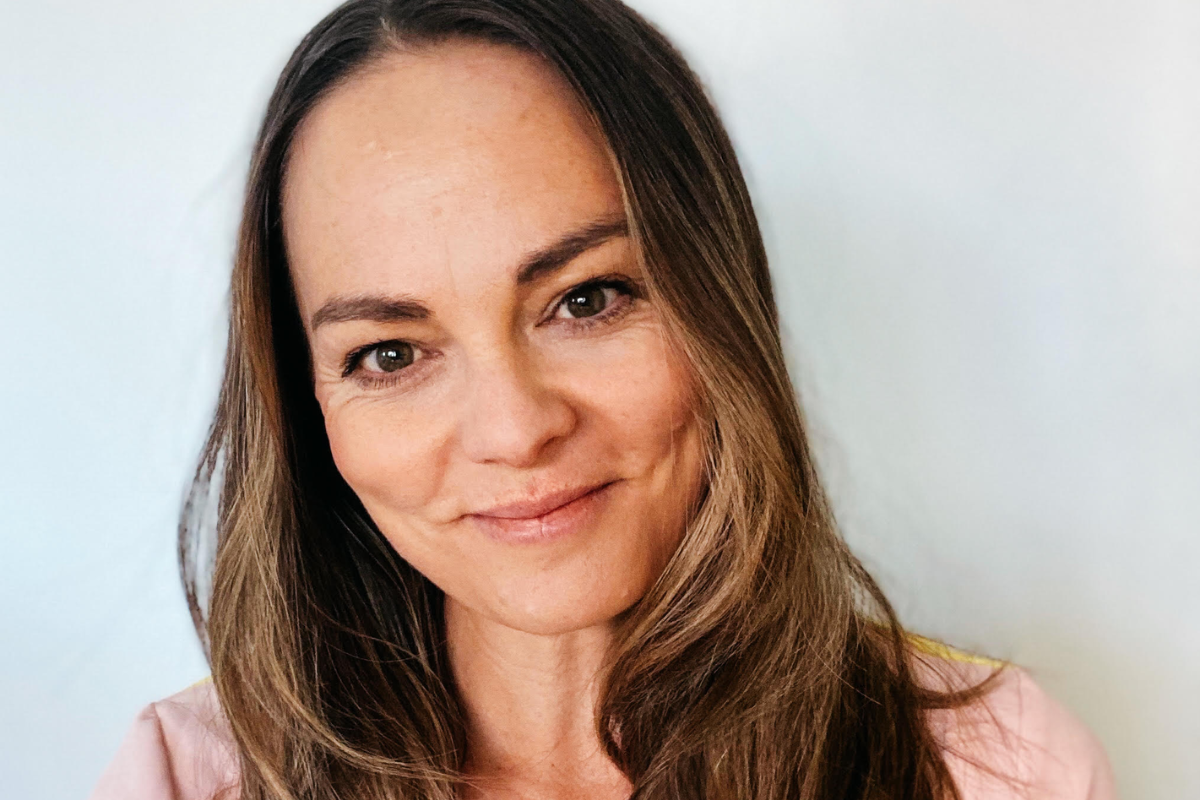
Clémence Michallon is the author of The Quiet Tenant, a USA Today and international bestseller and nominee for the Hammett Prize. She’s also a freelance journalist whose work has appeared in The New York Times Book Review, Time Magazine, The Independent, and more. Clémence was born and raised near Paris, has lived in New York since 2014, and became a U.S. citizen in 2022. Our Last Resort is her second thriller. She can be found on Instagram at clemencemichallon and on X at Clemence_Mcl.
What has the transition from being a staff writer at The Independent to being a freelance journalist looked like for you? Was this move a reflection of the changing journalistic landscape or a choice?
I’m very lucky to be able to say that my transition to freelance was entirely a choice. In fact, it felt scary, because who in their right mind quits a full-time journalism job, with a salary and benefits and a 401K, in this economy?
I love the work of journalism. I miss it. But I also love being a novelist, and trying to do everything at once made everything joyless. The basic logistics were also getting tricky. It’s hard, for example, to schedule book meetings while also trying to follow a trial. I needed more flexibility in my schedule, and I wanted to make sure I gave myself the time to fully enjoy this moment in my life as a novelist. That’s why I went freelance.
If I’m honest, I thought I would do more freelance work than I actually do. I do still write, and I’ve had bylines in The Wall Street Journal and Allure recently, as well as The New York Times Book Review, TIME Magazine, etc. I also wrote two articles about dance for a German magazine this past winter, and that was so interesting and different from anything I’d done before.
The thing about books is they behave structurally like a gas: if there’s a lot of room, they’ll take up all of it. If they need to compress, then they will—but only if they have to. And so far, my books have made themselves comfortable and taken up most of the room.
You’ve reported on true-crime and written thrillers. How did journalism fuel your novel writing?
One of the reasons I was driven to write fiction was that I wanted to make every decision (at least as far as the initial draft is concerned). When you’re writing a piece for a website or a newspaper, it’s—understandably—a collaborative process. Your byline is on the piece, but it’s not a Clemence joint. It’s a Newspaper Clemence is Writing For joint. That makes sense. It’s all perfectly fine. I wouldn’t want it any other way. But it was really fun, when I started writing fiction, to make every aesthetic and stylistic decision without having to pitch or justify them. It’s a big game of “because I said so”, and I find that immensely satisfying.
I try to keep my fiction brain separate from my journalism brain. By that, I mean that I don’t want to interview someone and have them worry that something they share with me is going to end up in a book. They are two different practices. At the same time, if I become interested in something, it tends to come up both in my journalism and in my fiction. When I sit down to write fiction, I hold a certain amount of knowledge at the back of my brain, and that informs the books. It’s a bit like my brain is a turkey and the knowledge I’ve gained through journalism is the brine in which my brain floats.
What changes did you see transpiring while working in the newsroom and how is that playing out now in the media?
I am a child of the big internet transition. In my experience, we basically all had to get comfortable with a lot of formats, whereas journalists in the past (I think) were able to focus on the actual reporting, and they tended to work in one form throughout their career. I’m a writer, and I always knew my journalism would come out in writing, but I learned how to record and cut sound, ditto video. Journalists who aren’t super senior are sometimes expected to be across a wider variety of things, but I do think that comes at the expense of our depth of expertise. It’s a balance, and people should pay attention to that.
What advice would you have for someone trying to enter journalism today?
I don’t know if this is because I’m from France, and we’re not the most optimistic people, but I used to get such bleak answers when I said I wanted to become a journalist. I was told I would make little money. (My starting salary was not high, but I made a living as a journalist for years in one of the most expensive cities in the world.) I was told the work would be hard and demanding. And guess what? It was! But it was also interesting and it made me feel alive.
In this economy, the work is always going to be hard and demanding. You might as well do something interesting with your time. So this is the advice I would give: if you want to do it, go for it. No, it won’t be easy, but nothing worth your while is. Your curiosity is your best asset. It’s a quality. The world needs more curious people.
And if you try it out and after some time you realize it’s not for you, or you need a break, or you want to do something else? Then you will do that. All US states except for Montana, apparently, have at-will employment. At-will employment is generally bad for workers, but it does mean that you can quit your job expeditiously if you need to.
Oh, and also: be incorruptible. I don’t just mean “don’t take bribes”—that should go without saying. Incorruptibility is a deep commitment. It’s an asset. Cultivate it.
As an award-nominated journalist, how do you feel writers can stand out or find their niche in such a saturated content market?
I’m conflicted about the concept of finding your niche. I studied journalism in three different countries, at three different academic institutions, and I think I was told both to find my niche but also to be as versatile as possible!
I do think it helps to do one type of thing really well. It doesn’t have to be a topic, per se, but I decided pretty early on that I was a writer. My journalism took place in writing. Maybe one day it will take place in podcast form, because I’m nothing if not a talker. But I decided I wanted to be a good journalist-writer, or writer-journalist, and I focused on that. So if a form of journalism calls out to you, then I don’t think it makes sense to fight it.
A journalism career is bound to call for reinvention at one point or another. Ride this current wave, fall down this one rabbit hole, and by the time you’re done with it, you’ll have arrived at the next one.
What do you think the impact of AI will be in journalism? How do we preserve a human-centered media landscape?
Journalism is the practice of writing the truth. I think that when we talk about truth, people have a very general concept of it. Writing the truth does often have to do with big concepts, but it’s also so much more granular than that. It has to do with sentence-level fact-checking. It has to do with asking yourself: is this thing meaningfully true, technically true, or both? And it has to do with things that sound like details but aren’t. All burglaries are robberies, but not all robberies are burglaries. Not all car crashes are car accidents, and not all car accidents are car crashes. In the context of journalism, you learn to express yourself with a degree of precision.
AI is incompatible with any of what I described above because it makes things up very confidently. It’s utterly inaccurate a lot of the time. If you were to use it, you’d need to fact-check the hell out of it. But you’re going to do that anyway, so why would you bring in AI as a completely unreliable middle man that also happens to steal from artists and kill the forests? Why make your own life more confusing and complicated?
What do you think the future of journalism might look like (good or bad)?
I am worried about the fact that many of the wealthy people who own or acquire media outlets (especially newspapers) do not realize, or maybe refuse to realize, that you cannot treat them like any other profit-maximizing entities. In journalism, you want to make enough to keep the machine running. You want to grow your operation, to keep it healthy, to make sure people can advance professionally, that they are taken care of financially. But if you want to get as rich as possible in as little time as possible, don’t buy a newspaper. Quality journalism isn’t incompatible with the running of a healthy business, but it is incompatible with the absolute prioritization of profit. Do not buy a media outlet if you believe in wealth more than you believe in journalism.
What skills do you believe a journalist should be focused on building/growing in this moment?
Do not be intimidated by power or by performances of power, big or small. This might sound obvious, but I find that it takes a lot of work to train yourself out of certain responses. We’re taught to be polite and deferential in the presence of authority. Do not be polite. Do not be deferential.
On the opposite end of that spectrum, be as human as possible with your sources and subjects. I’m talking here about people who are not elected officials or people in a position of massive institutional power. When someone is sharing a part of their lives with you, be it lovely or painful, be as human as you can be—and then be a little bit more human. Remember that most people have no idea how journalism works. (Again, I don’t mean elected officials or people with a vast publicity apparatus.) Most people don’t know what “off the record” truly means, nor do they understand how it works. Explain it to them. Make sure you secure their informed consent.
If you are about to ask someone to share a traumatic experience with you, prepare yourself by learning about trauma-informed reporting. Do what you need to do to avoid re-traumatizing them. When in doubt, take every precaution. Ask what words they’d like you to use or not use to describe what happened to them. Ask whether a specific detail is okay to include. When in doubt—ask.

Our Last Resort by Clémence Michallon
Frida and Gabriel head to a secluded luxury resort in Utah hoping to rebuild their relationship after a devastating tragedy drove them apart. But when a young woman is found dead and suspicion quickly lands on Gabriel, Frida is forced to question everything she believes about him. As the story moves between their present-day nightmare and their past escape from a cult, long-buried secrets start to surface. The closer Frida gets to the truth, the more she wonders how well we can ever truly know the people we love.
Buy the book now: Amazon | Bookshop.org

Leave A Comment