

Donna Jones Alward is the bestselling author of When the World Fell Silent (HarperCollins, 2024) and Ship of Dreams (HarperCollins, 2025). You can find her on the web at www.donnajonesalward.com
Several years ago, I felt like my career was unfocused. I had several books I wanted to write, opportunities waiting for answers, and I wasn’t sure how I was going to pull it all together and really advance my writing where I wanted it to go. Moreover, I felt like I was constantly in “react mode” rather than being in the driver’s seat.
That November, sitting in a school cafeteria while my kid did improv, I began writing out the beginning of my very first strategic plan—and I’ve never looked back.
What’s really great about this plan (and it’s a pretty comprehensive document) is that it grounds me in my goals and author identity. That makes it easy to make decisions: does this item or opportunity advance me toward my goals, or does it distract me from focusing on what moves me toward success? Even after making a complete genre switch into Historical Fiction, this handy tool keeps me on track and out of that scarcity mindset that has me wanting to say yes to everything (a sure path to burnout).
An author’s strategic plan doesn’t have to be complicated. The basic premise is actually the same for corporations, organizations, and individuals. Simply put, a strategic plan is a way for you to set your goals and then align your actions to achieve them.
Normally, I do a 1–2-hour workshop on this, but you can create a simplified version that will make you more grounded, focused, and—what every author I know seems to crave—more organized about the year ahead. Even better is that once set up, you can simply revise it year to year. The hardest work is done!
Let’s look at creating four main sections:
- Mission and Goals
- SWOT (Strengths, Weaknesses, Opportunities, Threats)
- Team
- Action Plans
Let’s get started!
Mission and Goals
The first step is to decide who you are as a writer, and one of the most succinct ways to do that is to start with a 1-2 sentence “elevator pitch” about you—including which genre you write, time period, tone, and anything that defines your stories as yours.
I’ll use mine as an example.
Donna Jones Alward is a bestselling, Canadian Historical Fiction author who writes emotionally fulfilling, women-centered stories rooted in real-to-life characters, settings, and time periods.
I’ve added my name, added any accolades (bestselling), and added some adjectives that define my style. That is, essentially, my brand.
If you were to describe who you are to an editor or agent, what words would you use to describe yourself? Consider them your keywords about you!
The next section will include a paragraph or two of a “mission statement”—a statement of your aims and values as an author. If the elevator pitch is about what you write, this section is about who you are and what your values are. And let me add that what these sections do is really anchor your author identity for you. The practice of writing this out and really nailing your own writer identity is so a) you feel solid in what you do and what matters to you and b) you make decisions that remain focused and true to those values.
Now it’s time to look at your goals. What are your 5-year goals, 1-year goals, and goals for the next quarter? I like to think of five-year and 1-year goals as big things, and quarterly goals as something smaller and manageable. Your goals will be individual to you, but here’s the biggest thing about this first section: it encapsulates who you are and what you want to achieve. Now, when faced with decisions, ask yourself, “Is this true to who I am as a writer?” and “Does this advance me toward my goals?”
SWOT
SWOT stands for strengths, weaknesses, opportunities, and threats. This section is super important and illuminating as it really gives you a picture of where you excel and where the gaps are, and if there are any behaviors you can change.
What are your strengths? What do you do well? Are you a fast writer? Are you good at social media? Do you embrace change well? Are you fantastic at writing back cover copy? List anything that you consider a strength!
Now, what are your weaknesses? Are you great at drafting but suck at editing? Are you a micromanager and have to do everything yourself? Are you bad about delegating? Perhaps you like social media but you don’t like doing graphic design or video. Does the thought of managing paid advertising make you want to break out into hives?
Now we’re on to opportunities. Is there an editor interested in your work? Have you made some great connections? Have you had an invitation to be in a group project? Are you cutting back in your day job so you’ll have more time for writing?
And what do you see as a threat that hinders your progress? Is it a day job, time management, budgetary constraints? What is getting in your way? Please remember, filling out this section is meant to be free of judgment. For example, one of the things that’s been really hard for me in the past year is fatigue and burnout. It’s important to recognize that as a threat, so I can build recovery into my strategies and action items later on.
Building your Team
You can’t—and shouldn’t try—to do everything yourself. Writing is already a solitary endeavor. But we all need community, and we all need people in our sphere who can help us move our career forward. Who is on your team? It might be:
- Your editor (publisher or freelance)
- Your agent
- An accountant
- A publicist
- A virtual assistant
- A web designer
- A critique group or partner
- A mentor
- A moral support circle (yes, this is also important!)
One of the biggest but best adjustments for me has been learning to trust people in their areas of expertise. When you build a team and have confidence in them, you then can step away from the do-it-all-yourself mindset and focus on more writing.
This is where your SWOT comes in handy. For example, you might love doing social media but you have no desire to do accounting. What can you outsource to make your job easier? And if you can’t afford to outsource, what systems can you put in place to make things easier for you?
Action Plans
Your action plans pull it all together. I generally break mine down into quarters, but you could do it by month or however you want to organize your objectives. First of all, create a writing plan. What do you want to achieve through the year? I generally include research, book(s) or words written, and education such as conferences or workshops.
Once you’ve done that, I recommend you start another document and create a simple budget. Be honest about your projected income and how much you can afford to spend on expenses such as office needs (laptop, paper, printer, pens, etc) and marketing.
Once you have a budget for marketing (website fees, paid advertising, influencer tours and promos, etc.) you can then create a marketing plan that stays within your budget. Maybe you’ll be launching a new book, or perhaps you’re looking at increasing your social media presence. Whatever it is, planning for it is generally more successful than adopting a spaghetti-on-the-wall strategy.
An important thing to note is that this is a fluid document. If you get to the budget and realize you need to tweak your marketing plan, do it. Edit sections as needed until you get things exactly the way you want. I also check in with mine quarterly to see how I’m doing. It’s a roadmap but detours happen, because life happens, or opportunities come our way. It’s important to be able to pivot – as long as the opportunity furthers us to our goals! But if you have a plan, you’ll probably feel like you’re off to a solid start. And maybe even be a little excited to dig in.
Here’s to a fantastic 2026—and much success!
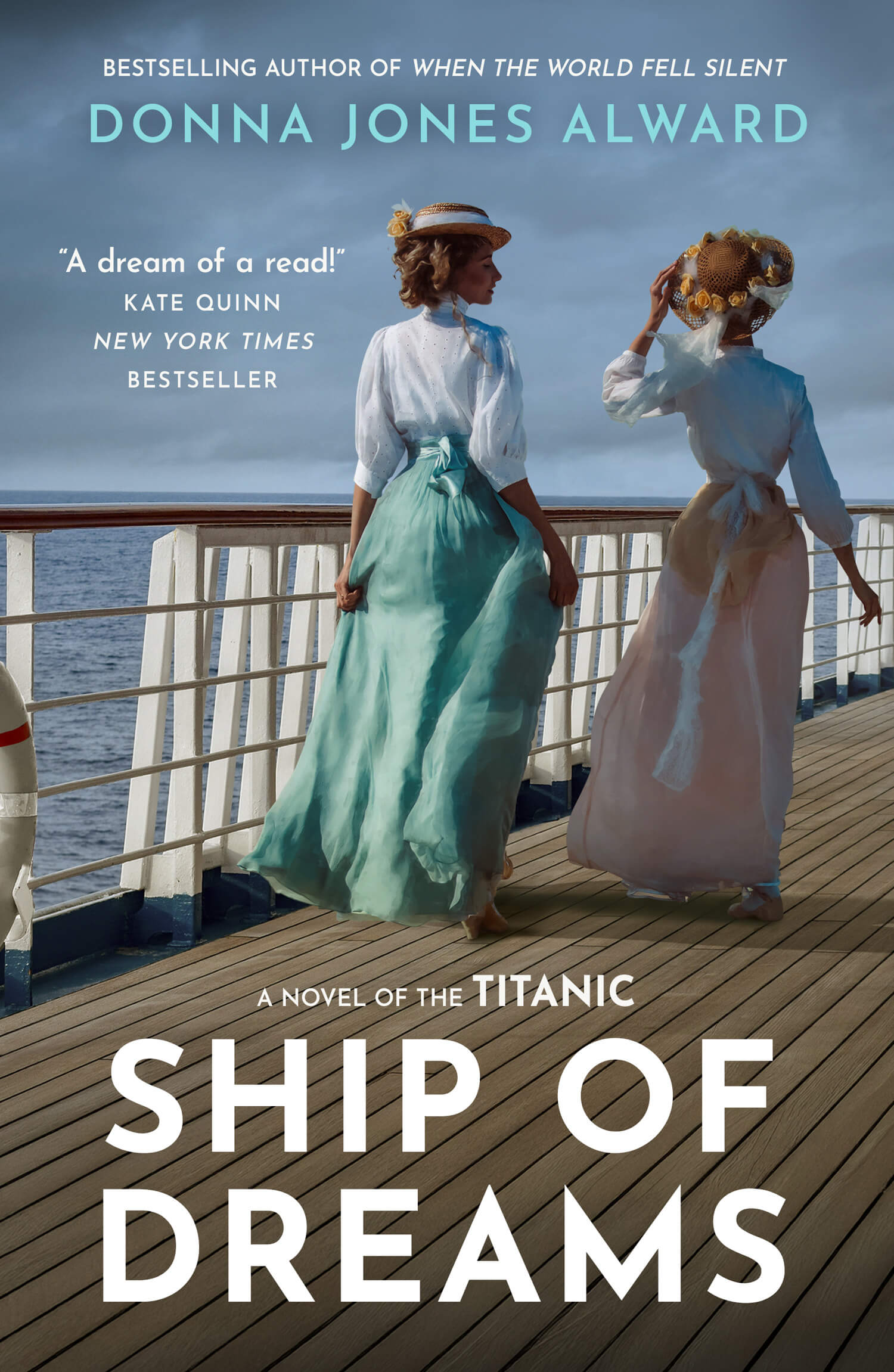
Ship of Dreams
Two first class passengers aboard the Titantic must grapple with the tumultuous choices in their personal love lives. Hannah is trying to mend her broken marriage with Charles and Louisa is trying to escape a passionless marriage despite her family’s insistence. Readers have to find out which relationships will survive on board this sinking ship.












Leave A Comment