

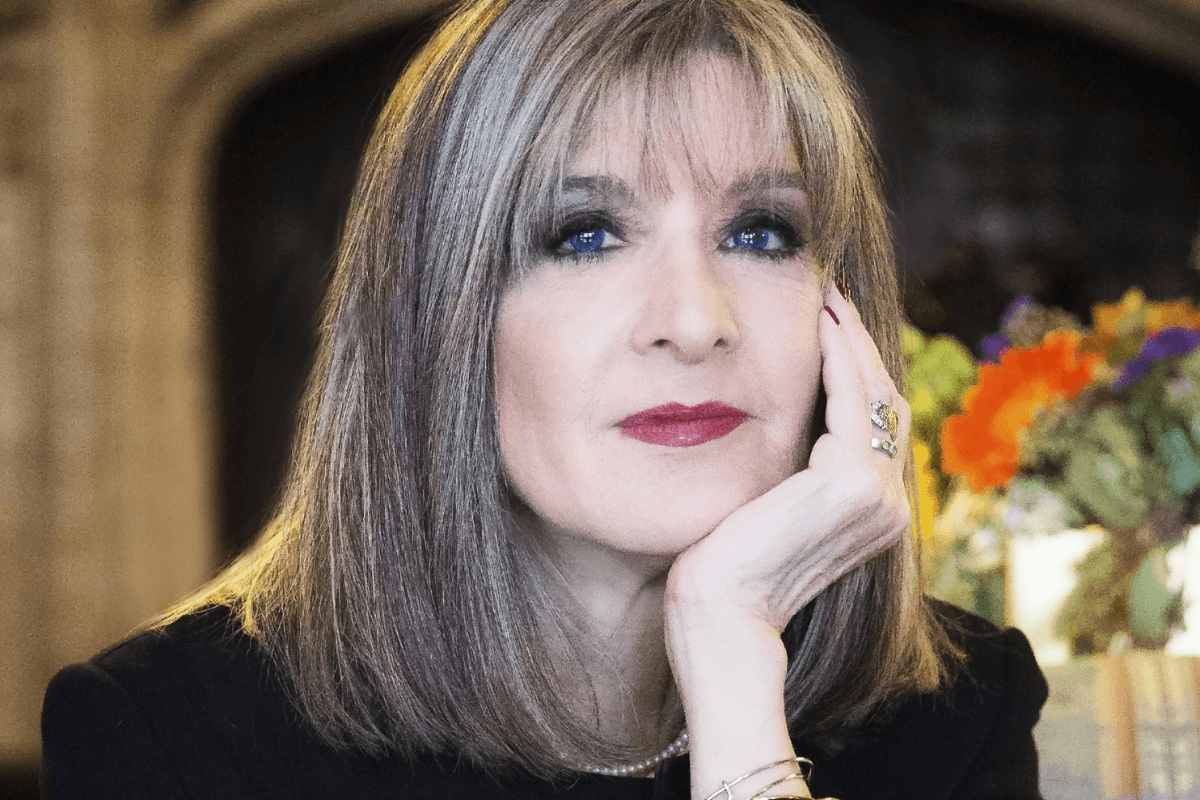
Maggie O’Farrell is an award-winning, bestselling author whose novels and memoir have captured readers’ hearts across the world. Recently, the movie adaptation for her beloved novel Hamnet was released to audiences—we’ve all collectively wept for days. But Maggie is a writer’s writer. The interviews she’s given are laced with the words every author or aspiring author needs to hear. Whether that be encouragement to chase a story, discouragement to chase reviews and awards, or advice to take the job a little less seriously, Maggie O’Farrell’s insight will guide you as you craft your story.
On Hamnet, Writing through Fear and Bravery
In an interview with The Guardian about her award-winning novel based on the life of Shakespeare, O’Farrell speaks of the way this story embedded itself, the task of writing about, perhaps, the most famous writer of all times and taking the job a little less seriously.
In the article, she discusses how this story grabbed ahold of her and couldn’t let go. The task, however was daunting.
“He had got under my skin. I felt he was part of my DNA.”
“I couldn’t. When you’re sitting at your computer, immersed in the world you’ve created, and have to write: ‘William Shakespeare had his breakfast…’ it’s impossible not to think: I’m an eejit. Even calling him William seems colossally presumptuous.”
As she wrote the story of the death of Shakespeare’s son, she had to contend with the horror and agony that she imagined would accompany losing a child while parenting her own three kids.
“It’s every parent’s worst and most visceral fear that you will lose your child. That – and the idea you couldn’t save them or weren’t able to safeguard them. I cannot imagine the agony of having to bury a child. It must be unlike anything else.”
“If I was doing this, I’d have to put myself inside the skin of a woman sitting beside her son, laying him out for burial. I thought, I cannot do it – imagine! My son used to say [teasingly picking up on his mother’s anxiety]: ‘On my 12th birthday you probably won’t give me a birthday party.’ That was not true and he’s almost 17 now…”
Despite the heaviness of the book and the world-renowned praise it received, O’Farrell doesn’t appear to take herself too seriously. The work is something she cherishes and clearly commits to doing with all her heart, but she doesn’t believe it requires much in terms of bravery. Perhaps we could all do well to embrace the art for the beautiful creative expression that it is, without carrying such a heavy weight for how it will live in the world.
“Writing is not brave, it’s the opposite – it’s just something I’ve always wanted to do. Surgeons are brave. If there’s a hierarchy of bravery, writers are somewhere near the bottom.”
And that’s okay! Thank goodness a life isn’t in our hands when we type—not a real one in the world at least, fictional characters, however, are not safe. Still, it feels like permission to let go a bit and to enjoy the process without the pressure. Because truly:
“There’s indescribable joy in being able to write when nothing stops you.”
On Organization, Busy Lives and Story Ideas
It’s easy to look at the accomplishments of someone like Maggie O’Farrell and assume they have something we don’t or they aren’t facing the same struggles we do. But the truth is, all writers enter a story with strengths and weaknesses, excitement and nerves, no matter how much they’ve achieved. In this interview with Good Housekeeping, O’Farrell talks about her writing reality.
“I’m not a very organised person, generally, in life or in writing. But I do have a strict rule that I never break and it can be very annoying for my colleagues, but I never check my emails in the morning.”
I think we can all get on board ignoring emails for the sake of our art. But she also discusses protecting her time at home.
“I think it’s really important, when you have got busy lives or family, to be really fierce with your writing time, to protect it so there is no distraction. My studio in the garden has no internet at all.”
If you do an okay job protecting your time, but feel the pressure to have a solid outline or to have a clear path through your stories, O’Farrell has an answer for that too.
“I have a vague idea of where the story is going to go, but I do believe in the kind of sense of the unconscious or the instinctive.”
It’s okay to not know where a story is headed. There is magic in the process—as well as struggle—but it’s okay to let it flow without a perfect plan.
On Awards, Reviews and Women in Writing
O’Farrell is an award-winning author with stats most writers dream of achieving, but she keeps a level head about her achievements. In her interview with The Telegraph, she talks about how she planned to process a big win and how awards can largely be based on luck.
“I’m going to enjoy having won for two days,” she says. “And then I’m going to forget it ever happened.”
“Having judged literary prizes myself you know that every year it’s down to luck. Every shortlist and longlist is a reflection of people’s taste. As a writer, you can’t approach book prizes with even a smidgen of entitlement.”
She also talks about how women and their stories are viewed in publishing, but isn’t concerned by this label… she’s in good company.
“There is still a mentality that women write about [only/either] family or domesticity,” she says. “But of course it’s meaningless. Hamlet could be described as a domestic play.”
And whether it’s an awards panel, the industry at-large or readers, O’Farrell has found that some distance from input is the best way to continue making her beautiful books.
“I steer away from thinking about how I am viewed,” she says. “I don’t think that’s healthy. I don’t read my reviews; I’m not on social media.”
Not only does she avoid public reviews and commentary, she writes like no one will ever read it at all.
“You have to write to satisfy some urge in you, to answer some question about something that you don’t comprehend,” she says. “I find I have to write in an unconscious vacuum where I pretend it’s just for me.”
Ultimately, she is a firm believer in telling the story you can’t get out of your head. It’s how she has created her masterpieces and how you should approach the story calling to you.
“The best writing you can do is the writing you can’t not do. You have to tell the story that is bursting to be told.”

Leave A Comment