

Alana Quintana Albertson has written over thirty romance novels, rescued five hundred death-row shelter dogs, and danced one thousand rumbas. She lives in sunny San Diego with her husband, two sons, and too many pets. Most days, she can be found writing her next heart book in a beachfront café while sipping an oat-milk Mexican mocha or gardening with her children in their backyard orchard and snacking on a juicy blood orange.
To retell or not to retell?
That’s what I had to ask myself when I first came up with the ideas of retelling some of Shakespeare’s most popular works—Romeo & Juliet, Taming of the Shrew, and My Fair Lady—through a modern Mexican-American lens.
I love retellings of the classics, but so many of these old books and plays have elements that are not palatable to modern readers. When I watched My Fair Lady as a child, I loved Audrey Hepburn but the full idea of fixing this woman always made me uncomfortable.
When I started on the third book in the Love and Tacos series, I initially was going to write yet another Shakespeare retelling, as I had with Ramón & Julieta and Kiss Me, Mi Amor. But I had this character, Jaime who was an unrepentant playboy (and a thorn in my side). For two books, the youngest Montez brother was annoyingly and unselfishly aware of his privilege, with no plans on changing anytime soon. In other words, the perfect character for me to force to face his shortcomings and grow.
Returning to My Fair Lady, I wondered what a good lens could be to show the growth he would need in this book? I did not want a book where the heroine fixes the hero. The hero needs to do the work himself. But I did like the idea of a hero being inspired by his heroine and then going through a journey of growth. In this case, his motivation grows seeing the heroine’s connection to her Mexican American background compared to his disconnection.
Jaime’s flaws are numerous, similar to the heroine in My Fair Lady has many flaws and has lived a sheltered and privileged upbringing, but he does try to improve himself and develop a deeper cultural connection, although in a bumblingly incompetent way (It’s a My Fair Lady retelling, after all!).
So how does one go about writing a retelling? The first recommendation I have is to read or watch the source material fresh. I like to take notes and jot down what I love and what I hate. After this process, I then create a rough outline of the elements I want in the story.
But when the retelling is gender swapped, there is a different layer. It’s not that easy to just swap the sexes of characters. An older man “refining” a young woman into a lady is not any type of story I want to rewrite. However, using this framework for a man to reform his playboy ways and reconnect to his culture to learn more about his heritage fascinated me.
I hope readers realize that this is a retelling of a problematic play and there will be times in it that Jaime says things that are off putting, and the heroine has to correct him. For example, when the FMC says she’s going to Mexico, he says it’s dangerous for her to go alone. She corrects him, and tells him that it’s not; in fact there are places more dangerous here in the United States (Something that has been frequently said to me as a Mexican American woman who has traveled to Mexico on her own many times!).
Her corrections ultimately let him confront his own internal biases. I debated editing these lines out but felt it was important to keep them in for Alma to correct him and ultimately show his growth. I had to trust that my readers would understand that I don’t agree with Jaime’s views, and I was trying to push back against that type of rhetoric.
Jaime’s views are not meant to represent the entirety of Mexican-American identity but rather represent what happens when one’s cultural identity gets skewed by privilege, distance, and his growth is about returning to something that was always his, not performing culture to impress others.
Another challenge when writing a retelling is straying too far from the source material that then the work isn’t a retelling at all. Where is the line between a retelling and “inspired by”? I find that it’s super important to do a “retelling” edit when the book is finished to make sure there are enough similarities between the source material and the retelling. Using My Fair Señor as an example, I wanted to make sure that I kept elements of language, discussions on culture, and privilege.
An old writing adage is that there are no new stories, and the enduring nature of the classic literary cannon proves that. However, there’s always a new angle, a way to reinvent a story for modern audiences. Retellings of classics will always be in style as the literary world welcomes more diverse creators and perspectives, and I for one, can’t wait to read yours.
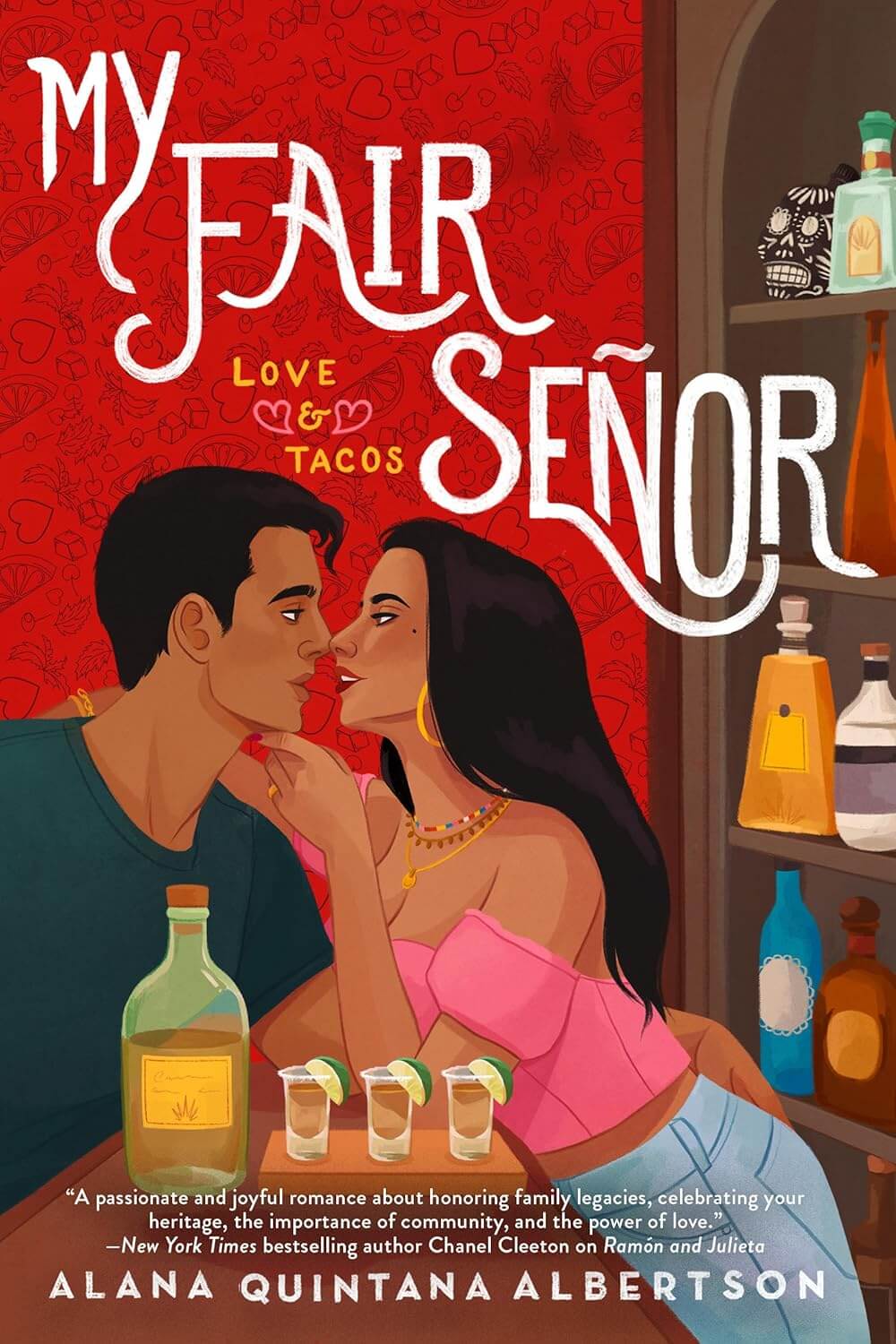
My Fair Señor by Alana Quintanna Albertson
Tired of being in the shadow of his family’s fast food empire, Jaime Montez decides to start his own liquor brand. He doesn’t know the first thing about liquor, but his college flame and bar owner Alma Garcia is the perfect teacher. The two strike a deal: Jaime will promote the bar at the Cinco de Mayo festival in exchange for a tequila-making masterclass. But their scorching chemistry blurs the lines between work and love, making them both wonder if a second chance together is worth the love hangover.
Buy the book now: Bookshop.org | Amazon | Barnes & Noble








Leave A Comment