

Sarah E. Ladd is an award-winning, bestselling author who has always loved the Regency period–the clothes, the music, the literature, and the art. A college trip to England and Scotland confirmed her interest in the time period, and she began seriously writing in 2010. Since then, she has released several novels set during the Regency era. Sarah is a graduate of Ball State University and holds degrees in public relations and marketing. She lives in Indiana with her family. Visit Sarah online at SarahLadd.com; Instagram: @sarahladdauthor; Facebook: @SarahLaddAuthor; X: @SarahLaddAuthor; Pinterest: @SarahLaddAuthor.
It’s happened to every writer: You’ve spent weeks crafting your plot and developing your characters when all the sudden you sit down to write a new scene and your mind goes blank. You can’t figure out what your characters should do or say. You have no idea what to write next.
You are STUCK.
When I was a new writer, not knowing what to write next could be crippling. Over the years and after writing many books, however, I’ve developed my own set of tools to get a story “unstuck” and flowing again. Typically, when you hit a writing roadblock it is because specific event or scene causing a kink in the storyline. The story’s not broken, you just need to tackle to story at the scene level and get the creativity flowing again. Here’s the list of tried-and-true tactics that I turn to when I feel like my story is slowing down.
Tip #1: Dive Into Dialogue
Even if I don’t know exactly what is going to happen in a scene when I sit down to write, the first element that usually comes to me is dialogue. I can almost hear the conversation happening in my mind, and I’d be willing to bet that you’re the same way. In my experience, if you can nail the dialogue, the rest of the scene will follow. So that’s where I start: I write dialogue only. No beats or tags, no environmental descriptions, no body language or action. Once you are happy with the dialogue you can go back in and add all the description, action, and non-verbal cues that will bring the scene to life.
Tip #2: Use Your Senses
One of our goals as a writer is to help our readers see the world from a specific character’s point of view. We what them to see what the character sees, feel what the character feels, and so on. When I have a scene that doesn’t feel like it’s heading in the right direction, I employ the 5 Senses Method. Before I start writing I create a list what will be heard, said, seen, felt, and tasted in the scene.
Here’s an example:
· Something the heroine hears: Waves crashing on the shore
· Something she says out loud: “Where is Elizabeth?”
· Something she sees: A shadowy figure next to the rocks on the beach
· Something she feels: The wind blowing her cloak against her legs, making it difficult to walk
· Something she tastes: Salt air on her lips
By noting these five sensations, I’ve already established a pretty good sense of the tone and feel for the scene before I even start. If it is a complex scene with several characters, you can do this for each character.
Tip #3: Jump Ahead
I’m a pantster. Anyone else? I admire plotters and wish I could produce detailed outlines, but it’s just not the way my brain works. Because of this approach I write very linearly—and sometimes I write myself into a corner. Instead of giving into panic when this happens, I give myself permission to daydream. What is one thing I want to have happen at the end of this story? I jump ahead into the unknown and write a scene that I either hope will happen or that I know needs to happen in order for one of the characters to achieve his or her goal. Will I end up using this scene? Maybe not, but the act of writing it gets me thinking about what comes next and helps pave the way for story to get there.
Tip#4: Brush Off Your Interview Skills
For me, getting stuck is a scene is sometimes the result of trying to force a character to act in a way that goes against the personality traits that I’ve established for them. When this happens, it’s a cue to take a step back and figure out why an action seems inauthentic, and the solution for this is to get to know my character even more and have a little chat.
Here’s what to do. Either on paper, out loud, or quietly in your head, ask your character a question that has nothing to do with the story you are writing.
Here are some examples:
1. What is the happiest day you ever had?
2. Describe one time you were really embarrassed.
3. If you could anything at all today, what would you do? Where would you go?
Again, these questions have nothing to do with the story, but the answers you create based on what you already know will give you even more building blocks to use, and the more you know about your character, the easier it will be for you to create believable actions.
Tip #5: Double Check Your POV
No one knows your characters better than you do, and even if you try to write your scene from the POV of the character who has the most to lose or gain, the scene may not feel like it is flowing properly. If this happens, one helpful tactic you can try is to write the scene in another character’s POV to experience the events from a completely different perspective. Even though you don’t intend to use the altered POV in the final version of your book, you can learn a lot by taking a step back and examining a situation through another character’s viewpoint.
Tip #6: Be Pessimistic
This is probably the only time that you’ll ever have someone give you this advice! Normally, I’d always encourage you to look at your glass half-full, but when you are having trouble moving a scene forward, it might be because you need to up the stakes. Ask yourself the following question: What is the worst thing that could happen in this situation? What would be consequential enough to make my character step outside of his or her comfort zone? Remember, the goal is to create tension and demonstrate how your characters grown and change. So go ahead and be pessimistic. Both you and your characters might learn something in the process.
Last Bit of Advice: Get Up and Move!
This has nothing to do with the actual art of writing, but it’s so important. Writers tend to sit for hours on end while crafting stories. It’s easy to lose track of time, and the longer we are immobile the more stagnant and sluggish our minds and bodies become. Set a timer on your phone for every 30 minutes and step away from your desk. Take the dog out. Switch the laundry. Step outside and feel the breeze on your face. You’ll be surprised at how refreshing a little break can be.
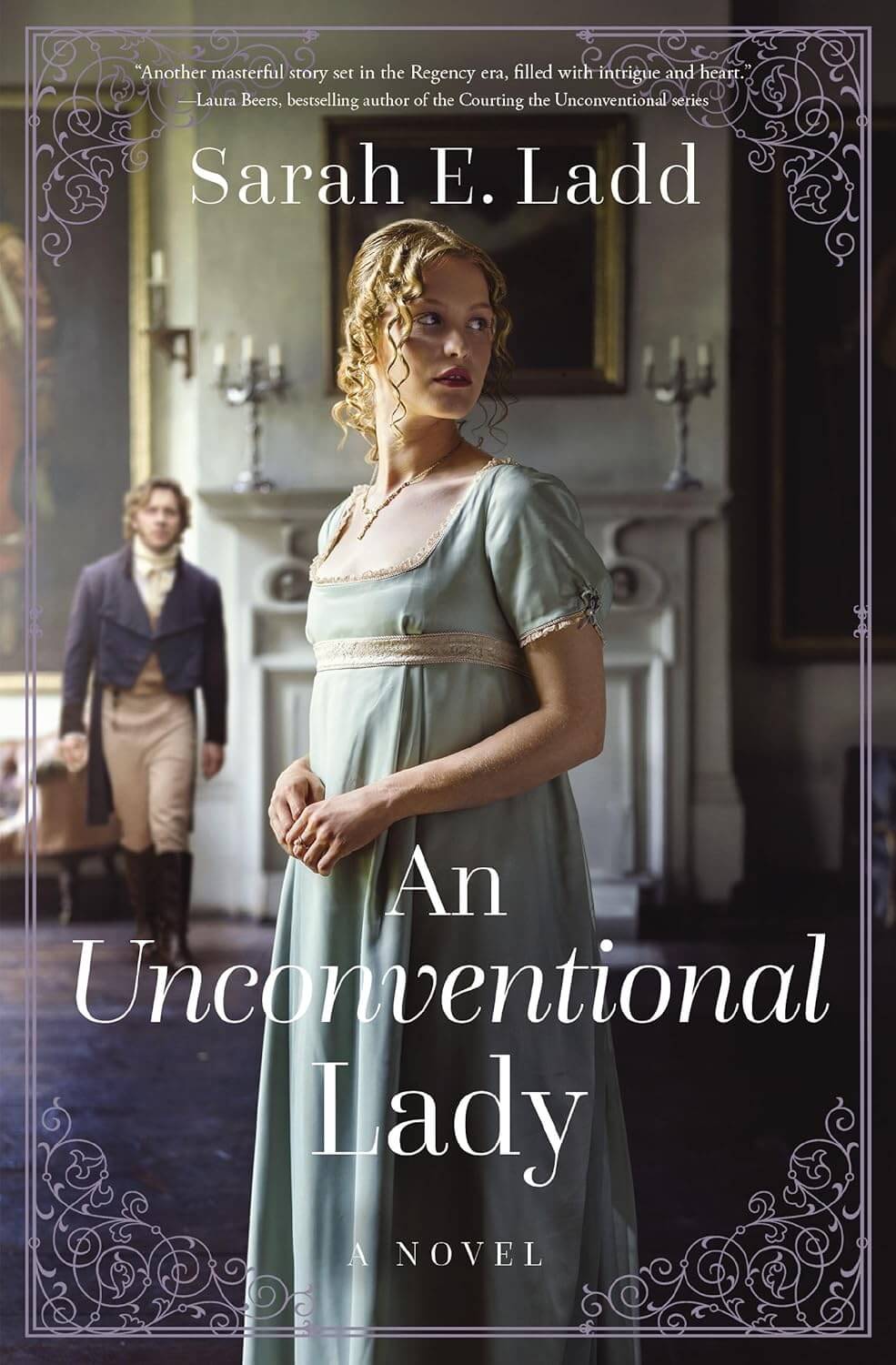
An Unconventional Lady by Sarah E. Ladd
Ella Wilde is the daughter of the headmaster of Keatley Hall School for Young Men, and this upbringing has given her such a strong love for education that she wishes to open her own school for girls. In a world crafted for boys, all she desires is to create a space for young, intelligent minds to find kinship with one another as they craft their own education. Her only path to her inheritance, however, is to marry before her father passes away and leaves her with nothing. So, in a bid of desperation, she seeks out an undesirable match.
Preorder the book now: Bookshop.org | Amazon













Leave A Comment