
This month, we are celebrating—and exploring—the current state of journalism. From newsrooms shuttering and Substack booming, to the impact of social media and AI, we’re talking to journalists who have seen it all.
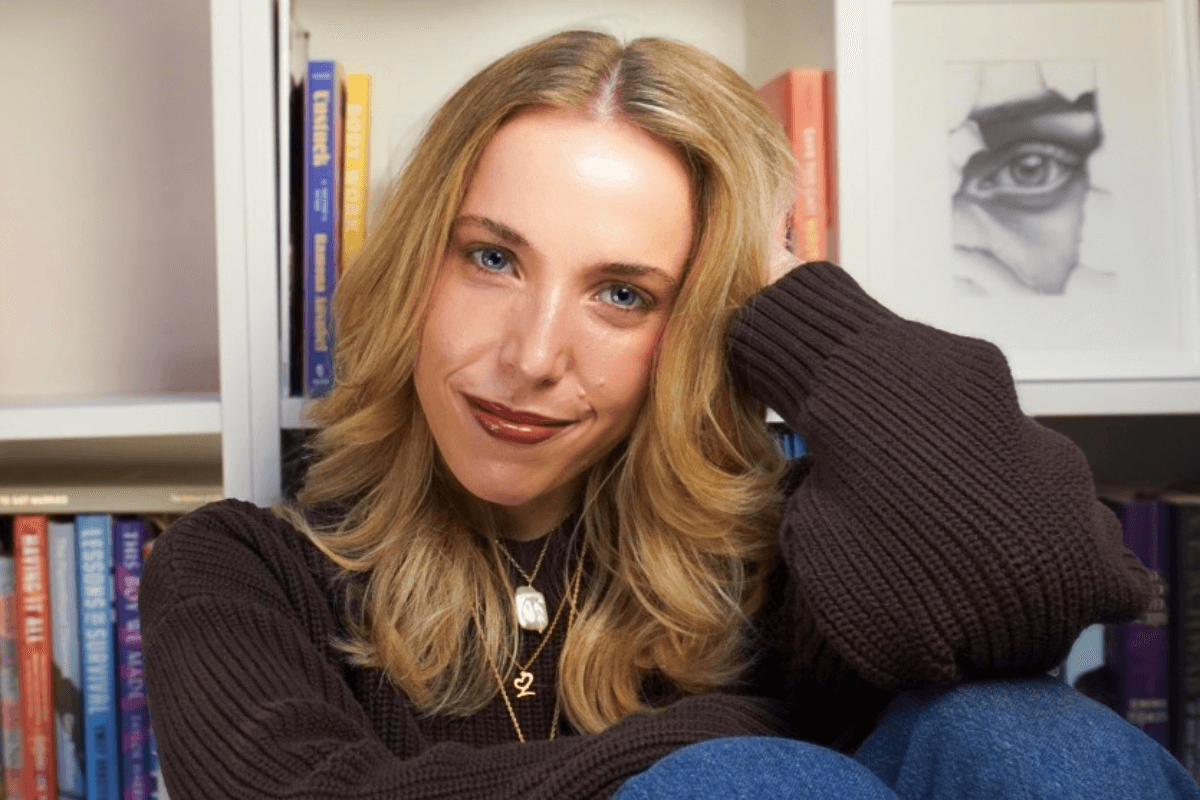
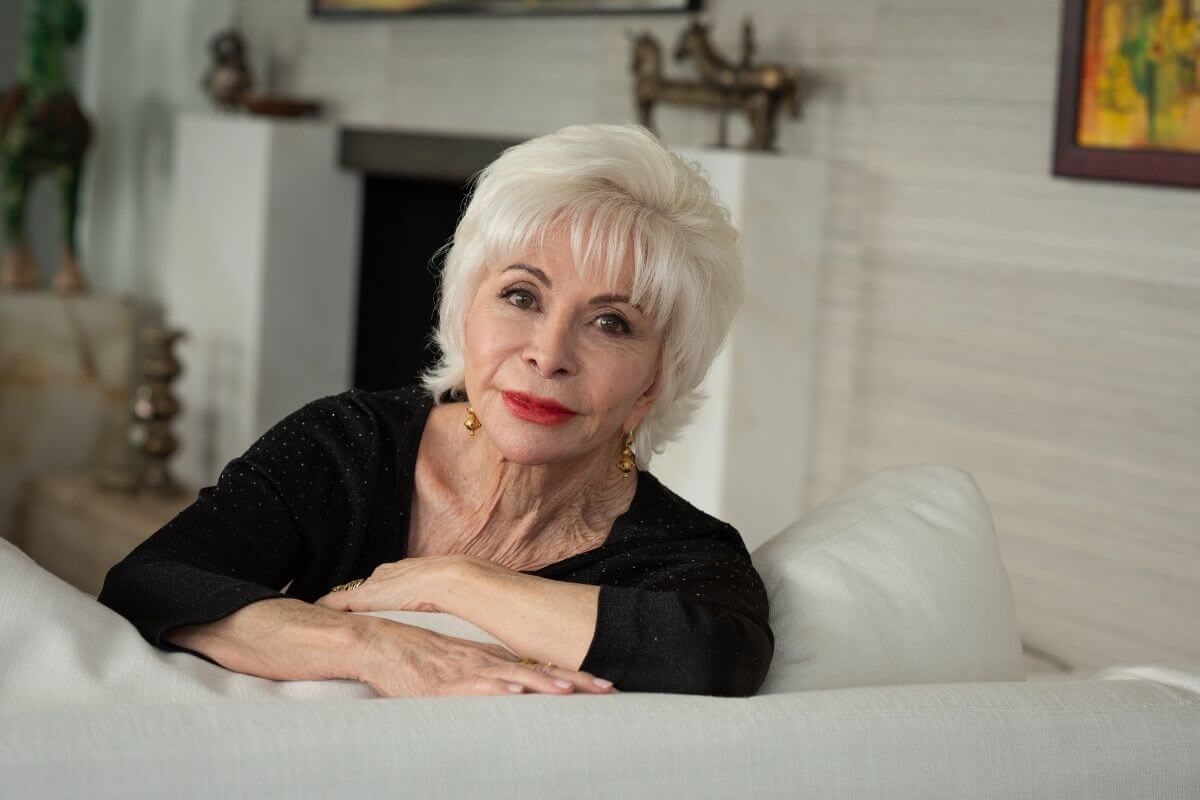
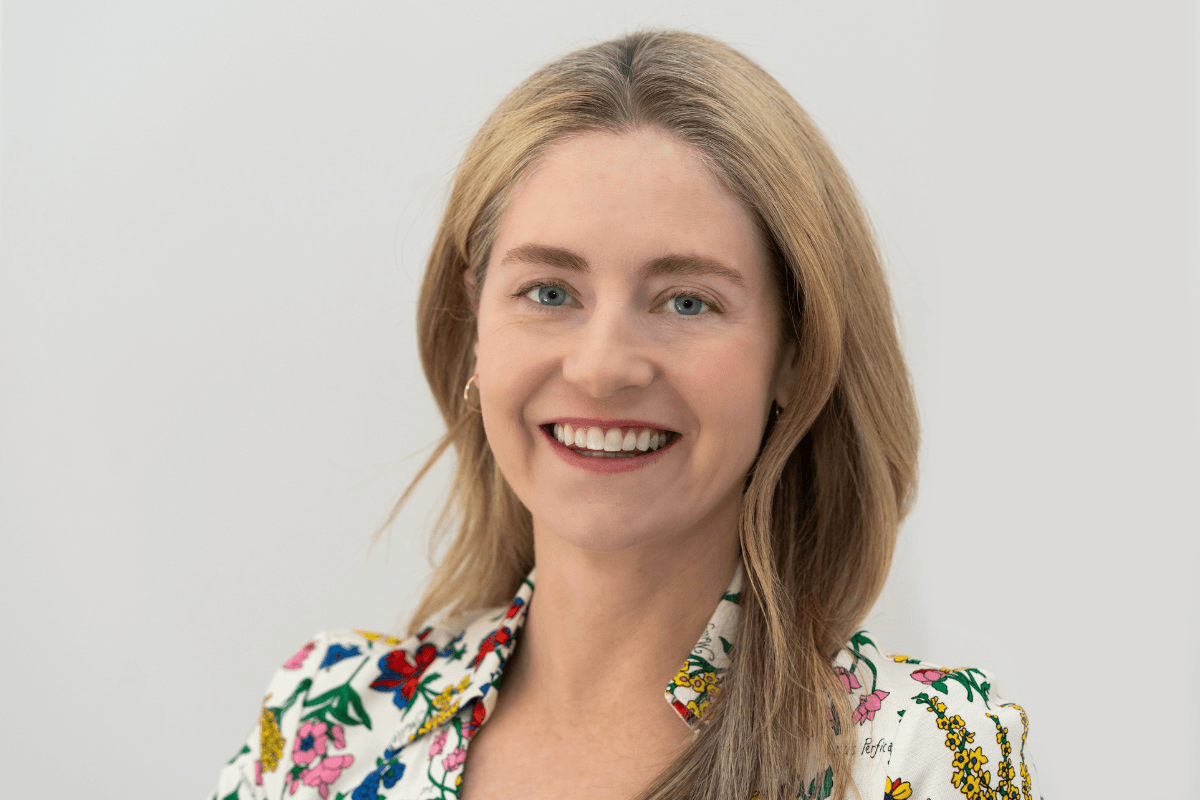
We had the chance to catch up with ELLE Senior Culture Editor, Lauren Puckett-Pope not only about the evolution she’s seen at ELLE, but in the books coverage space at large. We also got to talk to her about working on her first novel after years of seeing publishing from the other side. Check out this fascinating interview where we get the ins and outs of how books are being featured at one of the top magazines in the country.
Lauren Puckett-Pope is the Senior Culture Editor at ELLE, where she oversees coverage of film, television, books, music, and art. She was previously a culture writer and an associate editor at ELLE. Based in New York City, she is a member of the National Book Critics Circle, the Critics Choice Association, and the Television Critics Association.
How did you first start writing about books and what drew you to that beat specifically?
I started writing about books almost by accident. Years ago, I was an intern at a city magazine, where sometimes local authors would send in advance copies of their books. I knew next to nothing about the publishing business at that point in time, so I wasn’t even aware advance copies existed. The concept of having early access to as-yet-unpublished books was mind-blowing to me. When my editor at that internship asked if I wanted to interview one of these local authors for a story, I was over the moon about it.
I’ve always been a books person. I have always loved reading; I’ve always wanted to write my own books. I’ve always yearned to be around authors and other readers. I started interviewing authors for this magazine; then, when I was finished with that internship, I continued to do the same thing back in my hometown. As I grew my experience in the freelance sphere and my education in the world of books reporting, I started pitching to other outlets, in conjunction with a lot of other culture reporting I was learning to do at the time. And I’ve never really stopped since. Throughout my career in magazines and my time at ELLE, I’ve had the immense luxury of getting to write about books. Now, as an editor at ELLE, books are a cornerstone of the coverage I oversee. And I’m still over the moon about it.
What did book coverage look like when you started versus what you’re seeing in the media landscape today?
This is an interesting question, because I think I could say “it’s changed irrevocably” and “it hasn’t changed much,” and both would be true.
When we talk about traditional media, stories about books—reviews, author profiles, essays, radio and TV segments, et cetera—often look similar to the way they did a handful of years ago. But within the larger “media landscape” around books, there has been a marked shift. The rise of BookTok and Bookstagram is an obvious example, as is the rise of Substack and other newsletters. Also: the rise of certain literary magazines; the rise of independent publications; the rise of highly visible reader-led book clubs beyond the Oprah’s Book Clubs and Reese’s Book Clubs of the world. All of those examples have altered the way that traditional media relates to bookish audiences, which in turn impacts the way we talk about books themselves.
I don’t think the answer is for legacy media to entirely abandon old formats and, for example, “pivot to video” in order to be successful within this new landscape. But I do think we can learn a lot from these other players, because they’re not just announcing new bestsellers and moving onto the next story; they’re creating deliberate connections with readers and driving conversations around those bestsellers.
In an era of shrinking staff, increasing number of books, faster cycles, and social media-driven content, what pressures do book editors face that readers may not realize?
From my vantage point, it seems clear there are increasingly few editors who have the luxury of focusing solely or even mostly on books. I oversee ELLE’s books coverage, but I also organize our coverage of TV, film, music, and more. So the sheer volume of material I’m trying to a) consume myself and b) cover for our reader’s consumption, can be daunting. I rarely get through even half of the books that are sent to me for consideration. I wish I could!
There’s a weird sense of guilt that comes with this job. You want to do right by every author—you know how much heart and soul and sweat they put into these books—but you also know that’s an impossible task. You can’t give every book the attention it deserves. There aren’t enough hours in the day.
Beyond that, there’s a lot of work that goes on behind-the-scenes to make sure that every books story has a strong purpose. How we package that story in a way that will actually reach our readers across all of our platforms. That behind-the-scenes work is something I lose a lot of sleep over, in part because it scares me, but also because it excites me. There are so many interesting ways to engage with readers now. The options and opportunities abound.
There’s a belief that traditional media coverage no longer moves the needle for authors. From your perspective, is that true or is the value simply evolving?
I love this question so much. Please forgive me for climbing onto my soapbox for a moment here.
For about a million different reasons, getting readers to purchase a book is not a straightforward science. (If it was, we’d sell a lot more books, and there’d likely be a lot more books coverage.) So, while it’s true that having your book featured in a traditional outlet might not translate to a direct spike in sales, I do believe media coverage “moves the needle” for authors. Especially if we’re talking about the right kind of media coverage.
Here’s what I mean: Book marketing is a game of saturation in the right spaces. Word of mouth is the most effective form of marketing because it naturally extends from one intimate circle to another, with that overall circle widening as it grows. And people start talking about books for, usually, two reasons: 1) They genuinely enjoyed reading the book, and/or 2) They keep seeing it again and again within the spaces they trust.
What’s a trusted space? Maybe it’s your favorite bookstore. Maybe it’s your favorite Booktoker’s page. Maybe it’s your best friend’s Instagram feed. And maybe it’s an outlet like ELLE or The New York Times. It’s a space within which you have relationships—parasocial or otherwise—that you value. See the same book in enough of those spaces, and the likelihood you’ll buy and read it yourself increases exponentially.
Media coverage, especially particular forms of media coverage, remains a trusted space with an important cohort of readers. Institutional media doesn’t mint overnight stars the way it once did, that’s true. But media brands—and the editors who work within them—still have the power to build and re-build large networks of relationships with readers. And it’s relationships that sell books. So, as part of a larger strategy (and a larger culture around books), I think media remains integral.
Can you walk us through how books coverage works at ELLE from pitch to publication?
There are lots of ways books go from pitch to publication at ELLE, so I won’t run through every scenario here. But the gist is this: a lot of research, a lot of reading, and then a lot of synthesizing that research and reading into an editorial strategy.
I keep an extensive spreadsheet of titles that ELLE considers throughout the year, and I’m always adding to it as I become aware of new books. I track metadata—the title, author, genre, publisher, et cetera—and lay out our potential coverage plans based on that initial information, as well as any important contextual tidbits a publicist or editor has pitched to me. Sometimes I assign books to my colleagues to read; other times I read them myself. Sometimes we read them well in advance of their publication, and sometimes we’re late to the party and have to play catch-up. It happens. Once we’ve determined we want to feature a book, we decide where it fits: in a best-of list; in a feature; in a trend piece; in a Shelf Life column; in multiple stories; et cetera.
On other occasions, a freelancer will pitch me a books-related story, and I’ll determine whether it makes sense for ELLE. So I really have to trust this person’s taste, especially if I myself haven’t yet read the book they’re planning to cover. I think having a strong relationship with your contributing writers is key to any editor’s success, especially now that so many journalists these days are freelancers. The same is true for your relationships with publicists. I trust my publicist friends to help bring the best new books to my attention early and often.
What makes a book or author feel like the right fit for ELLE specifically?
I try to keep an open mind about what books the “ELLE reader” will enjoy. Our target demographic is adult women, of course, but that doesn’t mean I ignore YA books or hard science-fiction just because some people might associate those books—stereotypically and often incorrectly, to be clear—with young or male readers.
At ELLE, we cover a wide range of literary fiction, romance, fantasy, sci-fi, nonfiction, mysteries, thrillers, horror, et cetera. We feature more books by female-identifying authors than male-identifying authors because we’re a women’s magazine, but almost any type of book could be an “ELLE book.” A book feels especially right for ELLE’s audience when it has a finger on the pulse of something larger happening in our culture. It doesn’t necessarily need to be trendy to be “ELLE,” nor does it need to speak to trends in a literal way. But I do love when a book feels as though it’s meeting a moment, either because of how it satisfies an audience’s craving, or because of how it makes that audience reinterpret the context they currently live within.
From the editor’s side of the inbox, what makes a strong book pitch?
It’s clear. 2) It’s concise. 3) It includes all the information I need to know. 4) It’s well-researched and well-written. 5) It makes me lean forward a little bit in my chair, like I’m about to have a very interesting, very exciting, very juicy conversation. Hook me in your pitch copy, and the book has a good chance of hooking me, too.
Do platforms like BookTok or Instagram influence editorial decisions, or do they operate in parallel lanes?
At this point, I think it’s almost impossible to separate the influence of platforms like BookTok or Instagram from the overall “buzz” around a book. And the “buzz” around a book can absolutely help bump it to the top of my pile. That being said, I’m not going to cover a book just because an author or publicist pitches it to me as “BookTok-viral.”
It’s a bit like what I mentioned earlier re: media “moving the needle.” BookTok or Instagram alone are not going to make me cover a book, nor does popularity on those platforms make it more likely I’ll give a book a positive review. But if several trusted peers have already recommended the book to me, and I also see it on my Instagram feed, recommended by someone whose taste I appreciate? Sure, that might encourage me to pick it up sooner. And if I like the book, then, yes, we might go on to cover it at ELLE.
You’re currently working on a novel (congrats!). How does your process differ when you’re writing fiction versus reported nonfiction?
It’s almost hard to compare the two because they’re so different. With nonfiction, you’re working with a collected set of materials; you gather the materials, and then you decide how the materials best fit together. With fiction, you have to create the materials themselves.
So, with nonfiction, I can move relatively quickly from ideation to research to reporting to writing to editing to fact-checking to publication. Fiction takes—for me, anyway—much, much longer. I have to try different ways of creating my materials before they even begin to resemble materials. And only when they resemble materials can I try and fit them together. And then only after trying to fit them together multiple ways can I discover the best way.
But if, like me, you’re someone who thrives in a sandbox, it’s bliss. I like how both nonfiction and fiction trigger different creative muscles in my brain. Ultimately, those muscles strengthen each other.
How has working inside the book media space impacted your fiction work? Do you find it helps or complicates your process?
Working in book media has definitely made the publishing process less opaque to me. That doesn’t mean I find publishing any less daunting, but I understand how and why certain books get sold, and I understand what makes a book successful.
Still, understanding what makes a book successful and actually employing that understanding in your own work? Those are two very different things. I don’t think you can reverse-engineer a “successful” book, no matter how much insider knowledge you might have. There’s absolutely no doubt that the work I do for ELLE—reading as much as I do and spending as much time with publishing professionals as I do—has improved my fiction writing. I know the genre I’m writing in better because I cover that genre as part of my job. I know how to structure my chapters better because of advice that editors and authors have given me. I get to interview authors for work, which means I have a window into their processes, and those processes can inform and inspire my own. But none of those luxuries are a substitute for the work itself. I still have to show up on the page every day in order to improve my writing.
As a full-time journalist, what has it looked like making space for fiction writing as well?
Oh, it’s so hard. It’s actually shocking how hard it is. It shouldn’t shock me, given how many friends have told me how hard it is, but still—it’s shocking. And yet I love it. I relish those hours spent writing fiction. They’re the best.
This will not prove revelatory information to anyone, but journalism is not a slow-paced, 9-to-5 job. Your hours are not well-defined. You never know when news will break. And so it is difficult to set boundaries around your working hours to ensure you make enough time for your life and your non-journalism writing.
For me, I’ve had to learn to push myself. I can give myself grace—if I miss a writing day, I shan’t beat myself up about it—but I can’t allow myself too much slack, either. I try to wake up a couple hours before I need to get ready for work, because the early-morning hours are more likely to be news-free. I use the Freedom app to block my work and social apps on my phone; I make a cup of coffee and turn on some instrumental music; and I lock in for however many minutes I have before the emails and Teams messages start flooding in. Slowly, over weeks, those minutes turn into pages, and those pages turn into a draft.
What trends in publishing or books coverage are you watching closely in 2026?
I won’t spoil some of the trend pieces we’re working on at ELLE, but I am curious to see how the romance landscape continues to evolve this year. After the initial BookTok boom, what’s next for romantasy? Heated Rivalry drove an obvious uptick in demand for hockey romance, sure, but it’s not as if hockey romance is a new publishing trend—what does the Hollywood influence mean for the sports-romance subgenre as a whole? And is dark romance going to get darker? Is romance fatigue real, or are romance readers inexhaustible? If readers and publishing professionals have thoughts, I want to hear them.
What makes you hopeful about the future of books and literary journalism?
Readers. It’s always the readers themselves that make me hopeful. I think more and more people are understanding how, in order to support a healthy society and a healthy democracy, we need a healthy cultural apparatus bolstering us. The arts are not a luxury—or at least they’re not solely a luxury. And I’ve seen firsthand how readers are putting that understanding into practice by showing up for their local indie bookstores; showing up for their favorite authors; showing up for books journalism; and showing up for their own communities of readers.
I don’t think books inherently make readers better people. But I do think they create opportunities for people to engage in a world that’s otherwise made it easy for us not to engage. So when I see readers engaging, yeah, that gives me hope.
What is your best writing advice: as an author and as a books editor?
There’s no one “right” way to be a writer or an editor. But neither is there any shortcut to becoming a good one.
Tell us about your novel.
I’m working on an adult literary fantasy novel—or, anyway, I’m aiming for it to be literary! The story follows a graduate student who’s found the antidote to the magic poisoning her body…but it’s only hers if she can keep a secret. I’m still deep in the drafting process, but it’s coming along. I’m having a blast.


Leave A Comment