
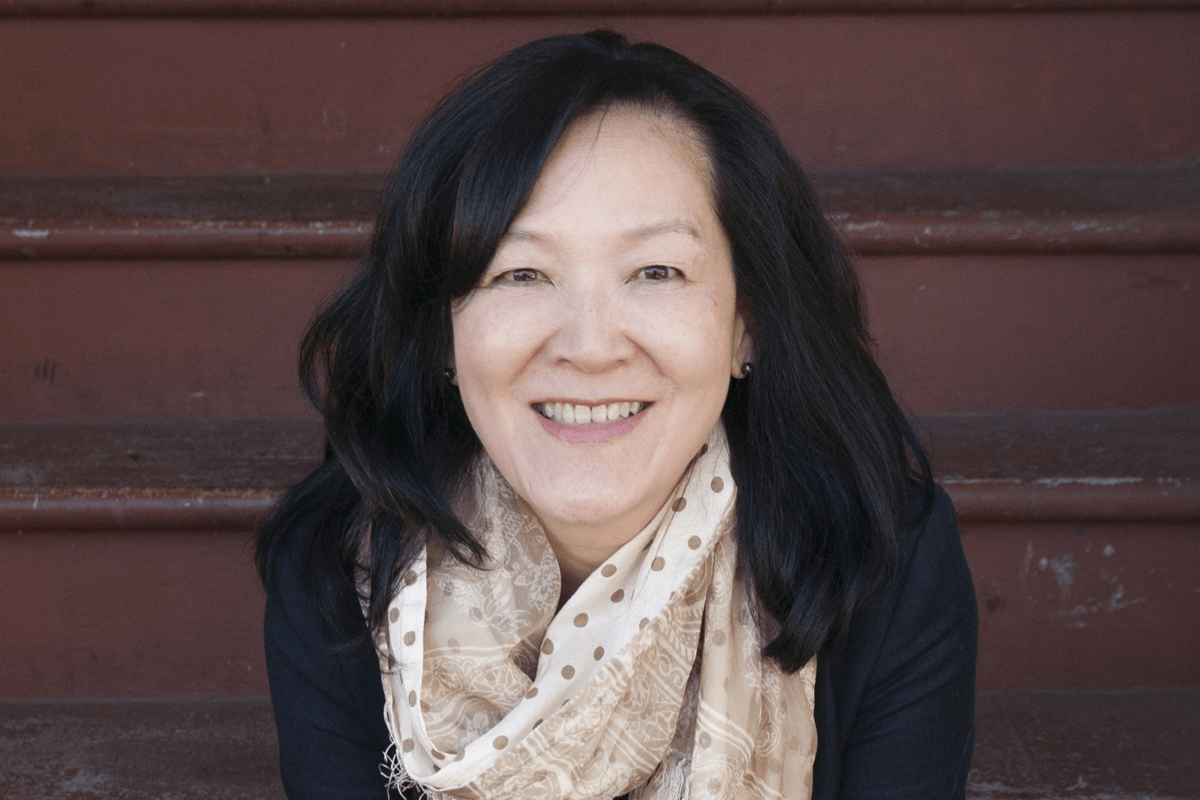
Janie Chang is a Globe and Mail bestselling author of historical fiction. Born in Taiwan, Chang has lived in the Philippines, Iran, Thailand, New Zealand, and Canada. Her novels often draw from family history and ancestral stories. She has a degree in computer science and is a graduate of the Writer’s Studio Program at Simon Fraser University. She is the author of Three Souls, Dragon Springs Road, The Library of Legends, and The Porcelain Moon; and co-author of the USA Today bestseller The Phoenix Crown, with Kate Quinn.
Connect with Janie on Instagram at @janiechang33, on Facebook at @JanieChangWriter, or via her website, janiechang.com.
When people ask “what is your process” I can only answer in broad terms.
Since I write historical fiction, research is always the first part of the process – and also a big part of the inspiration. Armed with historical facts and a sense for how my characters might behave given the era’s societal norms, I begin sketching the story outline. This first step of crafting and plotting a novel is always exhilarating. There’s so much potential for story, for bringing little-known people and events to light. There’s another practical reason for the outline – to narrow down the amount of research. Once I have an outline, I can dive into more specific areas of research and unearth facts directly relevant to the plot and characters.
Then begins the writing – the first couple of chapters or maybe pivotal scenes in the story, just to get a feel for whether the dynamic between characters feel true, whether the plot makes sense when it’s fleshed out. Write more if all goes well, and if not, brainstorm some more, research some more, replot, kill off characters, replot. Then begin writing again.
For 2026, however, I already know I need to make some changes.
I’ve come to realize that my writing practice is best described as serial monogamy. I have to finish writing one book before moving to the next. For one thing, it’s hard enough to gather the wherewithal to focus on the work-in-progress let alone pay court to more than one. I can’t write unless the world of the work-in-progress is agitating at the back of my brain, stirred around by a Muse who understands the characters better than I do. Eventually the Muse relents and rewards my fidelity by revealing what the story needs.
Then there’s deadlines. A book under contract means contract deadlines. For me a deadline hovers overhead, poised like a guillotine. This mental image is likely due to decades of working in corporate jobs where deadlines were sacrosanct. So any distraction represents a risk of not making the deadline and my brain simply refuses to entertain such a risk.
Not only that, but it takes me a long time to achieve distance even after handing in a book, emerging very slowly from the world of the WIP, with many backwards glances even though I’m feeling eager and ready to start the next project. It’s just really hard for me to leave the world of one story and hop into another.
So when did I realize the creative part of my brain was so relentlessly and incurably single-tasking? In 2023.
That was the year Kate Quinn and I finished writing our co-authored novel, The Phoenix Crown. We had (rather naively) agreed to a rather aggressive deadline. We handed in the manuscript, and Kate went back to writing the book that she’d set aside, and I went back to work on The Fourth Princess.
Except that the writing simply did not happen. The Muse had gone on strike. I had cheated on a book. My mind drew a creative blank even though I had roughed out a pretty good outline for the novel, even though I had written the first several chapters, even though I’d done the historical research. I just couldn’t get back into the world of the story.
I asked for a deadline extension. And finally, I’m pleased and relieved that The Fourth Princess will release in February 2026.
So why make changes to my writing process in 2026?
Because once again, Kate and I will be working together on a book while also dealing with our individual WIPs. I expect to jump into this project with both feet and at full speed because nothing focuses the mind like knowing your co-author is waiting for you to upload the next chapter. It’s all at once stressful, fun, motivating, and a totally different writing process.
It’s my solo book afterwards that worries me. Given how long it takes me to switch off from one book, what sort of tactics would let me achieve that much-needed mental distance sooner? Which part of the writing process should I change? It’s not just about meeting deadlines, it’s also the anxiety of wondering when or if I’ll ever get back into the world of the book. What if it’s simply not a good story idea? What if, what if. I refuse to go through that again.
After mulling over the sequence of events from the first collaboration, it occurred to me that the process is fine. There is no other process that makes sense for me. The real problem was that I had stopped working on The Fourth Princess after writing the first few chapters, at a point in the process that made it hard to restart. How could I regain the inspiration that had kickstarted the story idea in the first place?
Research.
Historical novelists are essentially history geeks. If allowed, we would happily research our way into multiple rabbit holes without writing a single word. If I restarted my own novel at a point where I still needed extensive research, it would pull me back into the right era, into the issues and events of the time.
So in 2026, my plan is to get as far as the story outline for my next (solo) book and then break off to work on the co-authored book. But not exclusively. I will dip into research for my own book from time to time, as a reminder of the story waiting for me, and so that I don’t drift too far away from the world I had to set aside. I’ll compile notes of facts and ideas that might come in useful when I return to my own WIP. And when it’s time to get back to it, I will be picking up the process at a point when it’s most exciting, still ripe with potential – which is precisely why it’s the best place to have hit pause. It’s close to the start of the process, when the story is still fluid, still requires more research.
Research will keep me connected and maintain creative momentum. It will re-inspire.
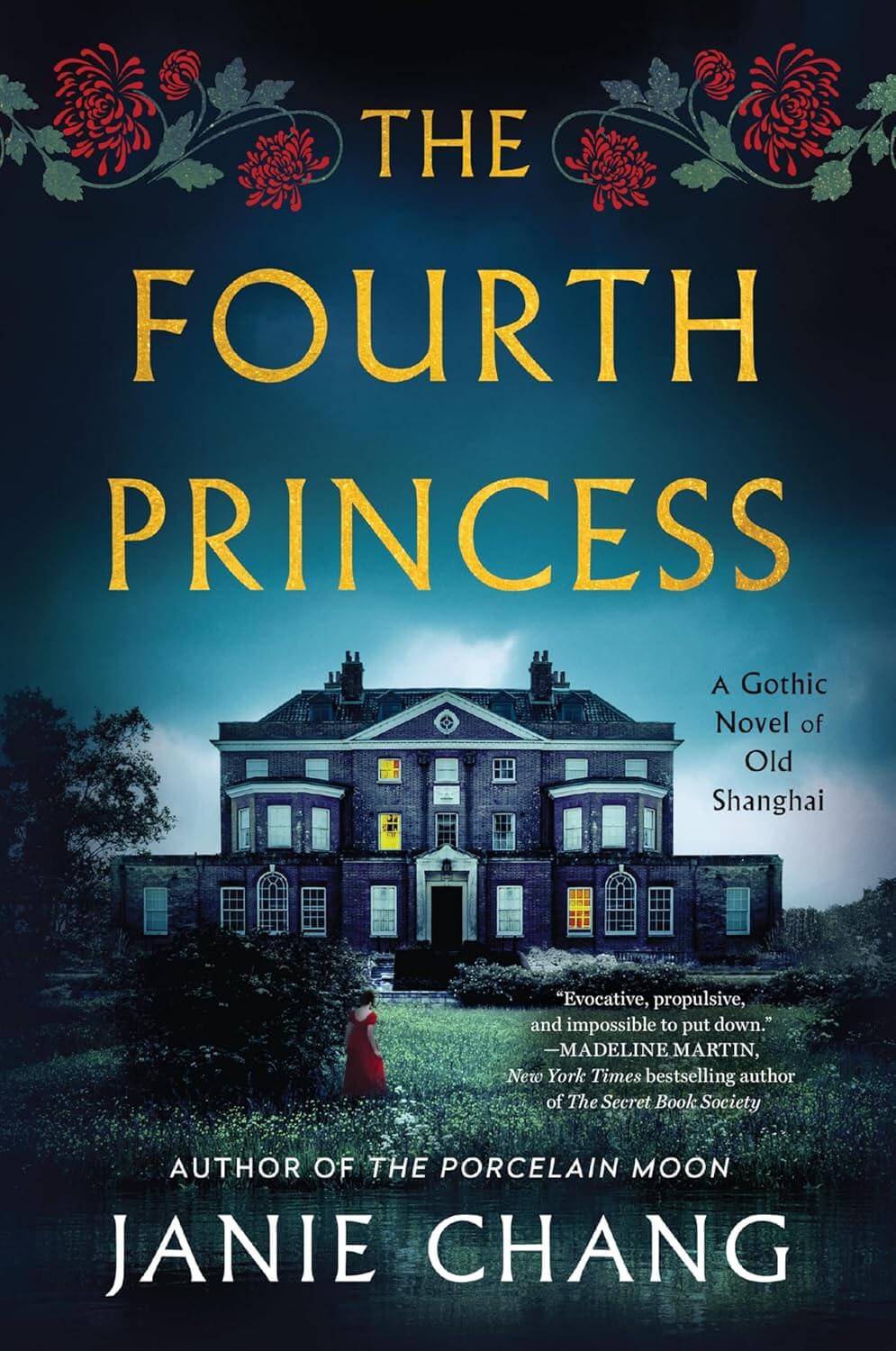
The Fourth Princess by Janie Chang
In 1911 Shanghai, Lisan Liu has just been hired as secretary to Caroline Stanton, a wealthy American and the new mistress of Lennox Manor. But the Manor is haunted by a previous owner’s suicide, and the past begins to bleed into Lisan’s present. Soon Lisan learns why her identity has been hidden for her entire life, even as she and Caroline are driven to madness by a guest who knows too much and a Manor that refuses to let them go.
Buy the book now: Bookshop.org | Amazon








Leave A Comment