

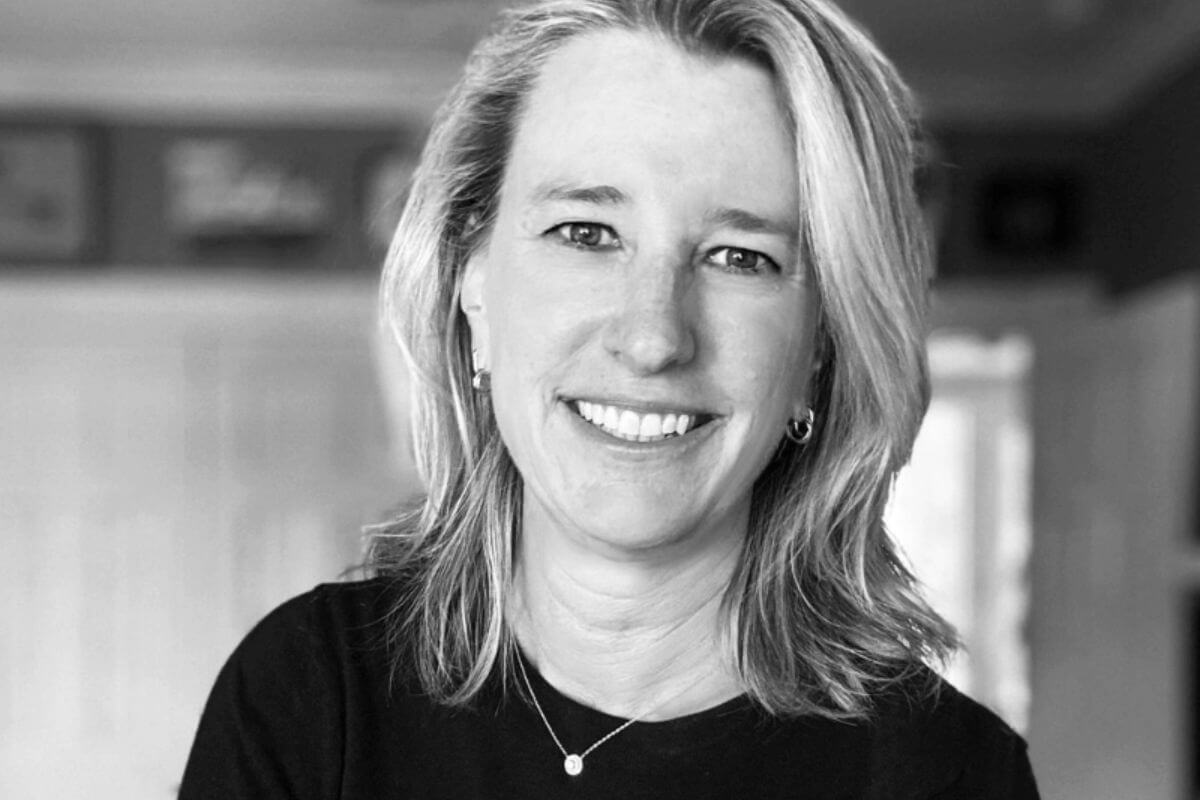
Monica Comas was born and raised in Cleveland, Ohio. She holds a bachelor’s degree in English from The Ohio State University and a master’s in journalism from New York University. She’s worked as a newspaper reporter, a journalist covering stocks and the economy, and a financial editor. But fiction has always been her true love. Monica lives in New York with her husband, John, and their tiny shih tzu, Poirot. For more information, visit www.monicacomas.com.
The main characters in my novel, Recipe for Joy, are old.
That’s no judgment—it’s a compliment. My protagonist is 45 years old. Her sister is also in her 40s. Now, do I have a couple youngsters who are minor players in this novel? Yes. But every major character in the story is middle-aged or older. This is by design.
Is it because I’m 55 years old and frankly, rarely pick up a book anymore with a 20-something protagonist? Partly. I’ve been there, lived that experience. I’ve moved to the big city, found my way, navigated the first steps of my career, and grappled with what every other woman does at that age. Don’t misunderstand me, these are important stories, and I’m thrilled they’re being written for a new generation. They’re vital and necessary. But these are also stories that are decades behind me in the rear-view mirror.
With my reading now, I want to immerse myself in characters who’ve lived a rich and varied life, who’ve gone through some things. I want to follow someone who’s experienced profound grief as well as untold joy. I want to read about characters who are navigating the terrain of middle-age and beyond. Because this is a ground that’s meaty and rich, offering so much to readers like myself. And this is what I like to write.
Better With Age
But the deeper reason for my decision to write characters who are older is that older people are interesting. They’ve got lived experience, the kind of emotional depth that you only come by after living a long time, and most of all, they have stories that enlighten. All of this is priceless. And yet, in our society, older people—and let’s face it, I’m mostly talking about women here—are disregarded in favor of the young. We were all young once—it’s an exciting time, I get it! But it isn’t until you get some decades of living under your belt that you start to gain real wisdom, the kind that’s worth sharing and passing down—most importantly, the kind worth listening to. These are not voices to be cast aside. We should instead be paying attention.
When my sweet mother passed away, I was an absolute mess. Never having walked such a grief-stricken road before, I was more than lost. I was utterly unmoored by a sorrow that felt bottomless and all-consuming. Women who were older and wiser than me, friends and relatives who’d already traveled down grief’s craggy path, were the ones who offered the greatest solace and understanding. What a gift that was, to not only be seen in my rawest, deepest sorrow, but also to be gently shepherded through it, arms linked, inexperience tethered to wisdom. It was a profound gift, one I still carry with me, which is why I was so keen to incorporate this reverence into my debut novel.
I also wanted to thread my mom into several of the characters in Recipe for Joy. My always-cheery mom, Patty, who loved to do yardwork, who had a delightful sense of humor, the best laugh, the most luminous smile, and who always turned toward the happy in her life, including countless times when it would’ve been so easy for despair to overshadow everything. Could I have stitched Patty’s sparkly qualities into a younger character? Sure. But I wrote Recipe for Joy after my sweet mom passed away, and more than anything, I wanted to see her. I wanted the representation to ring true.
Vintage Is In
There’s one final piece that bears mention. Not only did I need to write older characters at this point in my life because of my mom and the intuitive empathy older women showered me with…but I also needed to do this after being told years ago that I had to make my characters younger. Because in order for a book to be salable, the protagonist should be in her 20s—at most, her 30s. At the time, I was a writer in my 40s, and every signal flashing was that a debut novel with a character as old as me was too old to launch a book career. It was dispiriting—also infuriating considering the economic power that women my age wielded (and still wield). But I digress. So here I am older…perhaps a bit wiser. Or maybe it’s that just I don’t care anymore about what age my characters “should” be. It’s probably a mixture of all that. But what I think is important and most encouraging here is that the penchant to steer writers toward writing younger characters has run its course, at least for the moment.
Imagine a bookshelf without Olive Kitteridge, or Ove, or Sybil Van Antwerp, or the entire cast of characters in Alice Elliott Dark’s Fellowship Point. How lacking that shelf would be. I’m so glad we have every one of these iconic characters.
Fortunately, the editor who acquired Recipe for Joy saw the charm of my older characters and wanted to publish my story. The editors who then ushered my book baby into the world championed my feisty cast of mature characters every step of the way. It’s worth nothing that all these editors are younger than me. I’m grateful that my publisher saw the merit of a story, its charm, the way it squares its shoulders to emotional truths, and ultimately wends its way toward something hopeful. I’m abundantly thankful that my publisher and editors saw everything I love about Recipe for Joy instead of seeing a collection of characters who needed to be written younger.
Just as in life, age and wisdom are worth celebrating in our novels. Older characters give fresh new dimension to main character energy, and it’s heartening to see publishing embracing this. These are stories we learn from. Stories that help us develop empathy. Stories that make us grow. Books with older characters don’t just make for more interesting reading. Having well-earned wisdom knit into our novels, into the very pages we’re turning, the tales we’re digesting…every bit of it makes us all far richer for the experience.

Recipe for Joy by Monica Comas
Belle Sutton feels stuck in life—her career is stalled, money is tight, and her relationship with her sister, Lexie, is falling apart. When her beloved grandmother dies, Belle is devastated, until she receives letters, a cookbook, and treasured photos that reveal Gran’s final wish: for the sisters to reconcile. Following her grandmother’s recipes becomes a path back to each other, leading to healing, surprises, and a renewed sense of family. It’s a hopeful story about grief, forgiveness, and the comfort of tradition.
Buy the book now: Amazon | Bookshop.org







Leave A Comment