
Like most writers, I never had a choice in pursuing this profession. It chose me.
As a kid, I loved playing with dolls until one day, I grew bored. I had too many blondes, too many girls, not enough range. I assumed I had just grown weary of the fact that my stories could only unfold in a pink Barbie Dream House. I didn’t realize this feeling of confinement was because my mind was already seeking ways to tell stories, a desire that was only quenched once I discovered the beauty of a blank page.
I was a writer—a storyteller—far before I even knew what that meant.
In much the same way, the stories I’ve chosen to write have always chosen me. The characters were often so loud, all I needed to do to write their story was listen and transcribe the words on the page. A few months of imagining, and the novel was done. Drafted, and ready for beta readers. I was a proud pantser.
And I was getting nowhere.
I knew how to pitch a story, could secure a full request from a dream agent like it was nothing. But I wasn’t getting any offers. Any feedback I did receive from agents was a reiteration of the same issues—the pacing was off, the story was muddled, the character motivations weren’t clear.
Knowing what I know now, it’s because I was learning the story—and the characters—as I was writing it. My plots were wandering and my characters were unrealized, pieced together as I formulated each chapter.
I was a proud, but stagnant pantser.
Take it from someone who has received over three hundred rejections across four manuscripts and seven years—unless you’re a prodigy (most of us aren’t), pantsing is a surefire way to eliminate any sense of propulsion in your story. To confuse the plot and in doing so, confuse the reader. To eliminate your chances of getting traditionally published. To waste your time.
So here’s the new 9-step writing process I adopted—after years of being an avid pantser—that got me three offers of representation in less than a month of querying my most recent novel. I signed with my dream literary agent in December, and I largely attribute it to this process.
Step 1: Let the story choose you.
In order for a story to truly shine, it’s my belief that the story must choose you.
Most writers have notes apps filled with ideas that sprung from unhinged dreams or random wandering thoughts or heartbreaks that linger, so most writers likely have no problem with Step 1. We’re all trudging beneath the weight of the stories we wish we had the time to tell. However, if you’re at a place where you don’t know what you want to write, my advice is to take a pause. Go on a long walk. Read good books. Live your life.
Forcing a story to have that necessary gold will only ensure the arrival of that dreaded writer’s block, because you don’t love that story as much as you need to. The same goes for those of you who think you can outsmart the gatekeepers of publishing by writing to the market, or in a genre you think will be easy to sell.
We’re spending hundreds to thousands of hours writing then rewriting, capturing then implementing feedback, selling it then editing it again, and so on. You must love a story to its bones, and I don’t think that’s possible if you’re forcing it on yourself. Maybe bad advice, but I think I’m right just as I know that for all writers, the story you’re meant to tell will come to you. Give yourself the grace to let it hit you when it’s ready to be heard.
Step 2: Before you write a single word…Story Genius.
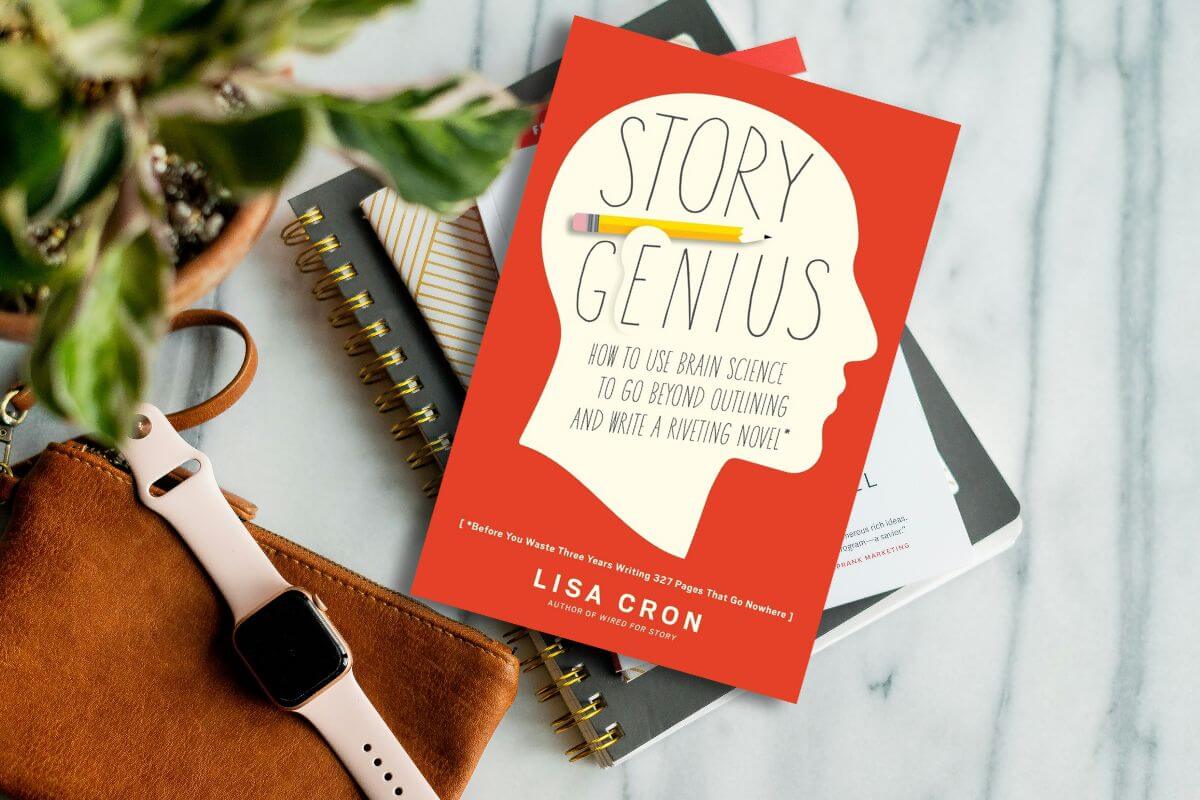
Once your story has chosen you, it’s time to focus on the craft. I recommend turning to none other than Story Genius by Lisa Cron, an absolute must read for all aspiring writers.
There’s a reason pantsers are so adamant about their writing method—their characters are loud, so loud they must listen. And I wholeheartedly agree with this sentiment—I was an avid pantser for most of my writing life. There’s merit in letting your characters tell you where your story should go. Lisa Cron calls this the “red thread”, woven through the pages of your story, and she’s managed to create a series of exercises that help you streamline those character motivations into propulsion.
My copy of Story Genius is marked up with highlights and annotations and dozens of sticker tabs to make sure I don’t miss a critical story-plotting assignment. So before you write a single word of your novel, complete the workbook and I promise, you’ll thank me later. Lisa Cron has struck gold here, and I fully intend to implement the Story Genius practices for every novel I write moving forward.
The next novel I’m currently working on has been flowing out of me like pure water because I took the time—nearly a month—to allow the story to introduce itself to me through the Story Genius exercises. And because of this, I won’t be spending years learning the story, realizing character motivations, or suddenly having an idea for a new ending that changes the entire plot trajectory (essentially…what I did for Lovers & Leavers).
Buy the book. Do the exercises. This won’t replace intuition, but it will give your story direction and focus.
Step 3: Pants—while plotting to hit each story beat.
Despite rebranding as a plotter, I still maintain some pantser ways that allow my story to breathe. So long as everything in my stories is still motivated by the character’s goals, the unpredictability of my characters allows me to tell the most interesting story.
But there has to be a rhyme to the reason. Save The Cat Writes A Novel is another must-read craft book that outlines the fifteen essential story beats all good stories have, and Jessica Brody provides proof in the many examples she details.

So, here’s what I do.
I’ll loosely follow the rough plot outline I drafted in Step 2 as I write the story—my version of pantsing, because I’ve already done a lot of the upfront work to get to know it—to make sure I’m loosely considering each of the story beats outlined in Save The Cat Writes A Novel. It doesn’t need to be perfect at this stage—I’m still in the messy drafting phase of writing a novel. But this allows me to consider the many ways the plot should be escalating. Following the story beats ensures that.
Step 4: Take a break.
This is the hardest step and trust me—I get it. We’re all in a rush to achieve our dreams, but your dreams won’t come true if you’re speeding through the process that makes you someone worthy of big things. It takes time, patience, and expertise.
Take it from someone who spent years courting dream literary agents (including my own) only to continue receiving the same feedback: the story wasn’t ready.
Once the first draft of the novel has been completed, take a break. I’m not talking a month—I’m talking several. You need enough space so that when you do return to your novel, it’s like you’re meeting it for the first time.
You can’t love your book when you go back into editing. You need distance and fresh eyes so you can dig in with less bias.
Step 5: Print that bad boy out, and read it.
Head to your nearest Office Depot and print out your manuscript.
Bonus tip: I recommend printing your manuscript one-sided so you can play around with the placement of certain scenes if needed.
Reading an analog version of your novel allows you to experience it as a reader would, and because you’re newly estranged from the story, you’ll be able to read it with an unbiased eye. Read as quickly as you can, and mark up the pages as needed. Be messy about it. Write any feedback that comes to mind.
Step 6: Re-map the draft against each story beat to identify story gaps and opportunities.
This is where the real plotting happens.
Now that you’ve read through the novel, bring out your trusty copy of Save The Cat Writes A Novel and begin mapping the plot against the story beats. If you have multiple POVs or multiple timelines, then create a single beat sheet for each POV and timeline, then combine it all into one master beat sheet.
This way you can ensure the plot is cohesive as it builds throughout your story. You’ll be able to identify any superfluous scenes, and any potential gaps in your story that require a bit of cushion.
Step 7: Work through revisions according to your new beat sheet.
Now that you have a master beat sheet, rewrite the story to make sure you’re hitting each of those necessary beats. You’ll find yourself suddenly able to maintain a logical sense of propulsion throughout each scene, because you’ve already mapped out how it all fits together. By this point, you should know your story.
This step will likely take you the longest, but it’s an essential step and it’s okay to take it slow. Remember, we’re okay with taking our time here. There’s no rush to write a good story.
Step 8: Speed read.
If you can, read through the entire thing in one sitting. You’ll find your notes are a lot smaller, and your critical eye is sharper. Cut anything that isn’t working to move the story forward.
Step 9: Polish—cut those darlings.
Implement all changes you noticed in the speed read, then it’s time for a final polish. Every author has filler words they use when they’re being lazy. Here’s my personal hit list if you’re looking for inspiration. I’ll search for each individual word to identify ways to clean up my prose.
A quick search will help to enhance clarity and brevity, while also cutting your word count. Agents will appreciate your attention to detail here.
From the Trenches is my new series where I’ll detail all the things I did to move from aspiring to agented author. Up next: we’ll cover the many ways my story has evolved over the years (been noodling on this one since 2016), the query package that got me fifteen full requests in less than a month of querying, and the many ways I plan to keep myself busy once my debut novel goes out on submission (we’re trending for early March!).













Leave A Comment