

Photo Credit: Sharyn Barratt
Nalini Singh is a bestselling author known for her paranormal romances, and her two thrillers which have gained attention from LibraryReads, the Indie Next List, The New York Times, and more.
There’s a reason so many romance writers also write in the wider suspense genre (for the purpose of this essay, I’m including thrillers and mysteries under this umbrella). Some of us come from urban fantasy where suspense is often a part of the storyline–it just so happens that the killer our protagonist is tracking might be a vampire, or perhaps a rogue telepath. Futuristic technology may be involved in some cases, but at the core of it, the suspense beats hold true.
But that isn’t the uniting factor among all romance novelists who step into the suspense side of life. No, the critical factor that defines both genres is an understanding of the human psyche.
A contemporary romance, for example, might be driven wholly by the emotional interaction between the protagonists. That’s harder to do than it sounds—to keep readers interested and invested without any external conflict or plot line—but a good writer can take us on a powerful journey by taking us into the hearts of our main characters.
It’s about digging deep, discovering what makes each of these people tick, stripping back their protective shields to uncover hidden wounds or secrets, and then building on that knowledge to create scenes that compel us to turn the pages.
A domestic thriller writer utilizes that same deep characterization. The only difference in a thriller of this kind might be that the writer doesn’t reveal as much of the character’s emotions to the reader—but the writing skill is the same: the writer must always know what drives their character, and what is at stake, in order for the character’s actions to make sense.
The latter doesn’t mean we want perfect people in our thrillers—of course not. Imperfect people make fantastic protagonists in both romance and in suspense. I loved writing my unreliable narrator with a brain injury, as well as a recent protagonist who was upfront about keeping secrets. Such imperfect characters are complicated and messy and can go off the rails—and sometimes, that’s just what a story needs.
Our job as writers is to weave their imperfections into the book, their decision making intrinsically influenced by their scars—so that when the reader gets to the end of the book, their actions make perfect sense (even if they didn’t at first glance).
As an example, Tavish in Such a Perfect Family was previously involved with an older woman with whom he should’ve never been intimate. He was her financial advisor; she was worth millions. Crossing the client-advisor boundary was a stupid, stupid move on his part—and it comes back to haunt him when she’s murdered—but there’s a reason Tavish couldn’t stop himself, a reason so deeply rooted in his childhood that even though he recognizes the recklessness of his self-sabotage, he can’t stop.
There are, of course, more plot-based mysteries and thrillers. An example might be the classic police procedural. However, an understanding of emotion comes into play even there. At the most basic level, it has to do with motive—we need a reason why someone has done a terrible act, otherwise, it all feels rather hollow.
We read not just for the factual resolution, the nuts and bolts of an investigation, but for the cause of it all.
Then there are the interactions between the characters, especially if we’re talking a series of procedurals featuring the same team. Part of the fun of reading a series is seeing the development of the relationships between the characters – it could be the gruff older cop who starts to reluctantly respect their brash younger colleague, or a broken team that begins to function better together case by case, until we’re on their side and want to return to see them succeed over and over again.
None of this works without a deep understanding of how humans interact and how we’re driven by our needs and desires, our ability to love—and our ability to hate. That’s at the core of why I don’t believe the transition from romance to suspense is a case of different writing skills.
We use the same skills in different ways.
I’m a plant nerd, so I hope you’ll excuse the garden metaphor to come: It’s like learning to plant a garden. You might start out with a flower patch, but once you learn about soil, fertilizer, and watering requirements, you can transition to planting vegetables without much of an issue. You’ve already got all the tools—you just have to calibrate them to your new crop.
Having said that, I do believe it’s always good to be willing to learn, especially if you’re stepping deeply outside the genre in which you’ve been writing for years. In my case, my second thriller was the first time I ever wrote a book in first person. While I’d read countless first person narratives over the years, I sat down and did a lot of research on writing in the first person—polishing up a tool I hadn’t used for quite a while.
And now, I find that I’m pondering using first person in some of my romances, too. Taking time to learn a skill or renew one as a writer is never wasted. Everything we learn flows into our work—giving us an ever-expanding writer’s toolbox from which to choose. But, to circle back to the subject of this essay, if there was one set of tools I would recommend every writer keep ever-sharp, it would be the one to do with emotion and understanding who we are as humans, both in the light—and in the darkness.
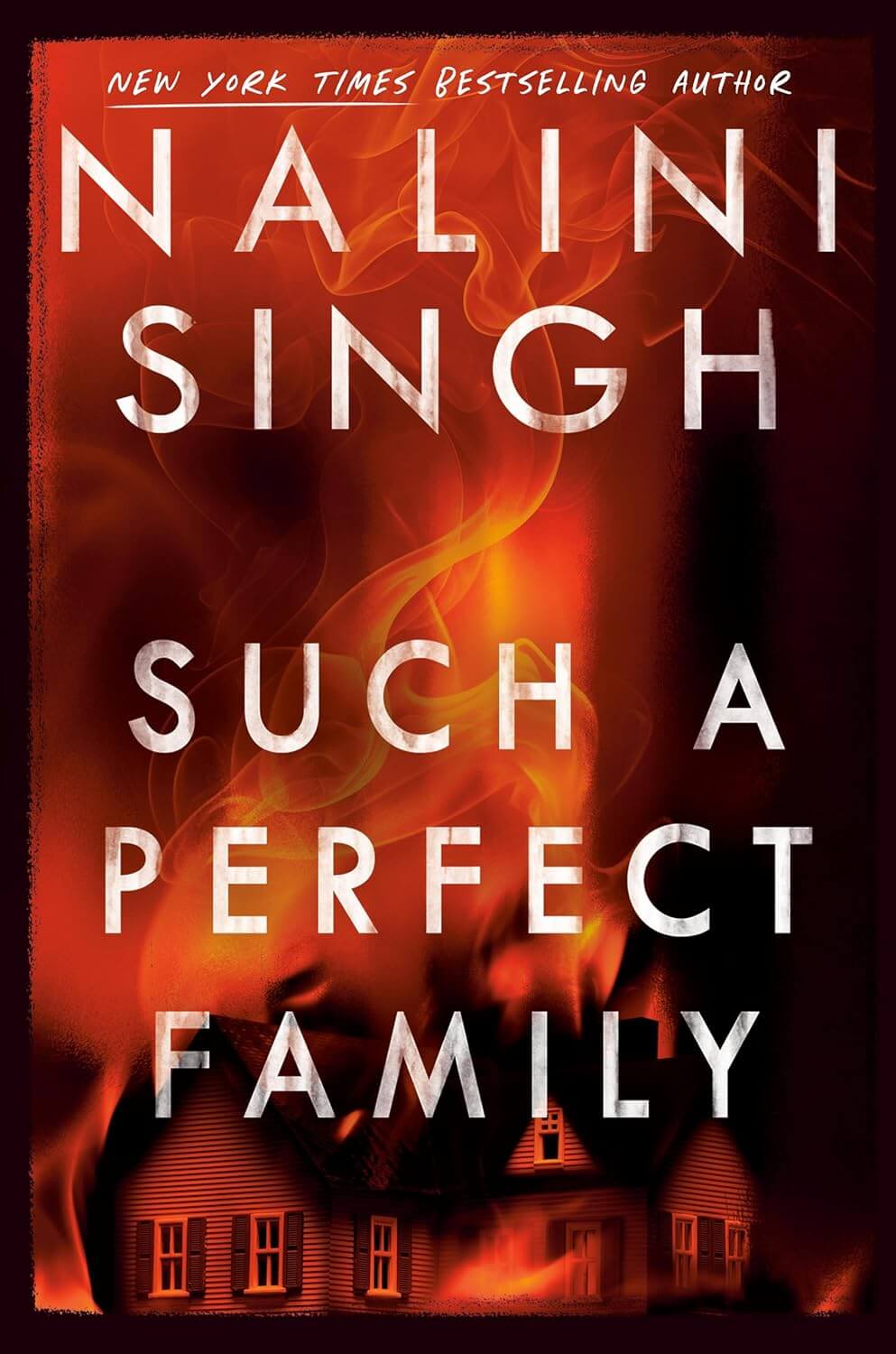
Such a Perfect Family
Tavish is freshly married, enjoying his new life. That is, until his wealthy in-laws’ house goes up in flames, putting his wife in a coma and killing most of her family. Tavish thought he left behind his previously fraught and dangerous love life, but turns out his new wife has plenty of secrets of her own. Now Tavish has to prove his innocence before his past catches up to him.
Buy the book now: Bookshop.org | Amazon











Leave A Comment