

Sally Kilpatrick is the USA Today bestselling author of eight novels and counting, including Nobody’s Perfect and The Happy Hour Choir. She has won multiple awards, including the 2018 and 2019 Georgia Author of the Year. Sally empty nests in Marietta, Georgia, and Los Angeles, California, with her ever-understanding husband and decidedly unimpressed cats. Her hobbies include reading, travel, wine, and running in an effort to make up for the wine consumed. She has yet to meet a house she didn’t want to tour.
As a writer with ADHD and anxiety, it never ceases to amaze me how I—and so many other authors with similar challenges—have chosen a profession that requires self-discipline as well as a tolerance for repeated rejection and never-ending uncertainty. Getting published is an achievement; remaining published requires an almost pathological persistence. Here are eight things I’ve learned on this roller coaster of publishing as well as the subsequent strategies I employ to keep on keeping on.
1. Self-compassion
First and foremost, it does no good to berate yourself. I’ve already tried that method, so you don’t have to. Many friends and therapists—and my husband—have attempted to get me to internalize this concept, but it really hit home in a diet book, of all things. I believe this statement from Abby Langer in Good Food, Bad Diet applies to many aspects of life beyond repairing one’s relationship with food: “Negative core beliefs sell us the fallacy that we’re broken in some way and will never be good enough, and this causes us to continually punish ourselves physically and emotionally in an attempt to repent and fix what [we] think is wrong.” Think about it: did beating yourself up for not making word count ever lead to more writing over the long term? Be kind to yourself when life is lifing. A handy rule of thumb: if you wouldn’t say it to your best friend, you probably shouldn’t be saying it to yourself.
2.Approach everything—but especially any painful emotions—with curiosity
Take a moment to ask yourself if there’s a reason why you’re having a hard time progressing. The HALTS method is especially useful. Are you hungry, angry, lonely, tired, sick, or stressed? Often, you need a sandwich, a walk, a chat with someone who isn’t fictional, or maybe to literally touch grass. In an industry that screams “hustle” and “write faster,” it’s easy to get burned out. Longevity will come from taking care of yourself both physically and mentally.
3. Ritual
We all have to write at times when our muse seems to have left on a world cruise, so how do we coax ourselves into doing so? By creating routines and/or by returning to a time when writing felt easy and fun. If I’m stuck, then I put on the soundtrack from The Last of the Mohicans and treat myself to a Dr Pepper. When I was in high school and college, I often wrote while listening to soundtracks and drinking a Dr Pepper, so doing so engages my muscle memory. In a class with Nancy Knight, she suggested setting aside a specific time and possibly lighting a candle. Anything that signals to your mind that it’s time to write will help.
4. Set achievable goals
We’ve already broken the acronym seal, so how about another one. Your goals should be SMART: specific, measurable, achievable, relevant, and timed. You can say, “I’m going to write a book this year,” but it’s even better if you say, “I’m going to write a book this year, and I’ll spend x amount of time preplanning, write x words each day/week, complete a first draft by x, etc. If you have ADHD like I do, it’s wise to break larger goals into much, much smaller ones because progress begets progress and smaller goals can lead to larger ones. Even completing a small task can cause a release of dopamine so writing 50 words just might encourage you to write another hundred.
5. Morning pages
My resistance to morning pages was legendary, but attempting them became one of my pandemic projects. The results were undeniable. The first thing I did was to allow myself to write my morning pages whenever I needed to. Not all of us are morning people. I’m sure following Julia Cameron’s original method is better, but something is better than nothing. Not only does the stream of consciousness nature of morning pages aid in creativity, but, for me, they become a dumping ground for the eleven billion thoughts and worries in my head, a way to allow those thoughts to leave me long enough to concentrate on writing.
6. Read
Similarly, it’s important to take time to read because reading is often the first love of writers. Author Pat Conroy once told me, “You have to read a hundred books to write one.” I don’t know if he originated that thought, but my output has increased since I picked up his challenge. If you’re worried about accidentally copying someone else’s idea, then try to read in a genre other than the one you’re actively writing. If I’m writing women’s fiction or romance, then I’m reading mystery. Often, I’m also reading nonfiction, too.
7. Limit and/or delay your social media posts
Whew, it’s awfully difficult to create when it feels as though the world is on fire. Allowing the outside world in can stymie any attempts to write. Also, we now know that social media algorithms reward outrage in order to stoke engagement. Even a well curated feed still allows inflammatory content to bleed through. Or maybe someone tags you in a bad review. I’m not saying that we need to stick our heads in the sand, but I am saying that starting your day with social media means you’ll lose time scrolling at best and leave your phone/laptop enraged at worst. We all gotta do it, but we don’t have to do it first.
8. Persistence
The number one thing that separates a pre-published writer from a published one is persistence. At first, it’s all about finishing the book, polishing the book, and shopping the book. Then it becomes writing another book, improving craft, learning new promo techniques, and, eventually, starting over. I can think of very few, if any, writers who haven’t found themselves between contracts at some point or another. You’ve done it once, and you can do it again. These days, a book can even take off years after its original release, which is also to say: you haven’t failed until you quit. So, don’t quit.
I’d be remiss here if I didn’t say that I’m also still writing thanks to a healthy amount of therapy. When I was in college, one of my professors said, “I’m in therapy. Everyone needs to be in therapy.” Dr. Scura was ahead of her time because folks didn’t admit such things so freely back then. But I’m glad she said it because it’s definitely right for me, and my therapist holds me accountable to all the things that I’ve mentioned above. So, be kind to yourself, hang in there, and let’s all keep writing.
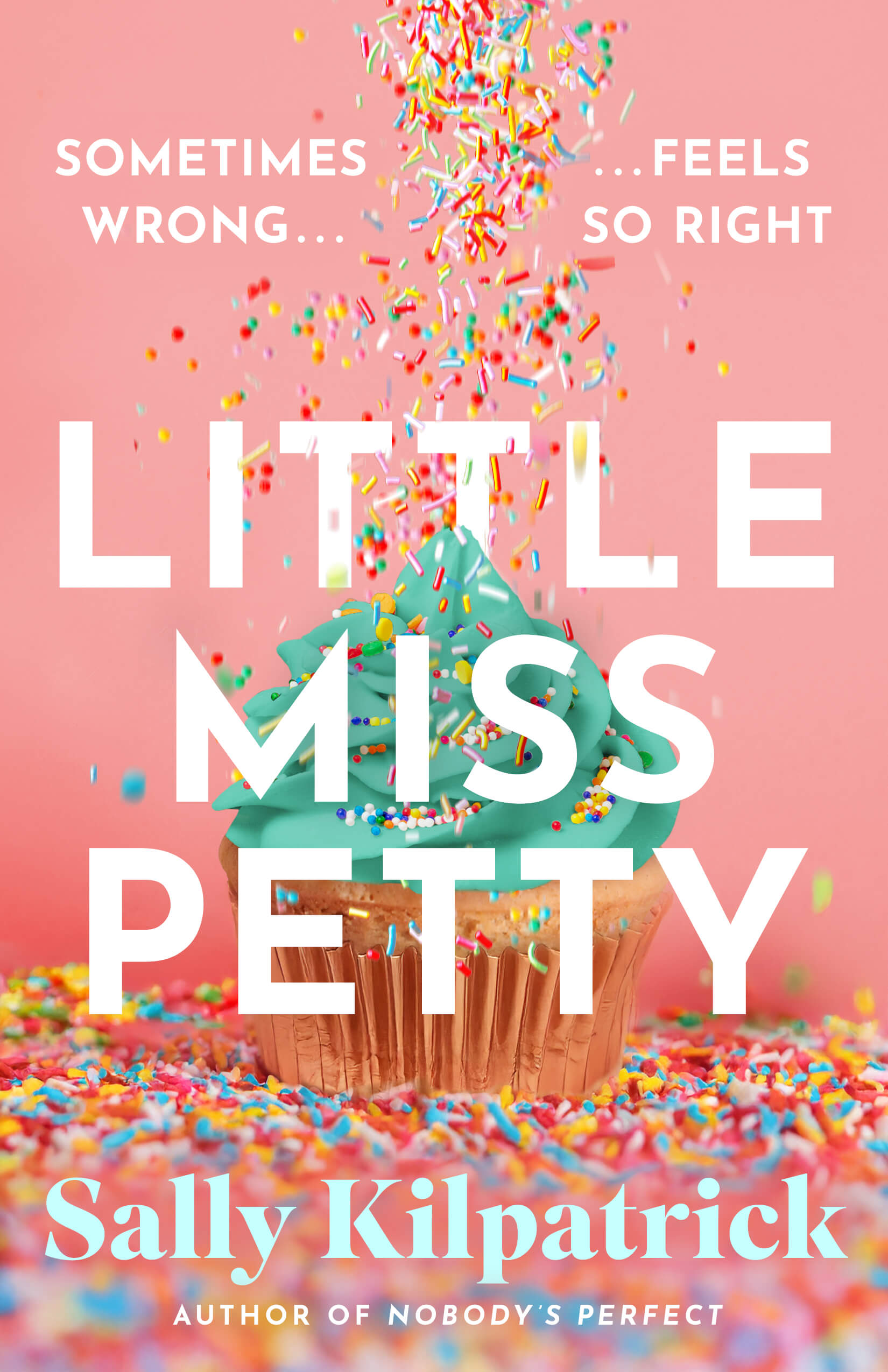
Little Miss Petty by Sally Kilpatrick
Sometimes happily ever after begins with a cheating boyfriend and deliciously satisfying revenge. Stella Stark’s heartbreak launches a new business venture orchestrating acts of karmic retribution for the brokenhearted under the name “Little Miss Petty.” Joining forces with some unique characters, she forges a team with Havisham, a rough around the edge woman and bar owner with a heart of gold, and Salcedo, a college student with a knack for marketing. When Little Miss Petty’s next target is Stella’s seemingly kind neighbor Malone, things get tricky. As her professional and personal lives begin to mix, Stella must figure out if her charming neighbor is worth the bad business.
Buy the book now: Bookshop.org | Amazon












Leave A Comment