
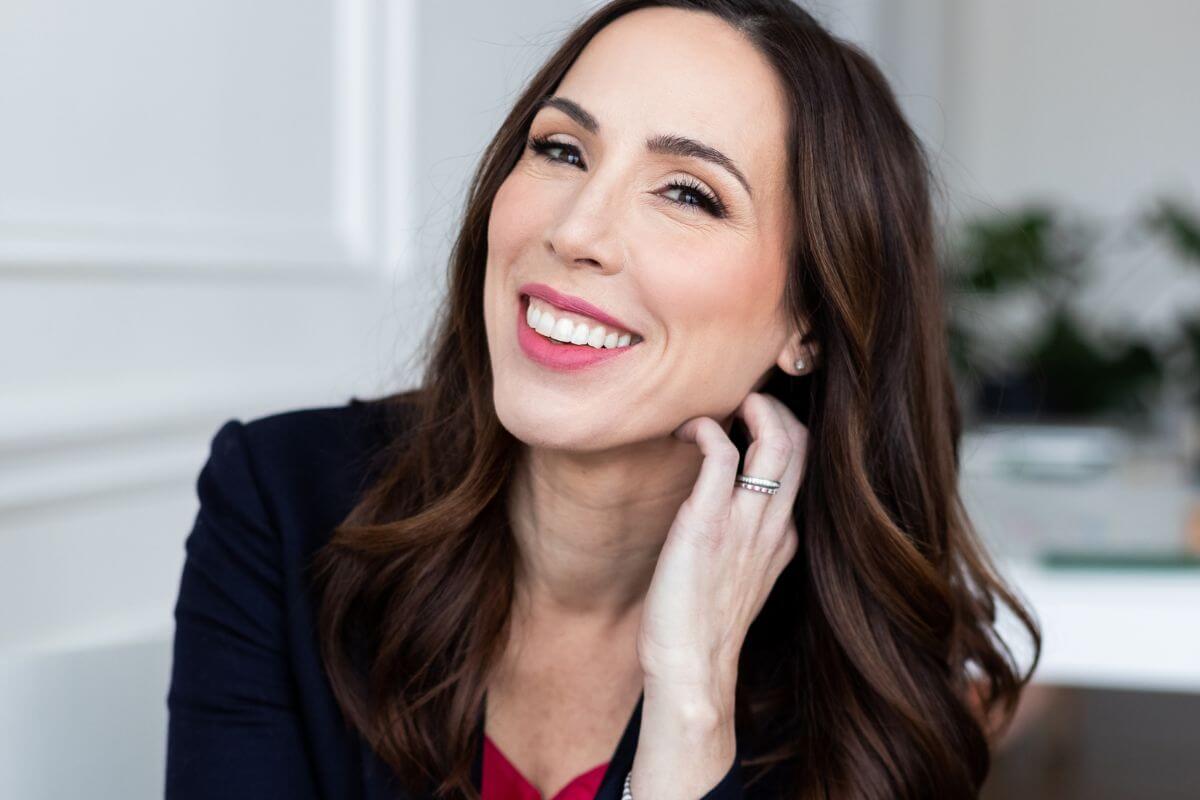
Camille Pagán is a publishing powerhouse whose books and business make her uniquely positioned to talk about the art and the commerce sides of getting a story out into the world. A bestselling author of eleven books, the host of the podcast The Career Novelist™ and master certified coach and founder of the Even Better Co., she has seen the industry from all angles and helped more than 1,000 novelists, creatives, and business owners find their own brand of success.
Her experience and enthusiasm are matched only by her transparency. In an incredibly opaque industry, she talks about publishing without the secrecy. And better yet, she talks about it always with a sense of optimism. In a world full of naysayers and doubters, she frames the pursuit of this dream as something you just keep going after until you get it.
So if you’re looking for an author who has been in all the trenches, a coach who brings the hope and a podcaster who will drop writing wisdom weekly, get ready for this exclusive She Writes conversation with Camille Pagán where she shares some of that brilliance with us.
Commerce, Creativity and the Breakout Debut Deception
As our discussion kicked off, one of the first topics we discussed was an often industry-wide tendency to ignore the fact that publishing books is a business. A collaborative one at that. On the writer’s side, we can get very caught up in the creative process and neglect the business end. On the publishing side, it can be common practice to exclude authors from the business decisions. Camille talks about the lightening strike moment in her career where these two worlds combined.
Camille Pagán:
“I definitely think if you want this to work, you have to take responsibility. Skye Warren talks about this. We’re afraid to look like we’re trying. But you have to try to make it work.
My editor said on the podcast way back in one of the early episodes, ‘It is art, but the minute you publish it, it becomes commerce.’
And I was like, ‘You just broke my brain.’ I knew that, but to hear this person who sold millions of books for other writers say that, I was like, ‘Yeah. It’s commerce.’”
There are a lot of uncontrollable aspects of publishing: agents, editors, sales, unpredictable market conditions… so Camille focuses on the controllable aspects. Particularly, producing more books.
Camille Pagán:
“That’s where I come back to the work. The work I do with all writers, but especially authors, is: create a body of work.
In a career, you’re going to have books that don’t work as well, and it might surprise you which ones don’t. And then you’re going to have books that you don’t like as much. I have a couple on my shelves—I’m not going to name them.
Books aren’t children; people say, ‘Oh, you’re birthing this book,’ and it’s so true, except my love for my children is equal. Books are not like that. You create some and you’re like, ‘I could have done that differently,’ or whatever. And then I have books where I’ve loved them so much, and they just haven’t worked in the marketplace the way that I wanted. It happens.
So I come back to: if you create that body of work over time, you have more of a test, not just A–B but A–B–C–D–E–F–G—okay, which will resonate? And also you can weather more because you have the royalties coming in (hopefully). Varied income sources—we talk about that in business all the time. You can do that with books.”
The publishing industry has a tendency to treat books like they have a shelf life—pun intended. To some extent, the early release days present some of the best opportunities for a new book, but that’s not the only chance it has to be successful.
Camille Pagán:
“Books have an eternal quality. The more you have, the better chance something funky can happen at any moment. I’ve been in publishing my whole career; I have lots of people who work in houses—publicists, agents—and I keep consistently hearing a quiet thing: the industry is recognizing it takes longer than a couple weeks for a book to work. I feel like 20 years ago you had two weeks to perform: Publishers Weekly or The New York Times list or not, and then it fell off. Now there’s a little more room to sell. I find that heartening; I hope it extends.”
Camille has first-hand experience with this kind of expectation in publishing. After all, it happened to her.
Camille Pagán:
“It’s hard to work within an industry, and this is true in entrepreneurship too (the other area I’ve worked as a coach). There’s a similar feeling: you have this shot to get a product or service out, a big launch, and if it doesn’t work, all hope is lost. In a way that’s real, but my debut did not work. It sold for six figures at auction; it was supposed to be the book that launched my career, and it sold a couple thousand copies.”
But clearly, this wasn’t the end for Camille’s career and so now she’s devoted to making sure all authors understand that this ubiquitous, but inaccurate assumption doesn’t have to be the determining factor for your career either.
Camille Pagán:
“Then I sold a second book for, like, no money—pennies practically—and it sold hundreds of thousands of copies. I wrote some bad books in between, but I share this all the time because we really do feel like we get one shot to succeed; you get as many shots as you’re willing to keep taking.”
Packaging for Success and Mindset
So how exactly does Camille help writers to find their way in an industry filled with confusion? What are those controllable factors that go beyond writing more books?
Camille Pagán:
“What I do with authors—whether unpublished or published—isn’t digging into their books (that’s really book coaching).
I’m really trying to control what we can control: a title that speaks to the right audience; when you have any input (most of us do), the cover, making sure the tone of the book is what you’re aiming for. If you want to be the next Emily Henry, you’re not writing a book like Anne Patchett. Many writers really don’t think about that early on. So I work on the packaging pieces and then, of course, the mindset.
No one buys mindset. They’re like, ‘Eh, what is that? It’s not going to do anything for me. I don’t want to be Pollyanna.’ Believe me, I’m not Pollyanna. I’m a person who likes statistics. I know what the odds are. But I’m the first person on both sides of my family to go to college and I did this thing that wasn’t supposed to work. So, control what you can, and the big thing is to keep taking the shot, book after book after book.
Mindset matters so much more, and it’s not woo at all. It’s basic cognitive science. If you’re having a thought on repeat in your brain, you feel a certain way that causes you to take (or not take) a certain action. That action leads to your result on repeat. We don’t talk about it enough that way. There are so many feelings involved in writing that sometimes the feelings have to be compartmentalized or set aside a little. Work just has to be done.
You’re not always going to feel good during it. That’s the hard part. It is frustrating. There are easier things we could do. I cannot tell you how many business coaches have said, ‘Why don’t you just coach? You have this great business, you love it, you’re not complaining.’ Some people in any business complain about clients, they’re like, ‘You don’t have any of that. Why don’t you just do that?’ And I say: ‘That’s a great theory. I can’t stop writing.'”
On The Career Novelist Podcast
If you’re as big a fan of podcasts as we are and you haven’t added The Career Novelist to your listening lineup, you must. Here, Camille pours out free advice on just about every topic in publishing. From the emotional journey to the practical skills, it’s all covered in these bite-sized, 15-20 minute podcasts that get right to the heart of the things you need to know.
Camille Pagán:
“As a journalist, I was used to creating things that were triple-checked, multiple layers of fact-checking. Every study I cited, I had to read the whole study, not just the abstract. Everything had to be right. What would really uplevel me was doing something maybe not perfect. So I decided to do this podcast.
[…]
I have so much I want to share that I just don’t hear out there. No shade to other podcasts—I listen to them all, my entire feed is basically about writing. But I’ve always strongly felt like I wanted to be a voice for people who’ve been told repeatedly that they can’t. I only had two people in my life growing up say I could: my aunt and uncle. My uncle died by suicide a couple years ago, which is really hard for me. Everyone else, growing up in a working class area, people didn’t become writers. A lot of people just wanted me to be realistic. Those two people (and later others who told me I could) made the difference between me working at Ford Motor Company and now being a novelist who’s written twelve of my own books and a zillion for other people (I ghostwrote nonfiction for a long time).”
Embedded within these episodes are so many treasures that whether you’re an aspiring author who doesn’t know where to start or a seasoned veteran trying to build something new, you’ll find lessons that speak to you.
Camille Pagán:
“I’ve done episodes on boundaries, finding time for writing, market positioning. I’ve done episodes on picking out your comps, everything you can think of. I keep thinking I’ll have nothing else to say and then I’ll have a conversation in group or one-on-one—or something weird happens (this is woo), everyone will be going through the same thing at the same time. I’ll be on a coaching call and someone will say, ‘Camille, I don’t believe I can.’ I’m like, ‘Funny—I just had that conversation with four other people.’ There’s something about that collective consciousness.”
Though Camille has a very rational, logical approach to the business of books, she also has the artist’s sense of wonder. Understanding the balance between magical and lucky as well as the way an author can own their power, her podcast is an exploration of all sides of the author world.
Selling Without Cringing
Writing books is a unique form of commerce. Because it comes from our hearts and feels so personal, authors are usually hesitant about being “sales-y”. Perhaps it’s that so many are introverts or that we’re scared of what it means if a wide audience reads our work, but the truth is, that’s what we’re here for. To be seen and heard. So while it seems like an excess of humility is demanded of artists, there has to be a middle ground where we’re not afraid to talk about our work.
Camille Pagán:
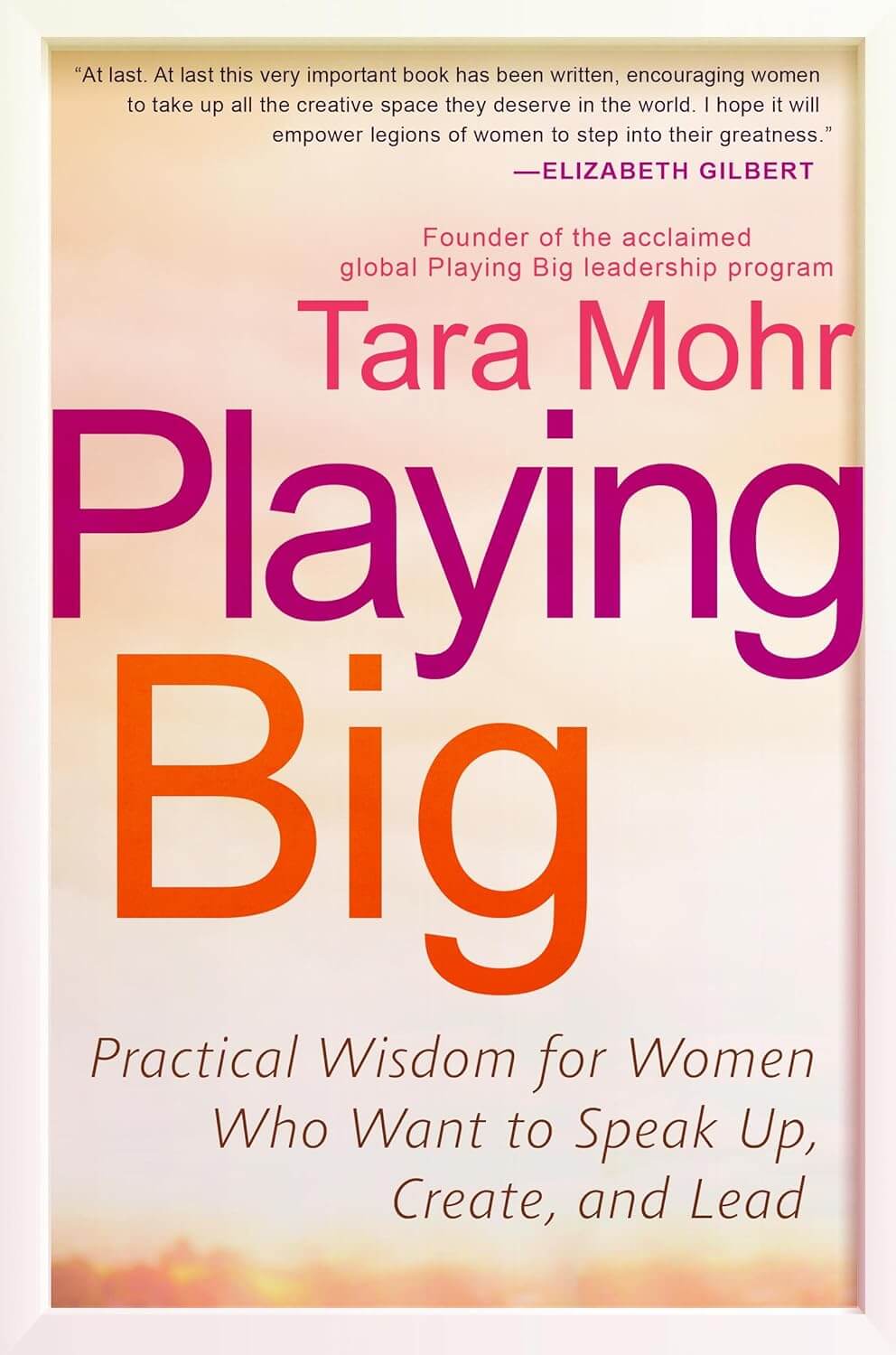
“I think it’s uniquely a women’s thing, we’ve been socialized not to take up space or credit. One of my favorite books I recommend to clients is Playing Big by Tara Mohr; her body of work is around this. I know, because I’ve coached a lot of men, it’s different [for them]. They’re like, ‘Yeah, I wrote a book; it’s so cool; here it is; want to read it?’ And we’re like, ‘This little thing? I actually have fourteen of them on my shelf, but I’m not supposed to talk about that.’
I tell clients: I did a guide to sociopathic behavior as a health reporter a long time ago. I asked one of the preeminent experts, ‘How do you know if you’re a sociopath?’ He said, ‘If you can ask, the answer’s no.’ I tell my clients this: if you’re worried about having an ego, you’re probably going too far in the other direction, hiding your light, not taking up enough space, and we’re going to work on doing that a bit more.’
I hate the squeaky-wheel analogy, no one wants to squeak. You just want to say to readers: ‘Hey, this exists. If you like this, this one is for you.’ That’s all. I don’t spend a lot of time on social. My success with paid ads has been varied. A lot of what I do is write books of my heart, make it clear who they’re for, tell people who like them: can you recommend it? Can you review? There’s no ego in: ‘I’m so glad you loved the book, would you take a second to review it on Amazon? That helps visibility.’ We’re afraid to even do that.”
So, put yourself out there. Get in touch with the people who like what you have to offer and make sure they know about you.
Resolutions and Goal Setting
Since we’ve found ourselves in a new year and the urge to create resolutions and goals around our writing lives are in the air, we thought we’d ask Camille how she approaches this time of year.
“Where I am now as a coach and author is a natural extension of who I came out of the womb as. If you look at StrengthsFinder, my top two are Achiever and Futuristic. I was the eight-year-old making lists of books I wanted to read. My brain is wired for goals, but it was always SMART goals, and here’s where I take a sharp left.
I’ve read the research on SMART goals; I understand the framework, but the ‘A—Achievable’ piece throws me off. Often a mid-career writer, and sometimes early writer, comes to me crushed because they’ve been going for what they think they can get, and they don’t care about it. When you plant the idea of ‘achievable’—’Well, I think I can write a lousy novel,’ or the example that ticks me off: people think it’s easy to write romance (I think it’s one of the hardest genres to nail). They’re like, ‘People do it; it’s bestselling; I’m going to do it.’ They’ll come to me: ‘I wrote these books and they’re not working.’ I’m like, ‘Great, what’s the last romance you loved?’ Crickets. ‘Okay—so you don’t like romance. Why are you over there? Why don’t you write the thriller you’ve been dreaming of?’ ‘Well, I felt like I could do that, and the other seems so hard.’
So, like I said earlier, it needs to be within the realm of possibility. I would love to sing like Mariah Carey, that’s never going to happen for me (I absolutely love her).
If you have the desire, that means something, your work is to follow it, instead of doing what you think you can achieve. Measurable? Sure, but ‘I want to sell tons of books’ doesn’t mean anything. For me that might be three books or three million. The time-bound piece also gives me pause because in publishing it often takes longer to get where you’re going than you thought.
I talked on the podcast: two of my clients just signed with amazing agents two weeks ago, stars aligned. It took them way longer than they thought, and they’d do it again. We often use deadlines against ourselves: ‘I said this is the year I publish; it didn’t work; I should quit.’ No, just do work into February or beyond. Keep going.”
It’s natural to get into the spirit of the resolution season, but make sure you’re not underselling your dreams to make them achievable, or giving up if you haven’t accomplished what you’d hoped on a specific timeline.
Camille Pagán has a new book releasing in April 2026, Dog Person, incredible courses like Pitch Pro that help you get your query out of the slush pile and a huge backlist of episodes (plus new ones dropping all the time) that help you at any stage in your writing career over at The Career Novelist.
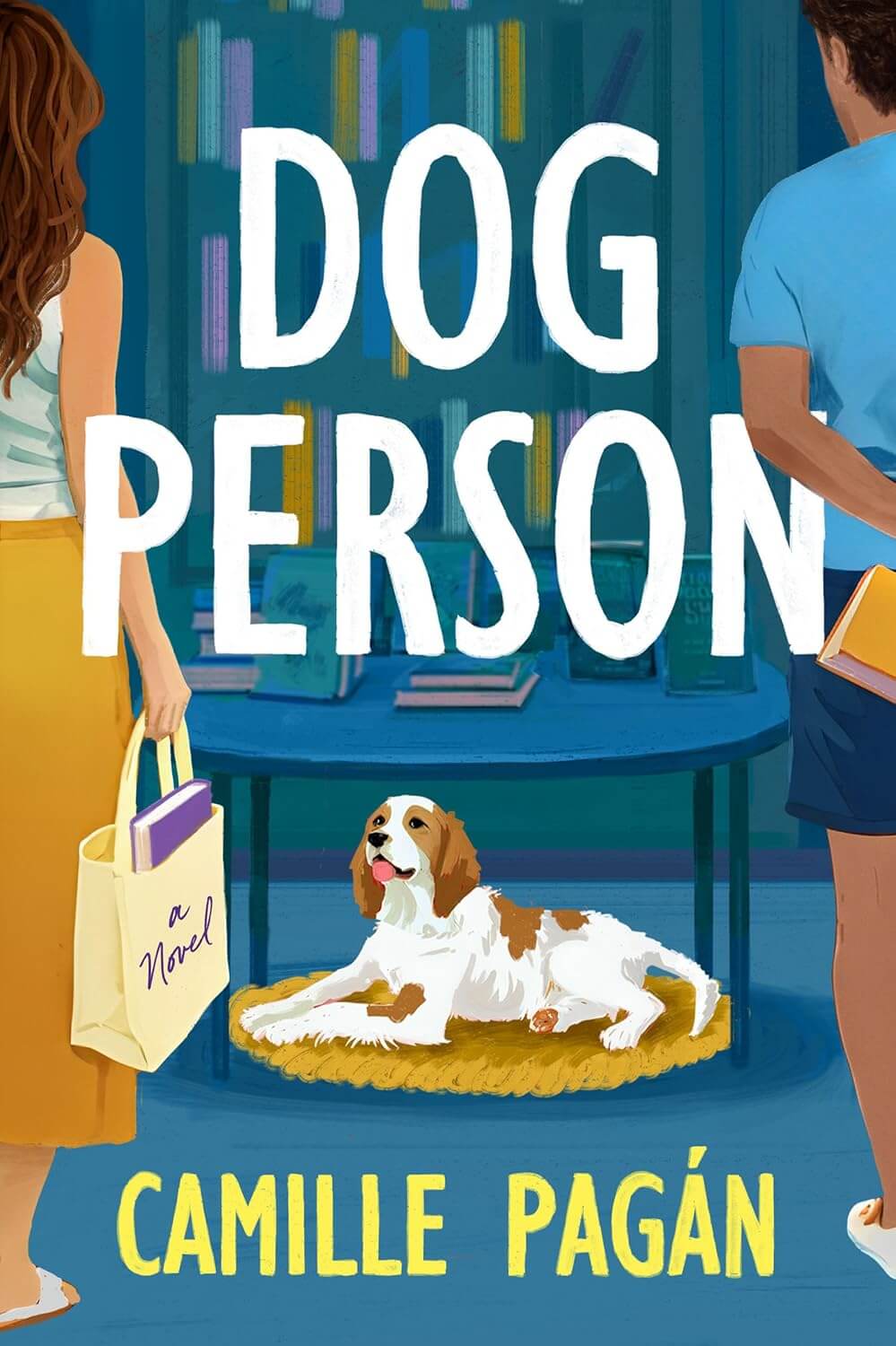
Dog Person by Camille Pagán
After romance novelist Amelia May dies, she leaves her aging mutt, Harold, with one last mission: help her grieving partner, Miguel, find love again. When their struggling bookstore is pushed to the brink by a no-show author, Miguel and Harold go looking for him, only to meet Fiona, his sunny but guarded sister, who doesn’t even like dogs, though her eleven-year-old daughter (also named Amelia) instantly bonds with Harold. As time runs out, Harold becomes determined to open Miguel’s heart to Fiona—and prove Amelia May was right that there are no coincidences, especially where love is concerned.
Preorder the book: Bookshop.org | Amazon


Leave A Comment